
One Molecule, Two Hormones: How GIP Came Back in Tirzepatide (and What the SURMOUNT Trials Found)
By Andres Zuleta, MD, ThriveMed · Patient and family education
The medicines that changed obesity care listen to one gut hormone. The strongest one so far listens to two. This is the story of the second one: a hormone found first, written off for years, and brought back as half of a single molecule.
This is Episode 12 of my 15-part series, The Peptide Breakthroughs. Over the last four episodes we followed GLP-1, the gut hormone that tells your pancreas to release insulin and tells your brain you have had enough. Last time, semaglutide at a higher dose helped people lose about 15% of their body weight. But GLP-1 was never alone.
The short version
- 1970s, Vancouver: John Brown's team found a new gut hormone, GIP. By 1973 they showed it makes the pancreas release insulin in people.
- 1993, Germany: in type 2 diabetes, GLP-1 kept most of its insulin effect. GIP lost about half. Most drug makers moved on.
- 2013: scientists reported one molecule built to act on both the GIP and GLP-1 receptors.
- 2022 and 2023: tirzepatide was approved for type 2 diabetes, then for chronic weight management. In SURMOUNT-1, people on the highest dose lost about 21% of their body weight in 72 weeks, compared with about 3% on placebo.
Watch the 5-minute story.
The hormone that was found first
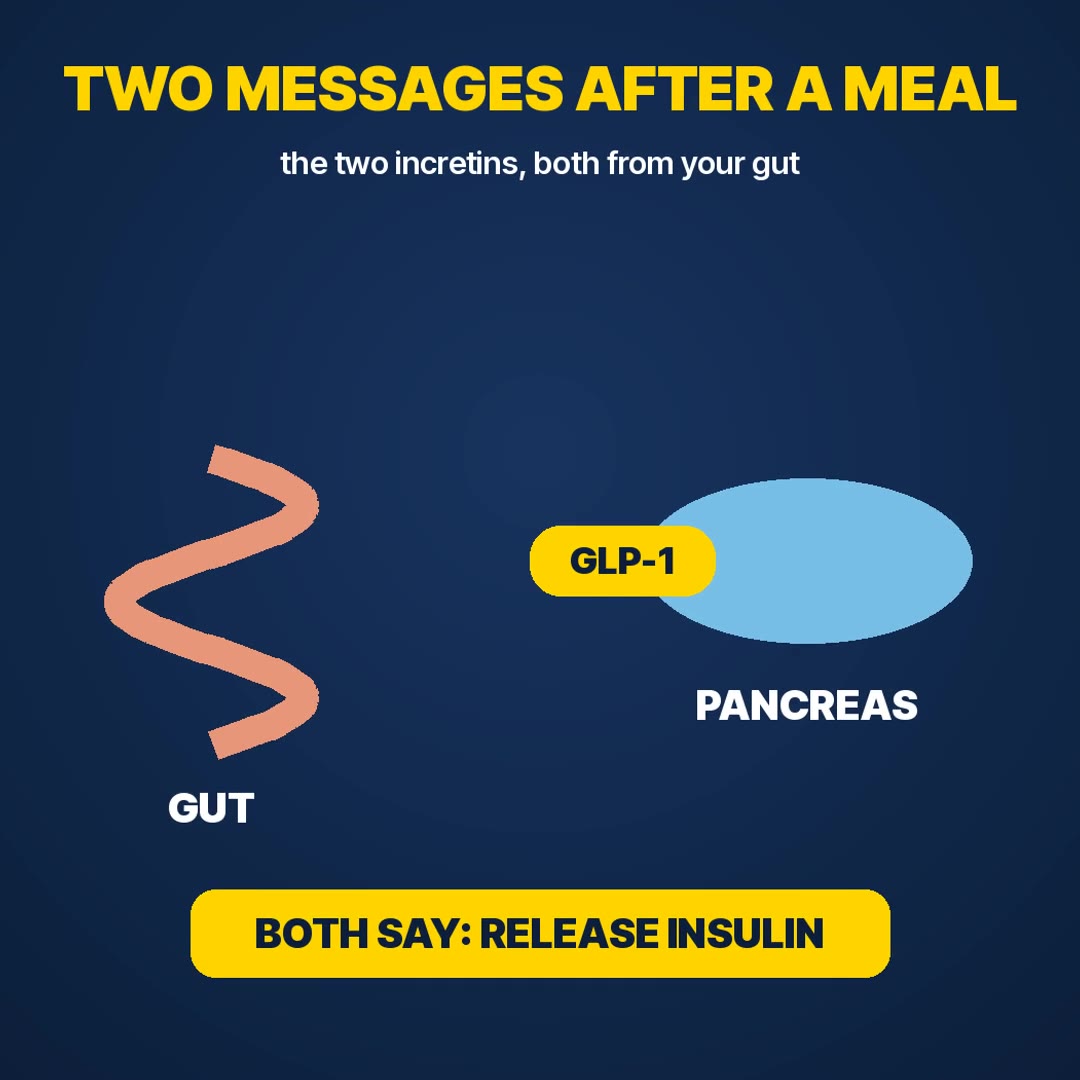
In the early 1970s, John Brown's team at the University of British Columbia in Vancouver pulled a new hormone out of the intestine. They called it gastric inhibitory polypeptide, or GIP. In 1973, his team showed that GIP makes the pancreas release insulin in people, so the name was later changed to glucose-dependent insulinotropic polypeptide. Same letters, better description.
GIP and GLP-1 became known as the two incretins: the gut hormones that help your body handle a meal by telling the pancreas that food is on the way.
Then GIP hit a wall
In 1993, Michael Nauck and colleagues in Germany compared the two hormones in people with type 2 diabetes. GLP-1 still worked well, keeping about 71% of its normal insulin effect. GIP's best effect was about 54% lower than in healthy people.
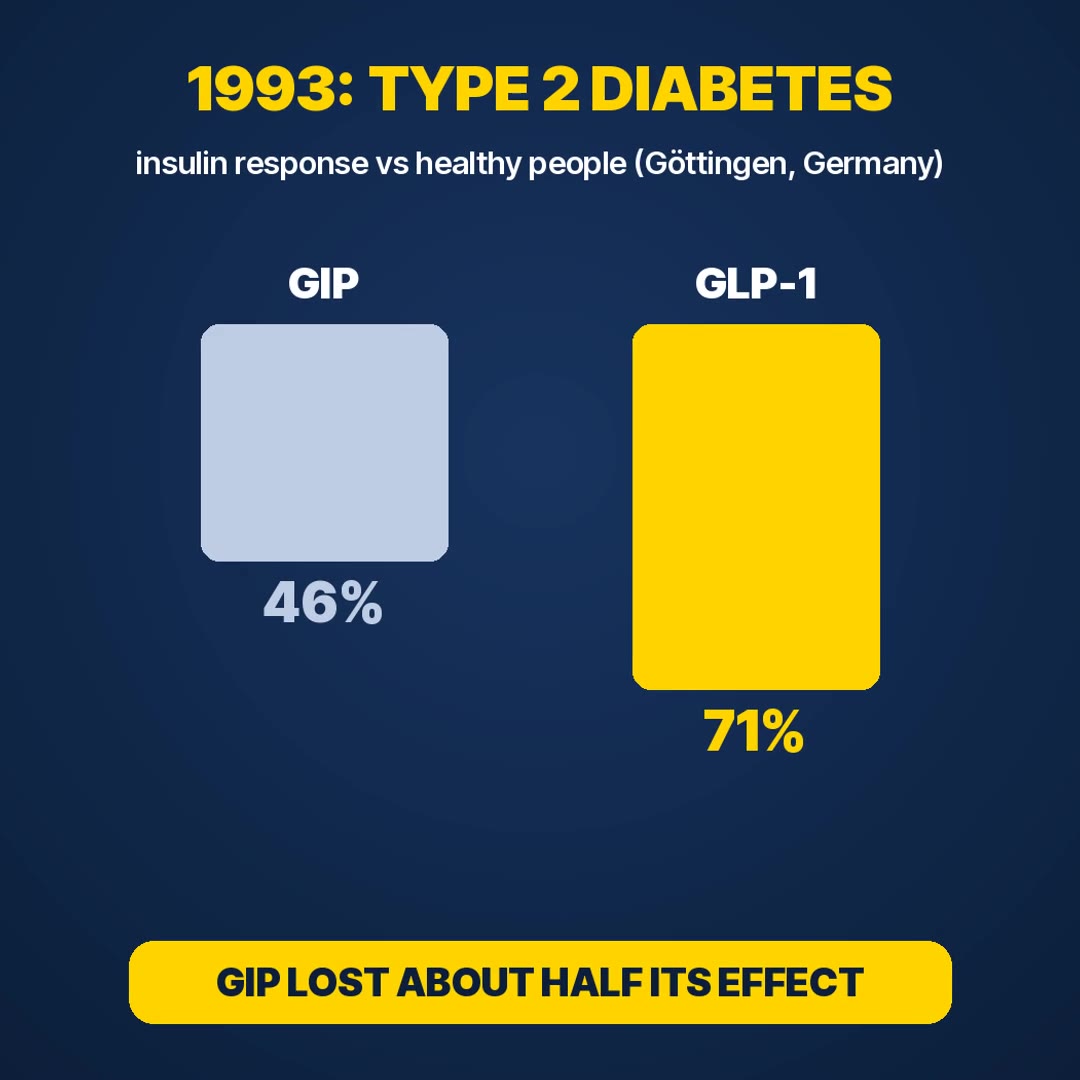
For years, GIP looked like the hormone that had stopped listening, and most drug makers moved on to GLP-1.
One molecule, two buttons
A few scientists did not give up. In 2013, groups led by Matthias Tschöp and Richard DiMarchi reported a single peptide built to press both buttons at once: the GIP receptor and the GLP-1 receptor. In animals, the two signals together did more than either one alone.
At Eli Lilly, scientists built their own version: one peptide, two receptors, with a fatty acid tail so it lasts a week. They called it tirzepatide.
What the trials found
First it was tested in type 2 diabetes. In SURPASS-2, a 40 week trial with 1,879 people, tirzepatide lowered blood sugar more than semaglutide 1 mg, and people lost more weight. The FDA approved it for type 2 diabetes on May 13, 2022.
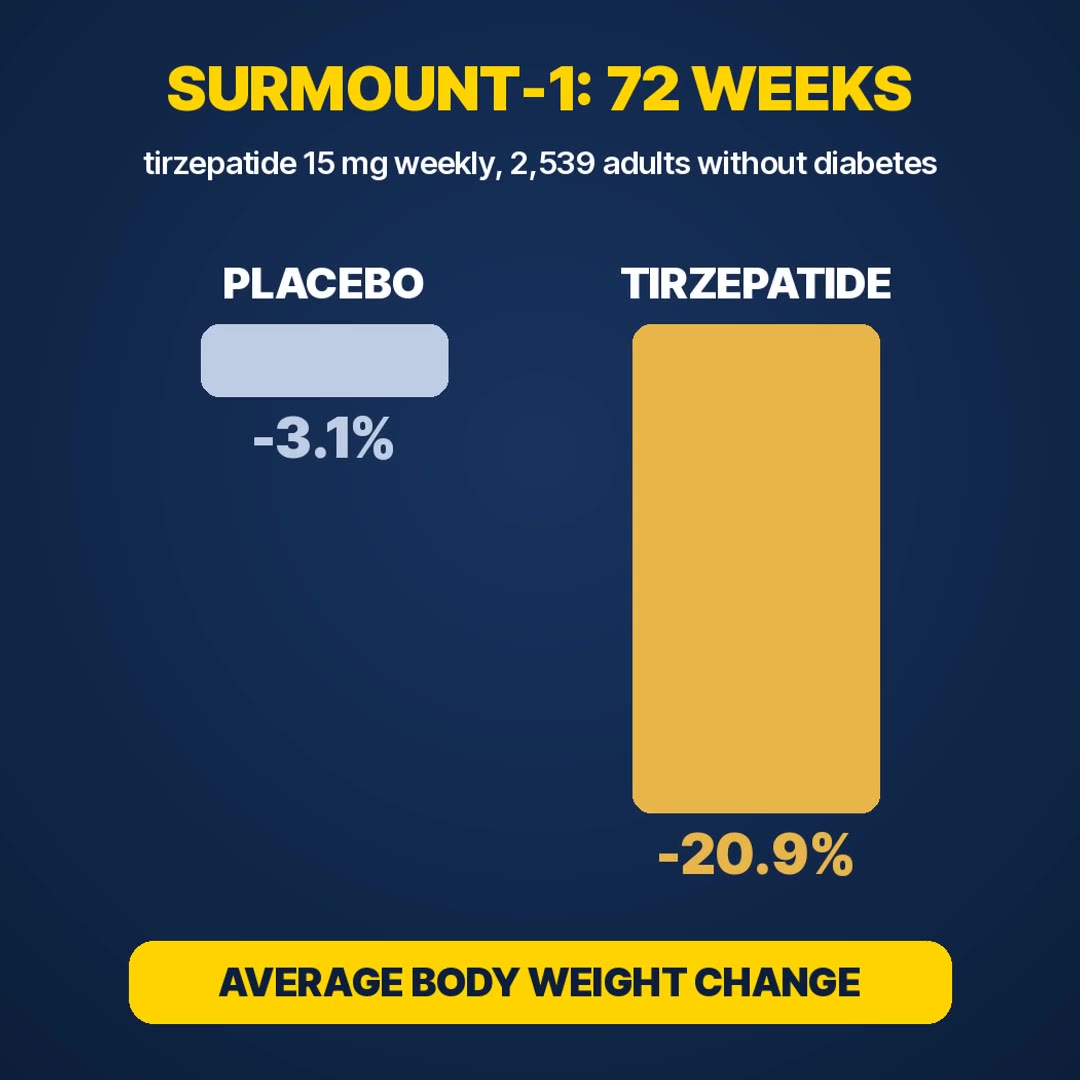
Then came the weight trial. SURMOUNT-1 enrolled 2,539 adults living with obesity, or overweight with a related health problem, and without diabetes. After 72 weeks on the highest dose, people had lost about 21% of their body weight on average, compared with about 3% on placebo. More than half of them lost 20% or more. On November 8, 2023, the FDA approved tirzepatide for chronic weight management.
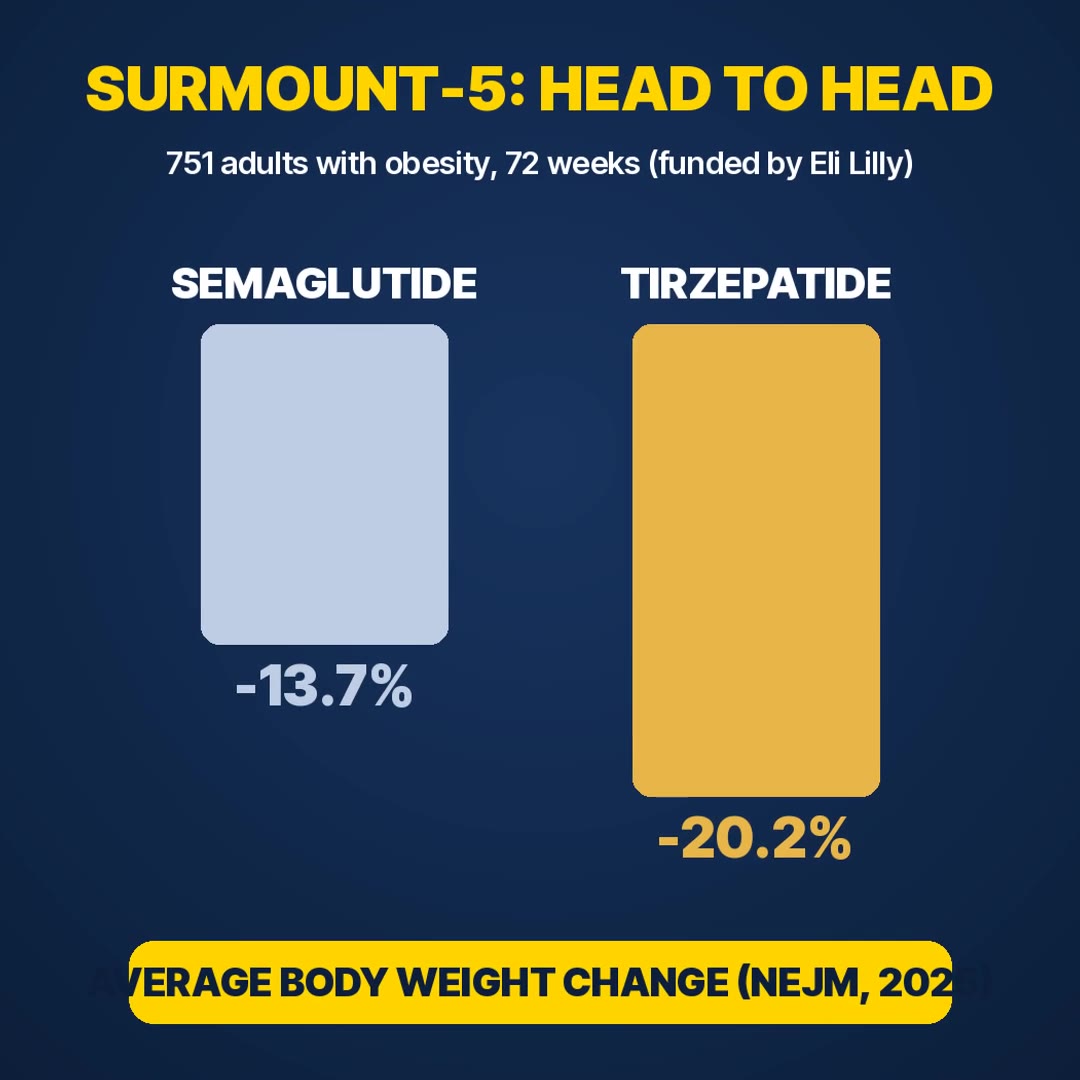
In 2025, SURMOUNT-5 compared the two medicines head to head in 751 adults with obesity. After 72 weeks, people lost about 20% on tirzepatide and about 14% on semaglutide. That trial was funded by the maker, so it deserves more studies.
The honest part
This is a prescription medicine, used under a doctor's care. Nausea, diarrhea and constipation were the most common side effects, mostly mild to moderate and mostly while the dose was being raised, but some people stopped because of them.
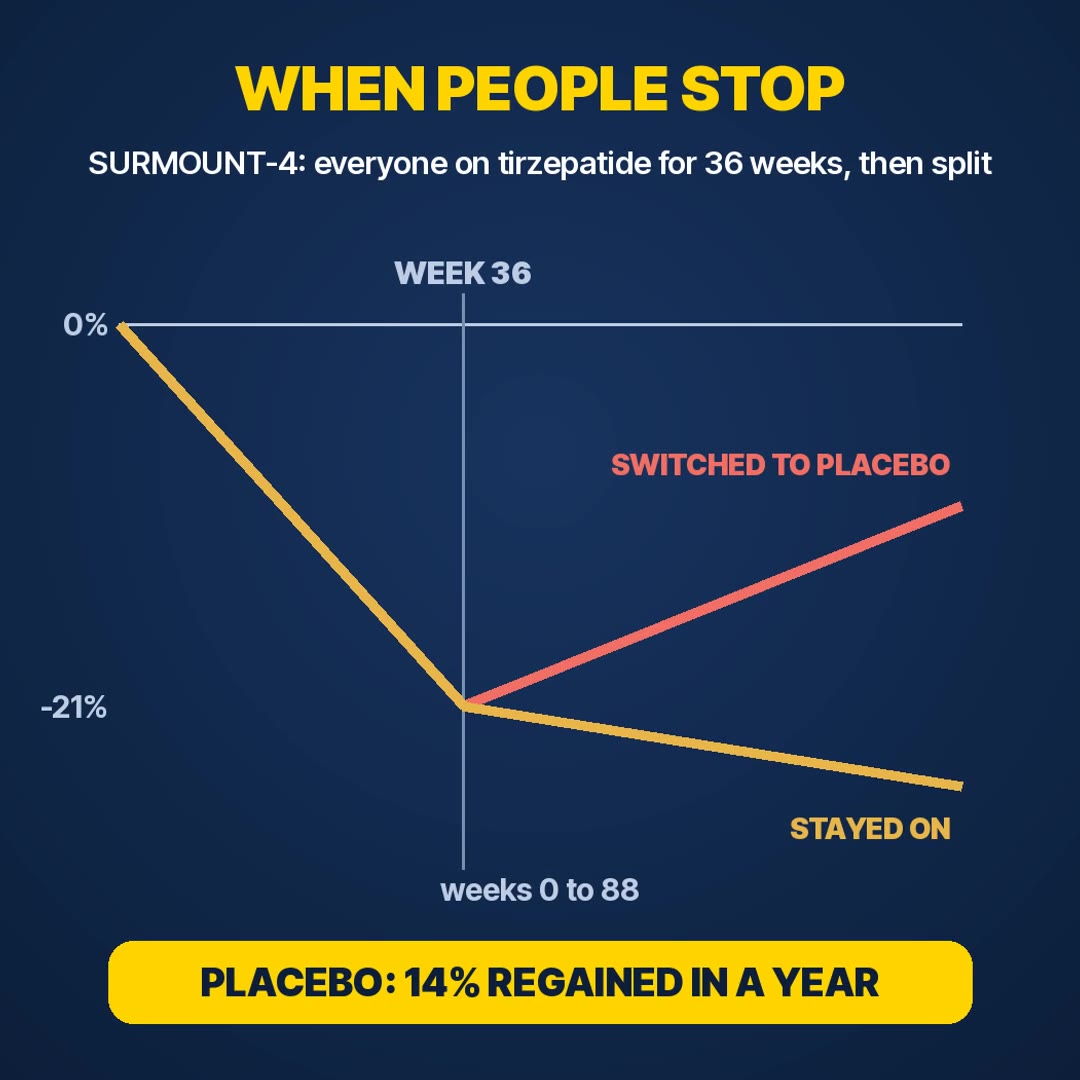
And just like with semaglutide, stopping matters. In SURMOUNT-4, people who switched to placebo regained about 14% of their weight within a year, while those who stayed on tirzepatide kept losing.
How much science is behind it
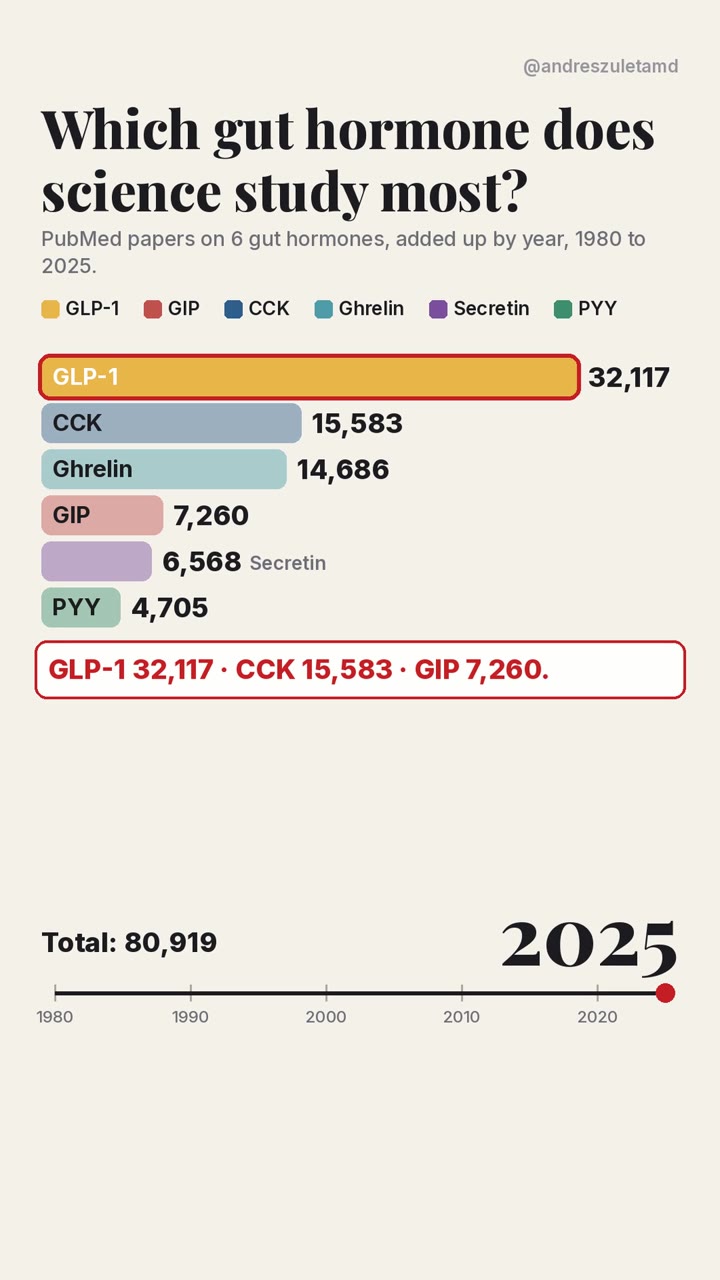
GIP still trails GLP-1 in the research world, but in 2025 alone PubMed lists hundreds of new papers on tirzepatide and on GIP.
Two ideas you can use
- Your gut speaks with more than one hormone. A signal written off for years turned out to matter.
- The biggest results so far come from combining signals, and from staying on treatment. Plan for the long term with your doctor.
A physician's take on the same story, for clinicians: The incretin that came back: a physician's read
Next time: what happens when one molecule speaks for three hormones.
Sources
- Brown JC, Dryburgh JR. A gastric inhibitory polypeptide. II. The complete amino acid sequence. Can J Biochem 1971;49:867. PMID 5120249.
- Dupre J, et al. Stimulation of insulin secretion by gastric inhibitory polypeptide in man. J Clin Endocrinol Metab 1973;37:826. PMID 4749457.
- Nauck MA, et al. Preserved incretin activity of glucagon-like peptide 1 but not of synthetic human gastric inhibitory polypeptide in patients with type 2 diabetes. J Clin Invest 1993;91:301. PMID 8423228.
- Finan B, et al. Unimolecular dual incretins maximize metabolic benefits in rodents, monkeys, and humans. Sci Transl Med 2013;5:209ra151. PMID 24174327.
- Coskun T, et al. LY3298176, a novel dual GIP and GLP-1 receptor agonist. Mol Metab 2018;18:3. PMID 30473097.
- Frías JP, et al. SURPASS-2. N Engl J Med 2021;385:503. PMID 34170647.
- Jastreboff AM, et al. SURMOUNT-1. N Engl J Med 2022;387:205. PMID 35658024.
- Aronne LJ, et al. SURMOUNT-4. JAMA 2024;331:38. PMID 38078870.
- Aronne LJ, et al. SURMOUNT-5. N Engl J Med 2025;393:26. PMID 40353578.
- Drugs@FDA: NDA 215866 (tirzepatide, type 2 diabetes, May 13, 2022); NDA 217806 (tirzepatide, chronic weight management, November 8, 2023).
- PubMed counts: NCBI E-utilities, title and abstract search, queried October 12, 2026. Papers, not studies.
Educational only, not medical advice. Andres Zuleta, MD, ThriveMed.