
From Blood Sugar to Appetite: How GLP-1 Became a Weight Medicine (Liraglutide, Semaglutide and the STEP Trials)
By Andres Zuleta, MD, ThriveMed · Patient and family education
A medicine made to lower blood sugar turned out to change something else: hunger. To understand why, we have to follow a hormone from your gut all the way to your brain.
This is Episode 11 of my 15-part series, The Peptide Breakthroughs. Over the last three episodes we followed GLP-1, the gut hormone that tells your pancreas to release insulin after a meal. Last time, scientists at Novo Nordisk made it last a day (liraglutide), and then a week (semaglutide). But people taking these medicines for diabetes noticed something else: they ate less, and they lost weight.
The short version
- 1996, London: Stephen Bloom's group found GLP-1 and its receptors in the hypothalamus, the part of the brain that helps control hunger. GLP-1 there made hungry rats stop eating.
- 1998, Copenhagen: a GLP-1 drip made healthy young men feel fuller, and they ate 12% less at lunch.
- 2014: liraglutide at a higher dose, 3 mg a day, was approved for weight management.
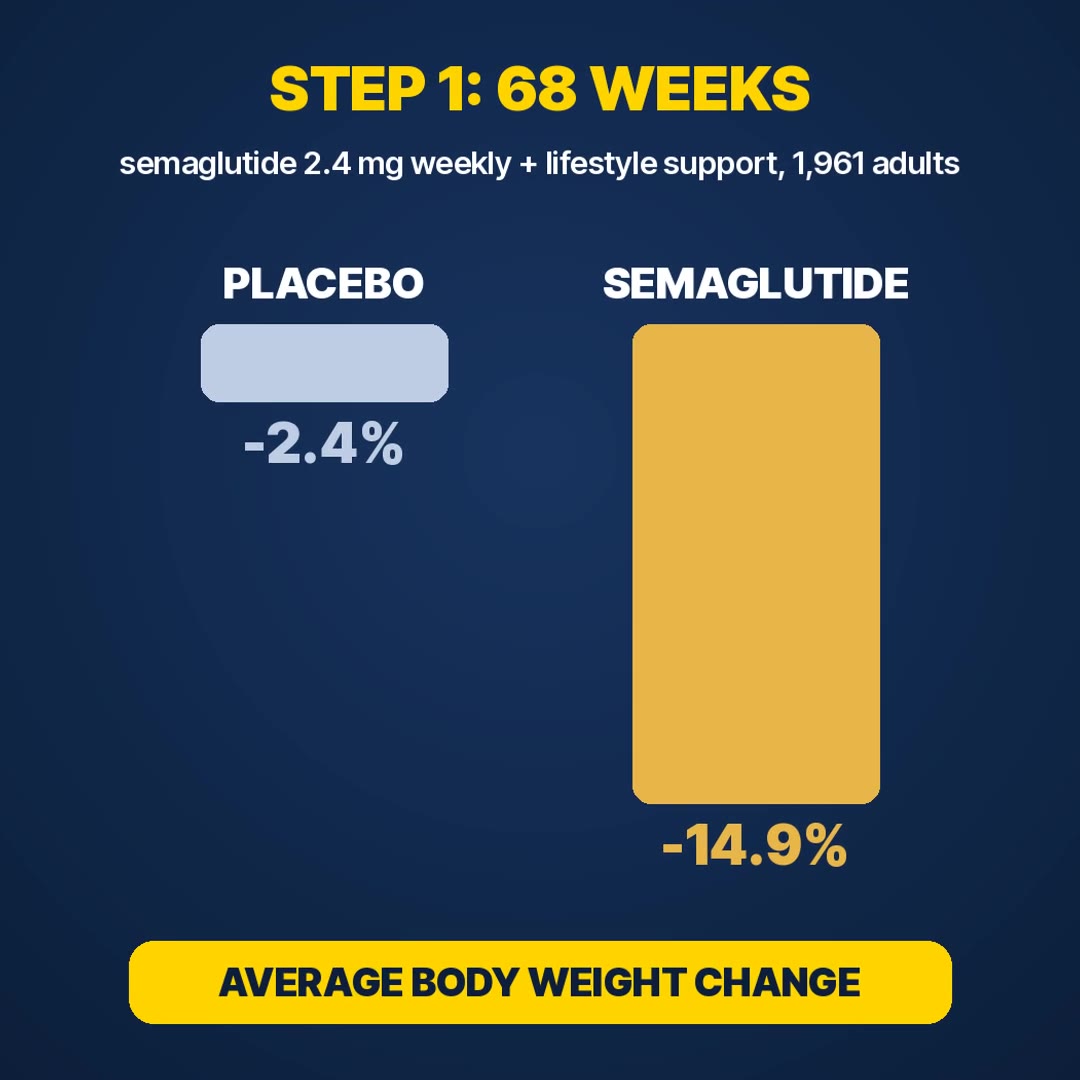
- 2021: once a week semaglutide at 2.4 mg. In the STEP 1 trial, people lost about 15% of their body weight in 68 weeks, compared with about 2% on placebo.
Watch the 5-minute story.
The first clue came from rats
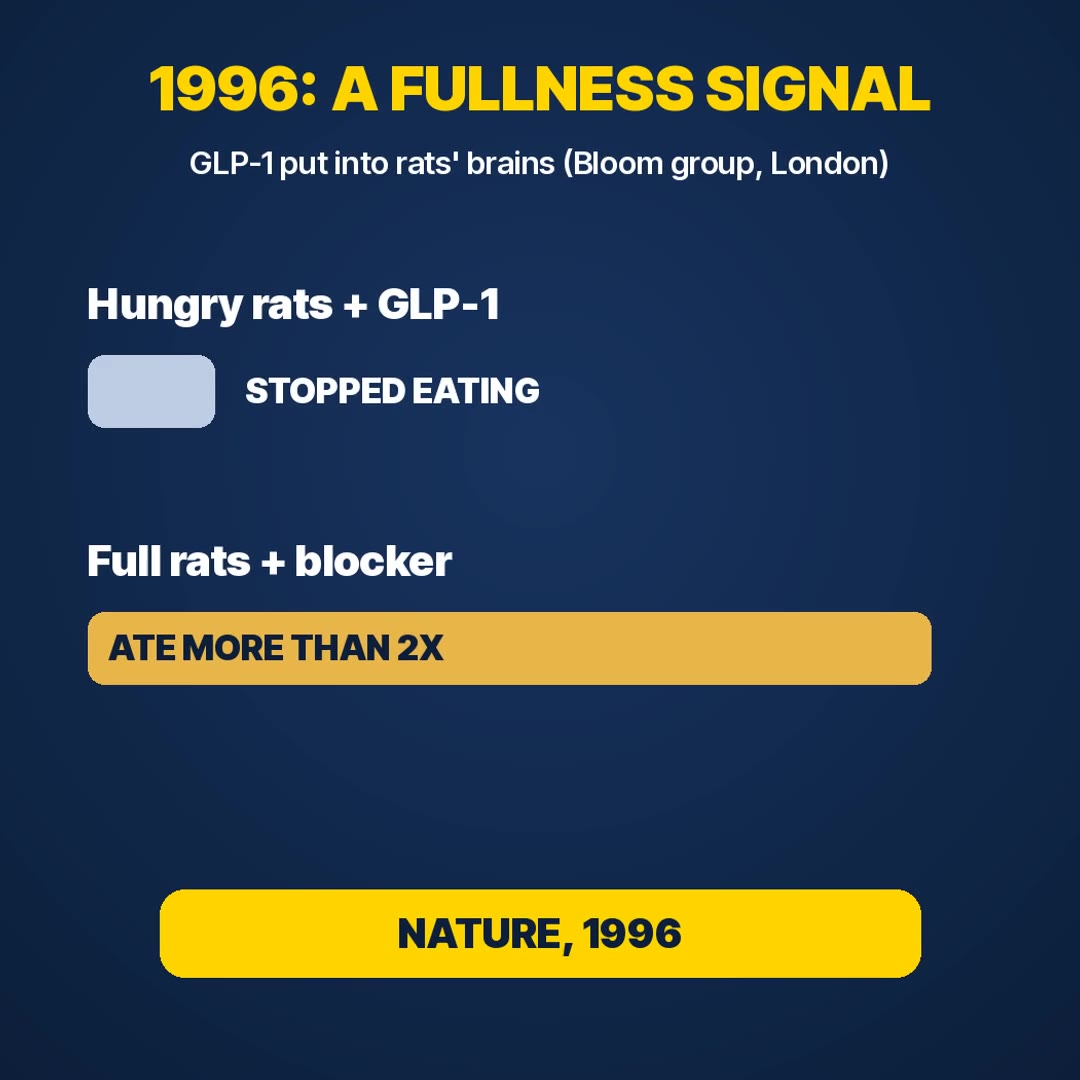
In 1996, a team led by Stephen Bloom in London showed that GLP-1 and its receptors are present in the hypothalamus. When they put a tiny amount of GLP-1 into the brains of hungry rats, the rats stopped eating. When they blocked the receptor, rats that were already full ate more than twice as much. GLP-1 looked like a fullness signal.
That paper caught the attention of Lotte Bjerre Knudsen, the Novo Nordisk scientist we met last time. Her team was making GLP-1 into a diabetes medicine. She saw a second use: appetite.
Then came people
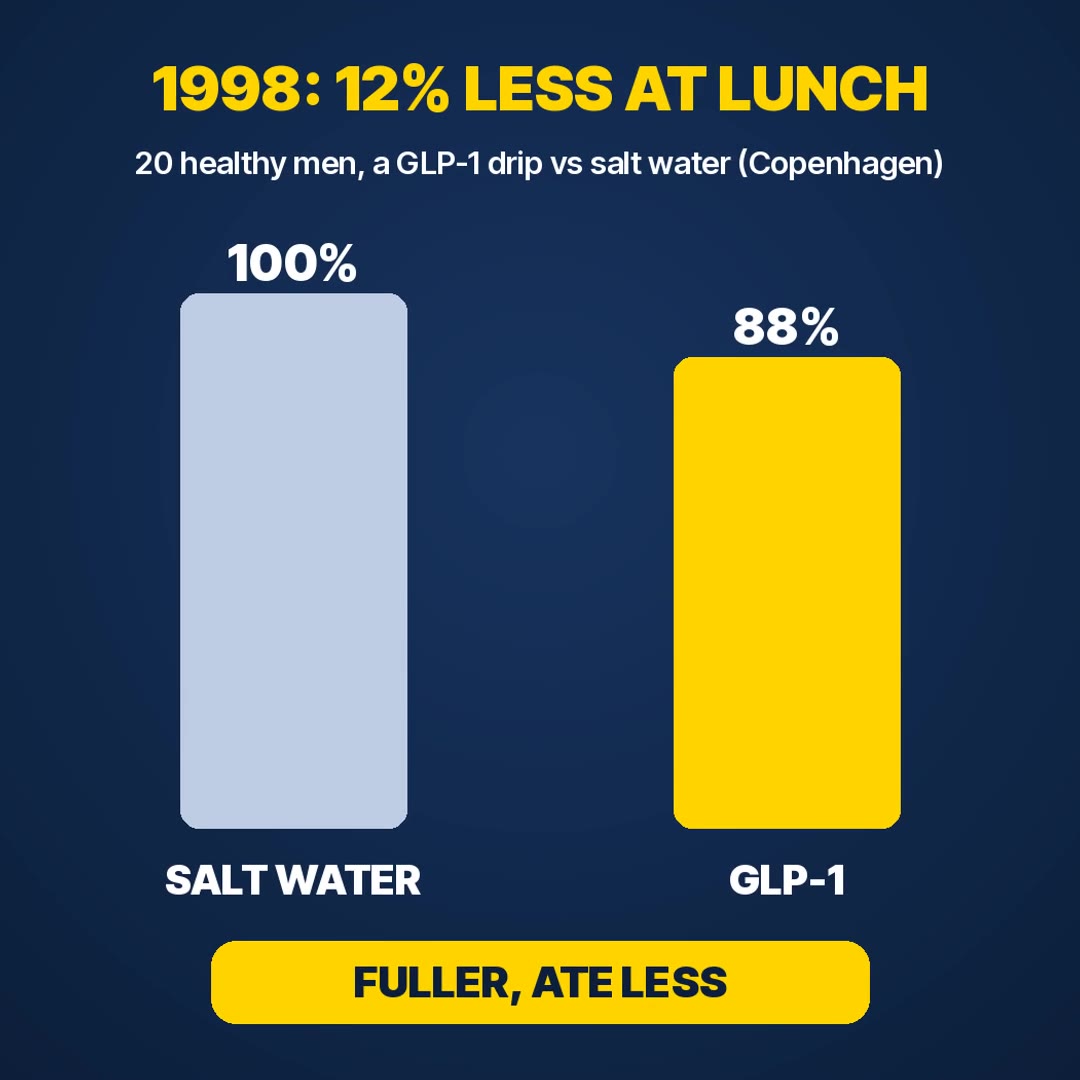
In 1998, a team in Copenhagen gave 20 healthy young men a slow drip of GLP-1, or salt water, with breakfast. With GLP-1, they felt fuller. At lunch, where they could eat as much as they wanted, they ate 12% less.
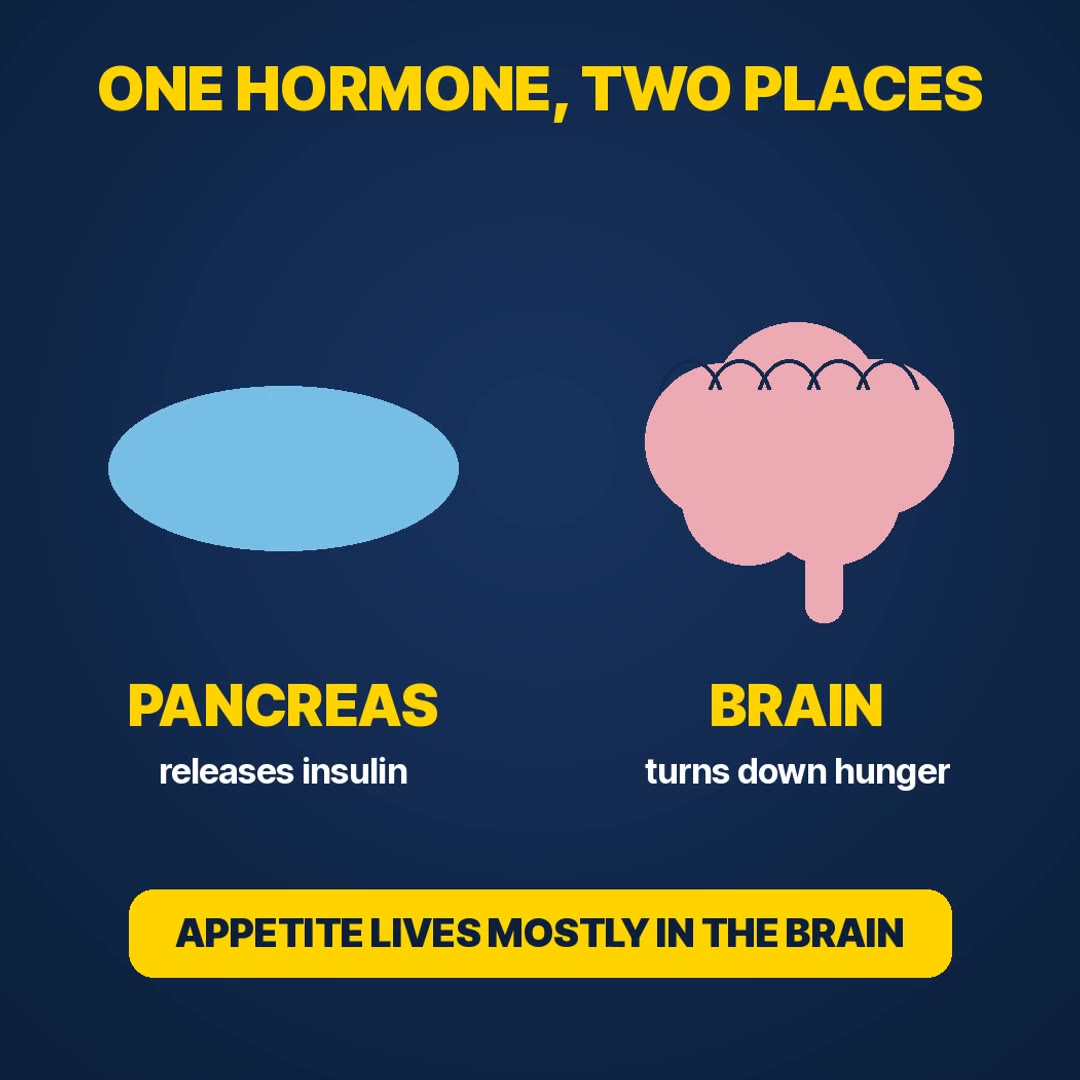
The insulin effect lives mostly in the pancreas. The appetite effect lives mostly in the brain. Later studies in animals showed that semaglutide reaches brain areas involved in hunger, including the hypothalamus and the brainstem.
From a diabetes dose to a weight dose
Knudsen's team tested liraglutide at 3 mg a day in people without diabetes. In the SCALE trial of more than 3,700 adults, people lost about 8.4 kg on average over a year, compared with about 2.8 kg on placebo. It was approved for weight management in December 2014.
Then came the once a week medicine. Semaglutide was tested at 2.4 mg, a higher dose than for diabetes. The STEP 1 trial enrolled 1,961 adults living with obesity or overweight, without diabetes. Everyone also got support with diet and activity. After 68 weeks, people on semaglutide had lost about 15% of their body weight on average (14.9%), compared with 2.4% on placebo. Half of them lost 15% or more. On June 4, 2021, the FDA approved it for chronic weight management.
The honest part
- This is a prescription medicine, used under a doctor's care.
- Nausea and diarrhea were the most common side effects, usually mild and fading with time, but some people stopped because of them (4.5% vs 0.8% on placebo in STEP 1).
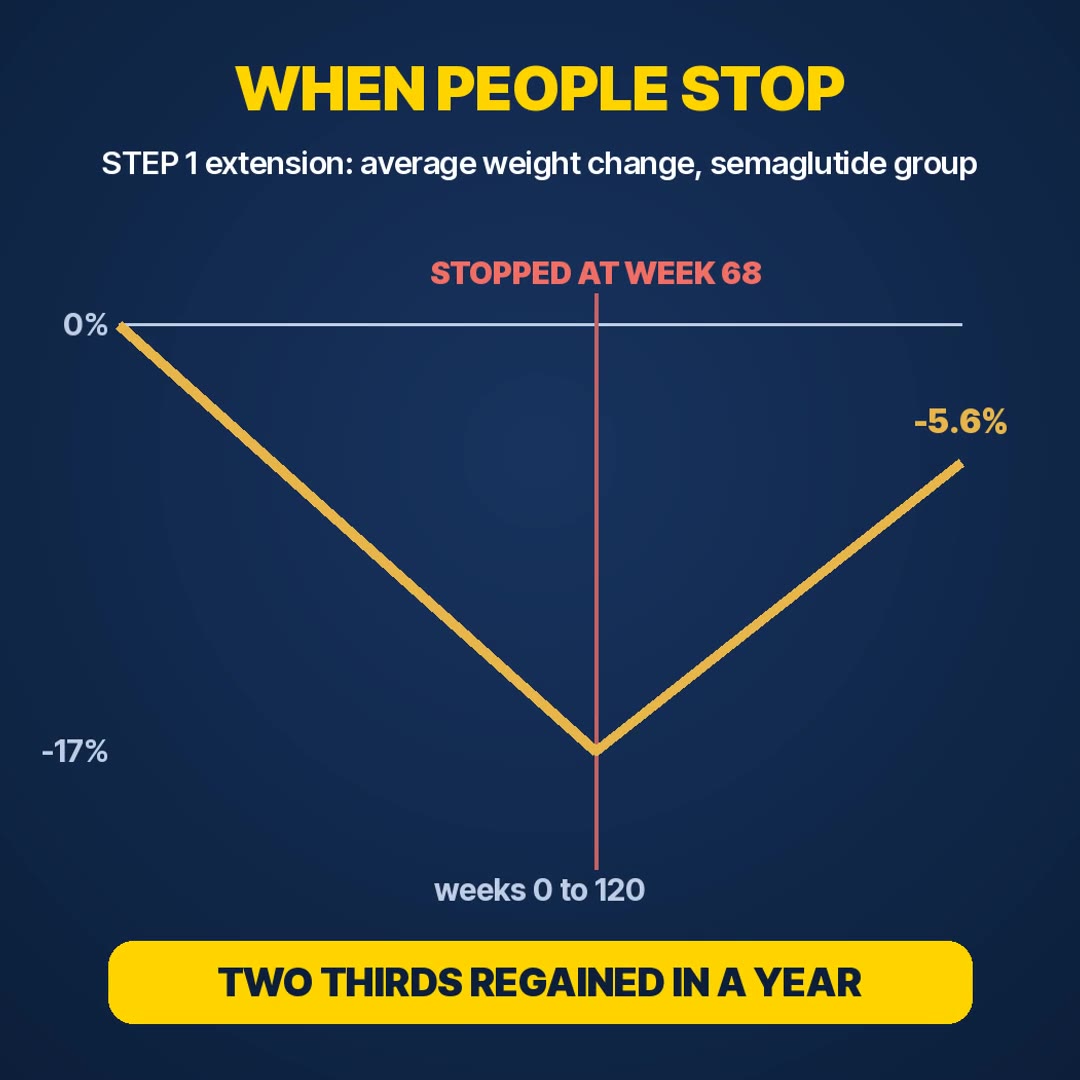
- When people stop, weight often comes back. In STEP 4, people switched to placebo regained about 7% of their weight in less than a year. In the STEP 1 extension, a year after stopping, people had regained about two thirds of what they lost.
- In 2023, the SELECT trial in people with heart disease and overweight, but no diabetes, found a 20% lower risk of heart attack, stroke or death from heart disease (6.5% vs 8.0%).
What the research looks like now
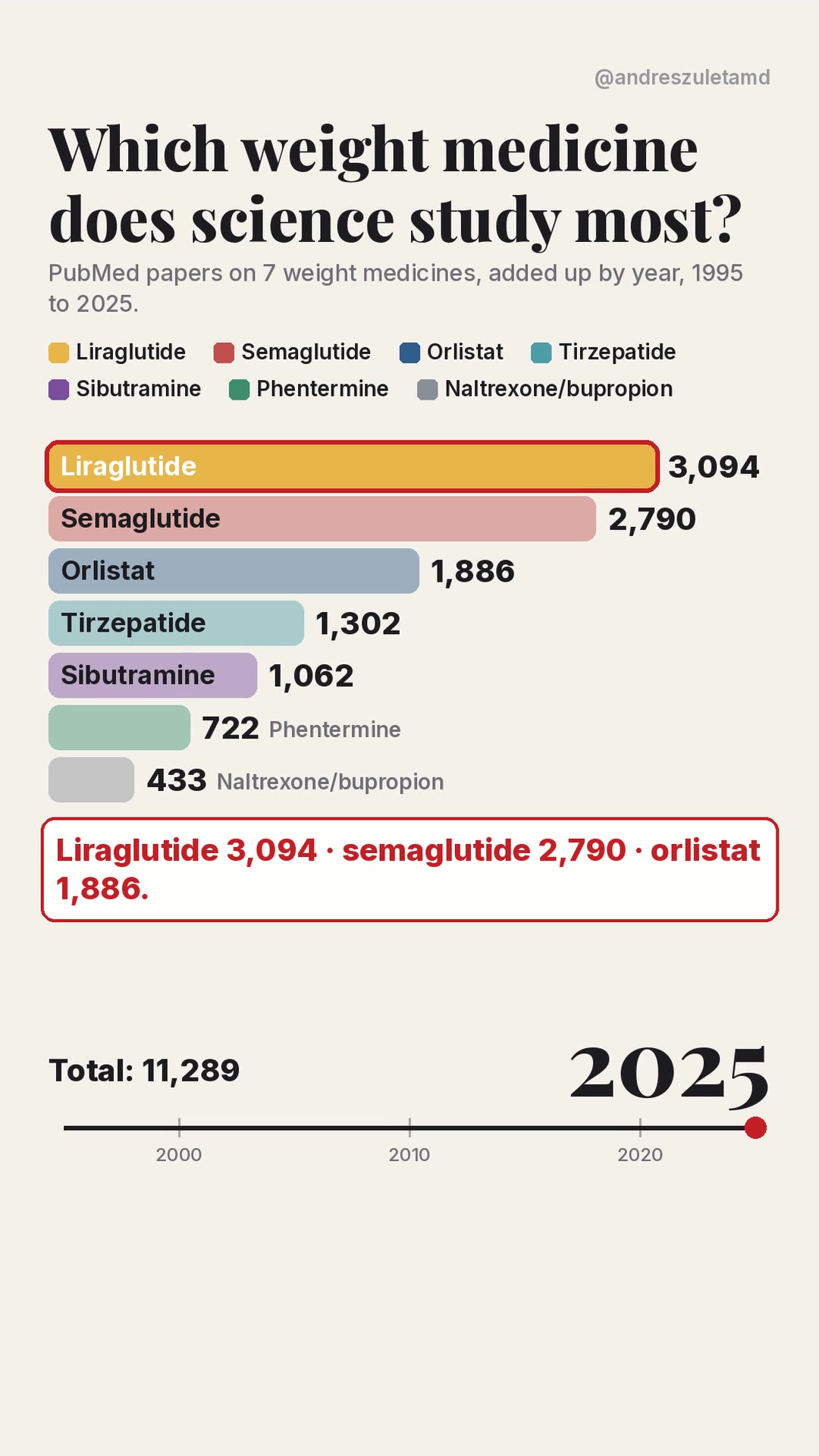
In PubMed, liraglutide passed orlistat in 2019 and now leads weight medicine research with 3,094 papers. Semaglutide is right behind with 2,790, and in 2025 alone it had more than twice as many new papers as liraglutide.
Two ideas you can use
- Hunger is biology. It is a conversation between your gut and your brain, not just willpower.
- Weight is a long term condition. It deserves long term care, whatever tools you and your doctor choose.
A physician's take on the same story, for clinicians: From blood sugar to appetite: a physician's read
Next time: what happens when one molecule speaks for two hormones.
Sources
- Turton MD, et al. A role for glucagon-like peptide-1 in the central regulation of feeding. Nature 1996;379:69. PMID 8538742.
- Flint A, et al. Glucagon-like peptide 1 promotes satiety and suppresses energy intake in humans. J Clin Invest 1998;101:515. PMID 9449682.
- Pi-Sunyer X, et al. SCALE Obesity and Prediabetes. N Engl J Med 2015;373:11. PMID 26132939.
- Wilding JPH, et al. STEP 1. N Engl J Med 2021;384:989. PMID 33567185.
- Rubino D, et al. STEP 4. JAMA 2021;325:1414. PMID 33755728.
- Wilding JPH, et al. Weight regain after withdrawal of semaglutide (STEP 1 extension). Diabetes Obes Metab 2022;24:1553. PMID 35441470.
- Lincoff AM, et al. SELECT. N Engl J Med 2023;389:2221. PMID 37952131.
- Gabery S, et al. Semaglutide lowers body weight in rodents via distributed neural pathways. JCI Insight 2020;5:e133429. PMID 32213703.
- Knudsen LB, Lau J. The discovery and development of liraglutide and semaglutide. Front Endocrinol 2019;10:155. Lasker Foundation, 2024 award essay.
- Drugs@FDA: NDA 206321 (liraglutide 3 mg, December 23, 2014); NDA 215256 (semaglutide 2.4 mg, June 4, 2021).
- PubMed counts: NCBI E-utilities, title and abstract search, queried October 12, 2026. Papers, not studies.
Educational only, not medical advice. Andres Zuleta, MD, ThriveMed.