
One Molecule, Three Hormones: Glucagon, Retatrutide and What the TRIUMPH Trials Found
By Andres Zuleta, MD, ThriveMed · Patient and family education
Last time, one molecule spoke for two hormones. This time, it speaks for three. And the third one is a surprise: it is the hormone that pushes your blood sugar up.
This is Episode 13 of my 15-part series, The Peptide Breakthroughs. In the last episode we met tirzepatide, one peptide that speaks for two gut hormones, GIP and GLP-1. In its big weight trial, people on the highest dose lost about 21% of their body weight. So scientists asked a bold question: what if we added a third voice?
The short version
- 1923: glucagon is found, right after insulin, as something in pancreas extracts that pushes blood sugar up.
- 2009 and 2015: the labs of Richard DiMarchi and Matthias Tschöp build one peptide for two receptors (glucagon and GLP-1), then one for three (GLP-1, GIP and glucagon).
- 2023: in a phase 2 trial, Eli Lilly's triple agonist, retatrutide, led to about 24% average weight loss at 48 weeks on the highest dose.
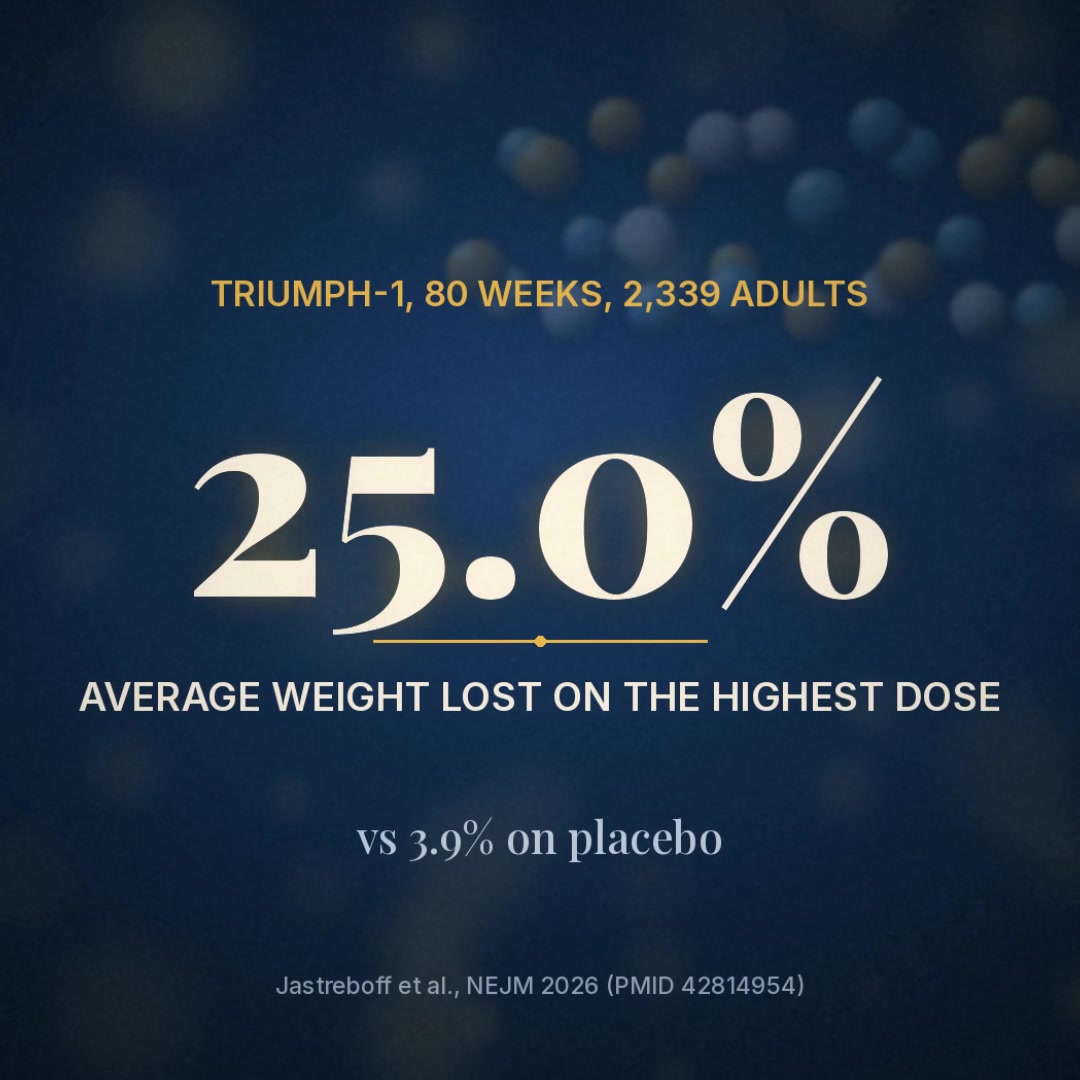
- 2026: the first phase 3 trial, TRIUMPH-1, reports about 25% average weight loss at 80 weeks on the highest dose, compared with about 4% on placebo. Retatrutide is still not approved.
Watch the 5-minute story.
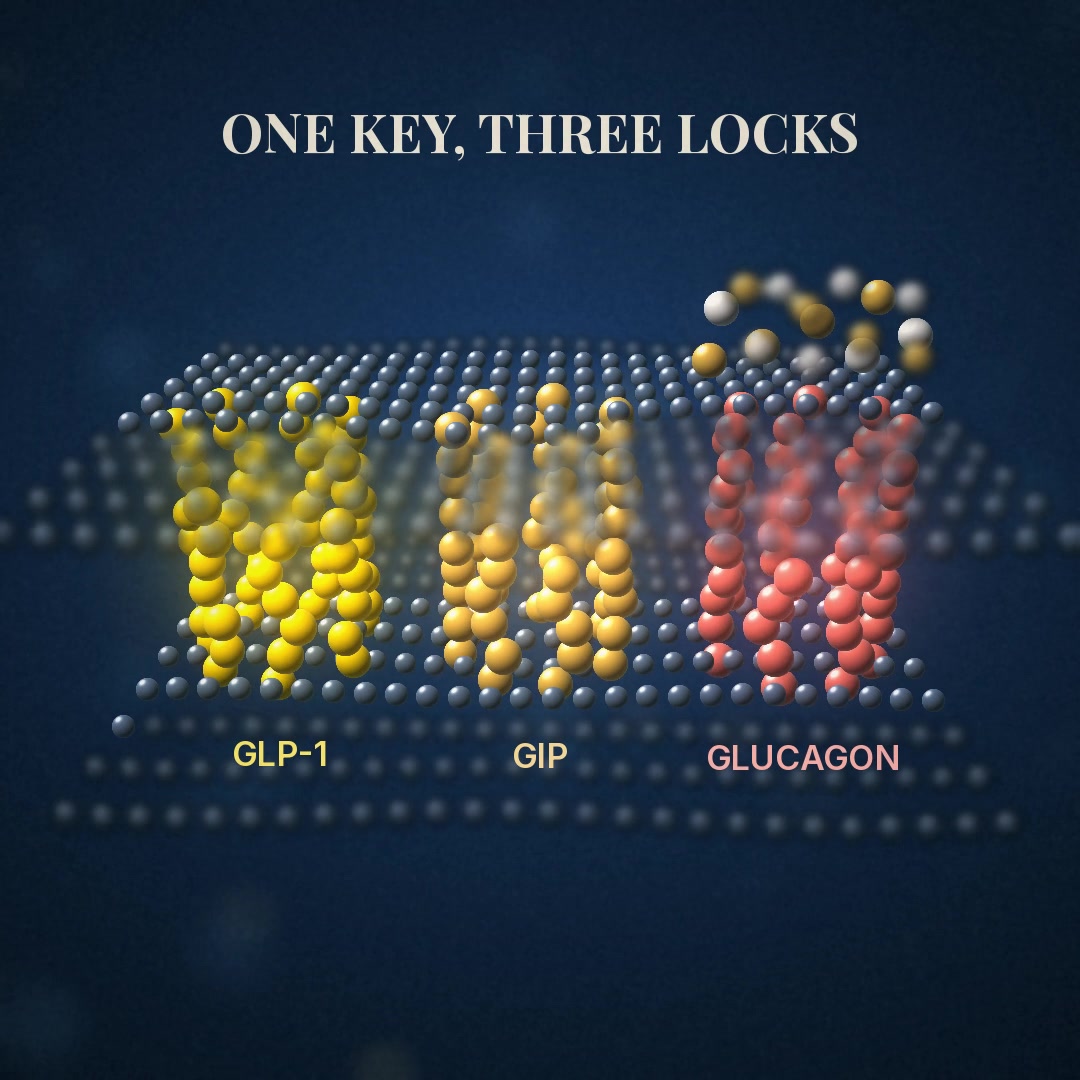
The third voice
Glucagon was described in 1923 by Kimball and Murlin, right after insulin was first purified, as something in pancreas extracts that raised blood sugar. Its everyday job is to keep your blood sugar from falling too low between meals, mostly by telling the liver to release stored sugar.
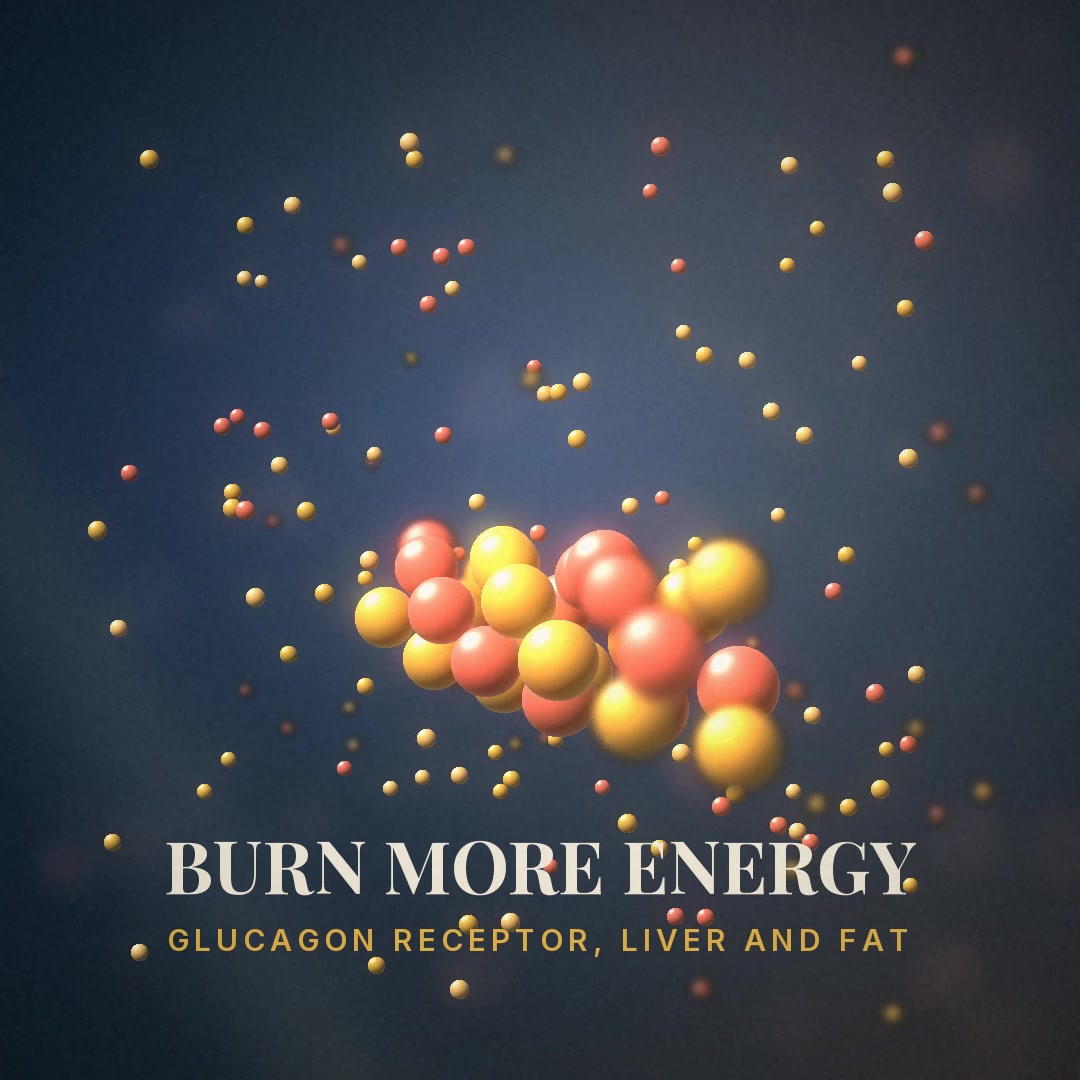
So adding glucagon to a diabetes and weight medicine sounds backwards. Here is the twist: glucagon does more than raise blood sugar. It also tells your body to burn more energy, and it helps your liver use fat.
From two receptors to three
In 2009, the labs of Richard DiMarchi and Matthias Tschöp reported a single peptide that acted on both the glucagon and GLP-1 receptors. In mice, it melted away fat, because the animals ate less and burned more.
In 2015, the same teams went one step further and built one peptide for all three receptors. Each part had a job. GLP-1 lowered appetite. Glucagon raised energy use. And GIP helped hold blood sugar steady against glucagon's push. In rodents, the triple molecule beat every pair.
Retatrutide
At Eli Lilly, scientists built their own triple agonist, with a tail that lets it last a week. Its name is retatrutide.
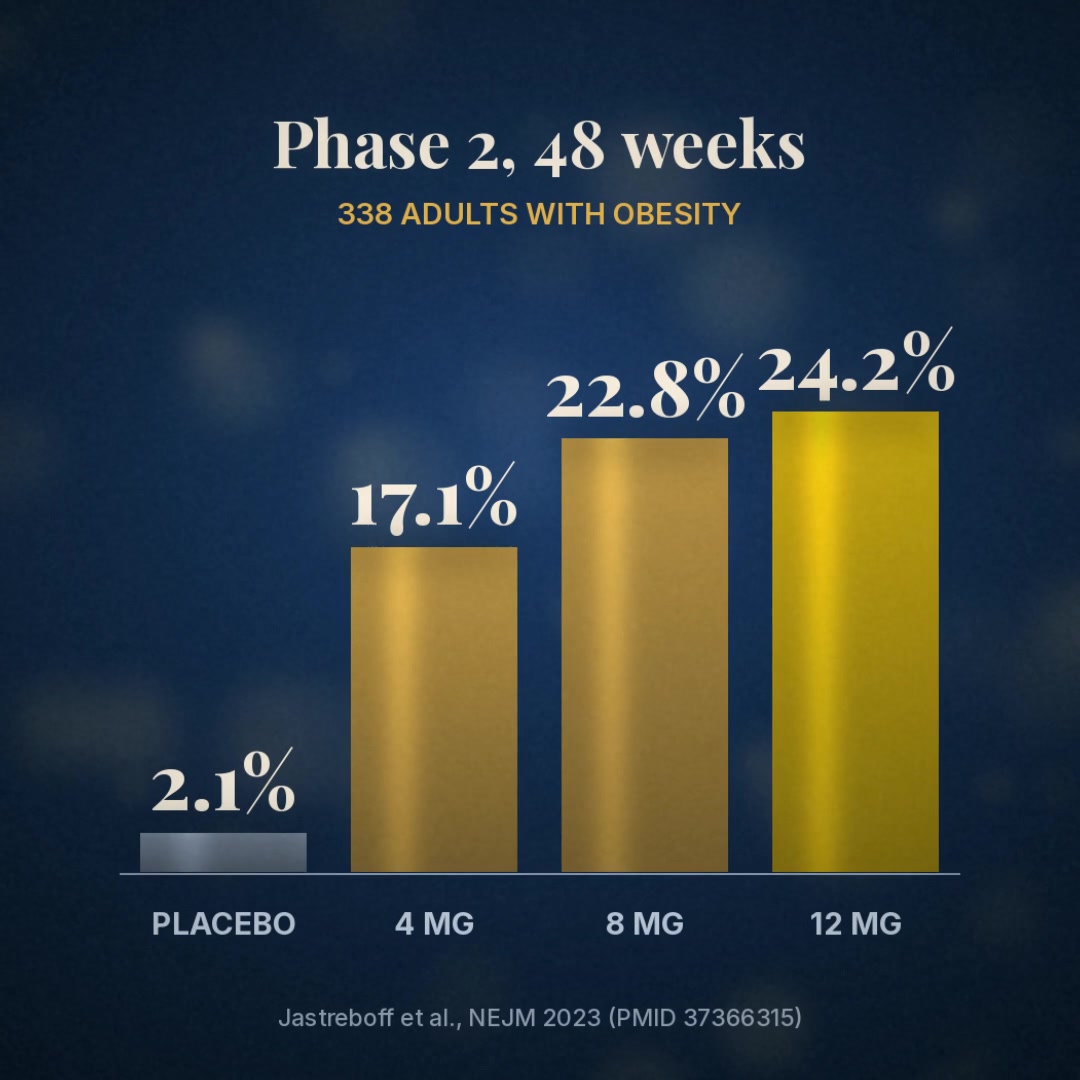
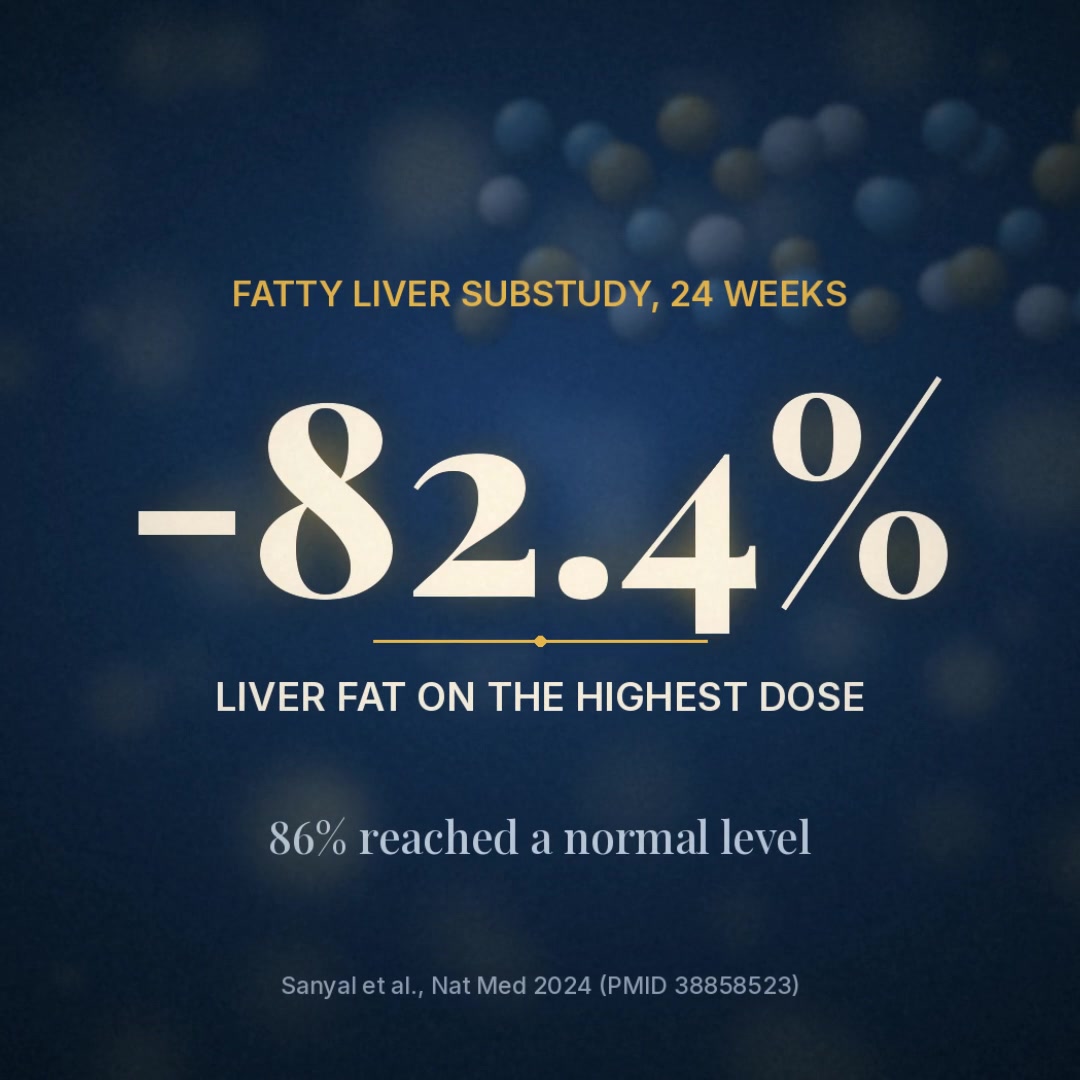
In 2023, a phase 2 trial in 338 adults with obesity reported its results. After 48 weeks on the highest dose, people lost about 24% of their body weight, compared with about 2% on placebo. In a smaller group of 98 people with fatty liver, liver fat dropped by more than 80% at 24 weeks on the higher doses, and 86% of people on the highest dose reached a normal level.
The first phase 3 results
Published just weeks ago, TRIUMPH-1 followed 2,339 adults with obesity, without diabetes, for 80 weeks. On the highest dose, people lost about 25% of their body weight on average, compared with about 4% on placebo. People with knee arthritis had less pain, and people with sleep apnea had fewer breathing pauses at night.
A second trial, TRIUMPH-2, in 1,152 people with obesity and type 2 diabetes, found about 19% weight loss on the highest dose compared with about 5% on placebo.
The honest part
Retatrutide is not approved. It is still an investigational medicine, studied under a doctor's care.
- Nausea and diarrhea were common, more so at higher doses.
- Heart rate went up in the phase 2 trial, then eased over time.
- Some people felt unusual skin sensations, and more people stopped the highest dose because of side effects than stopped placebo.
- These trials were funded by the maker, and we still need long term data on heart outcomes and on what happens after stopping.
And please hear this: anything sold online as retatrutide is not the medicine that was studied.
How much science is behind it
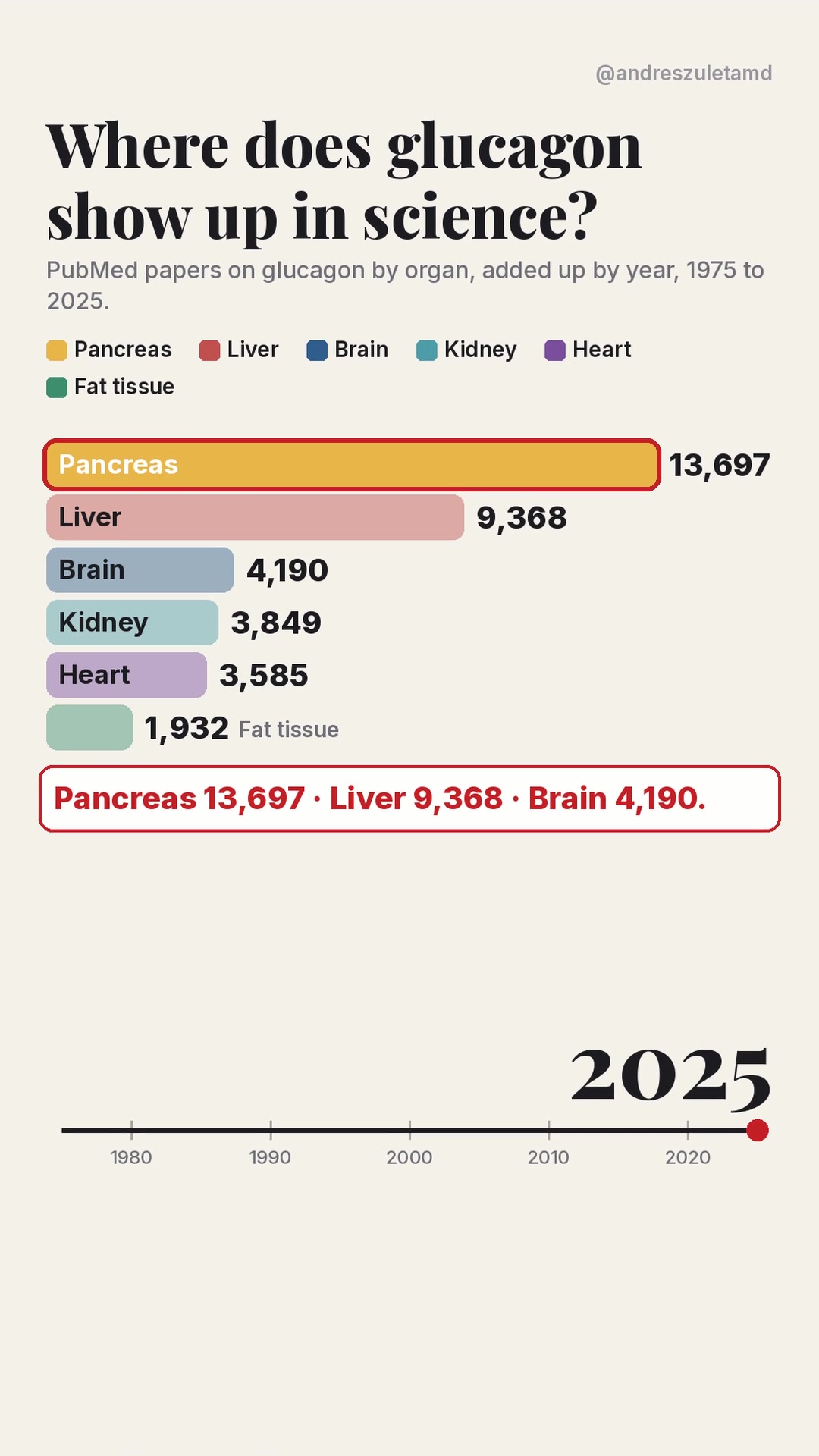
Retatrutide is new to the research world, but the number of papers is climbing quickly.
Two ideas you can use
- A hormone that sounds like the enemy of weight loss turned out to be a useful partner, because each signal covers a different job.
- Bigger numbers come with more questions. The right next step is a conversation with your doctor, not a shortcut.
A physician's take on the same story, for clinicians: The counterintuitive third agonist: a physician's read
Three hormones, one molecule, and a lot still to learn.
Sources
- Kimball CP, Murlin JR. Aqueous extracts of pancreas III. Some precipitation reactions of insulin. J Biol Chem 1923;58:337. Review: One hundred years after the discovery of insulin and glucagon. Endocr Relat Cancer 2023. PMID 37310813.
- Day JW, et al. A new glucagon and GLP-1 co-agonist eliminates obesity in rodents. Nat Chem Biol 2009;5:749. PMID 19597507.
- Finan B, et al. A rationally designed monomeric peptide triagonist corrects obesity and diabetes in rodents. Nat Med 2015;21:27. PMID 25485909.
- Coskun T, et al. LY3437943, a novel triple glucagon, GIP, and GLP-1 receptor agonist. Cell Metab 2022;34:1234. PMID 35985340.
- Rosenstock J, et al. Retatrutide for people with type 2 diabetes, phase 2. Lancet 2023;402:529. PMID 37385280.
- Jastreboff AM, et al. Triple-hormone-receptor agonist retatrutide for obesity, a phase 2 trial. N Engl J Med 2023;389:514. PMID 37366315.
- Sanyal AJ, et al. Retatrutide for metabolic dysfunction-associated steatotic liver disease. Nat Med 2024;30:2037. PMID 38858523.
- Jastreboff AM, et al. Retatrutide, a triple hormone receptor agonist, for treatment of obesity (TRIUMPH-1). N Engl J Med 2026. PMID 42814954.
- Bellido V, et al. Retatrutide in adults with obesity and type 2 diabetes (TRIUMPH-2). Lancet 2026;408:1455. PMID 42810372.
- Regulatory status: Eli Lilly press releases, May 21 and July 23, 2026 (investigational; US submission planned).
- PubMed counts: NCBI E-utilities, title and abstract search, queried October 12, 2026. Papers, not studies.
Educational only, not medical advice. Andres Zuleta, MD, ThriveMed.