
A Cancer Drug Reached Brain Tumors in 3 Patients. What That Does and Does Not Mean
By Andres Zuleta, MD, ThriveMed · Patient and family education
Imagine a family hearing the word glioblastoma for the first time, and then learning that most cancer drugs cannot even reach the tumor. That second fact is one of the hardest parts of this disease, and it is why a small study from Oslo made headlines this week.
On October 9, 2026, the Swedish company Oncopeptides reported that its drug melflufen was found inside the tumors of the first three patients in a glioblastoma study. Here is what that means, what it does not mean, and the questions I would ask.
The short version
- What was found: in three people whose glioblastoma had come back, one dose of melflufen before planned surgery led to "clear and consistent presence of active compound" in the tumor tissue that was removed. That was the main goal of this part of the study.
- Why it matters: the brain is protected by the blood-brain barrier, which keeps most drugs out. Getting in is step one.
- What it does not show: that the tumor shrank, or that anyone lived longer. The study was not designed to answer that.
- The honest part: three patients, no comparison group, no drug levels released, and no peer review yet. The company calls it "a major breakthrough". I call it a real first step.
Watch the 5-minute read.
Why getting into the brain is so hard
Glioblastoma is the most common and most aggressive brain cancer that starts in the brain in adults. In the 2005 trial that set today's standard first treatment, surgery followed by radiation and the chemotherapy pill temozolomide, median survival was 14.6 months, compared with 12.1 months with radiation alone.
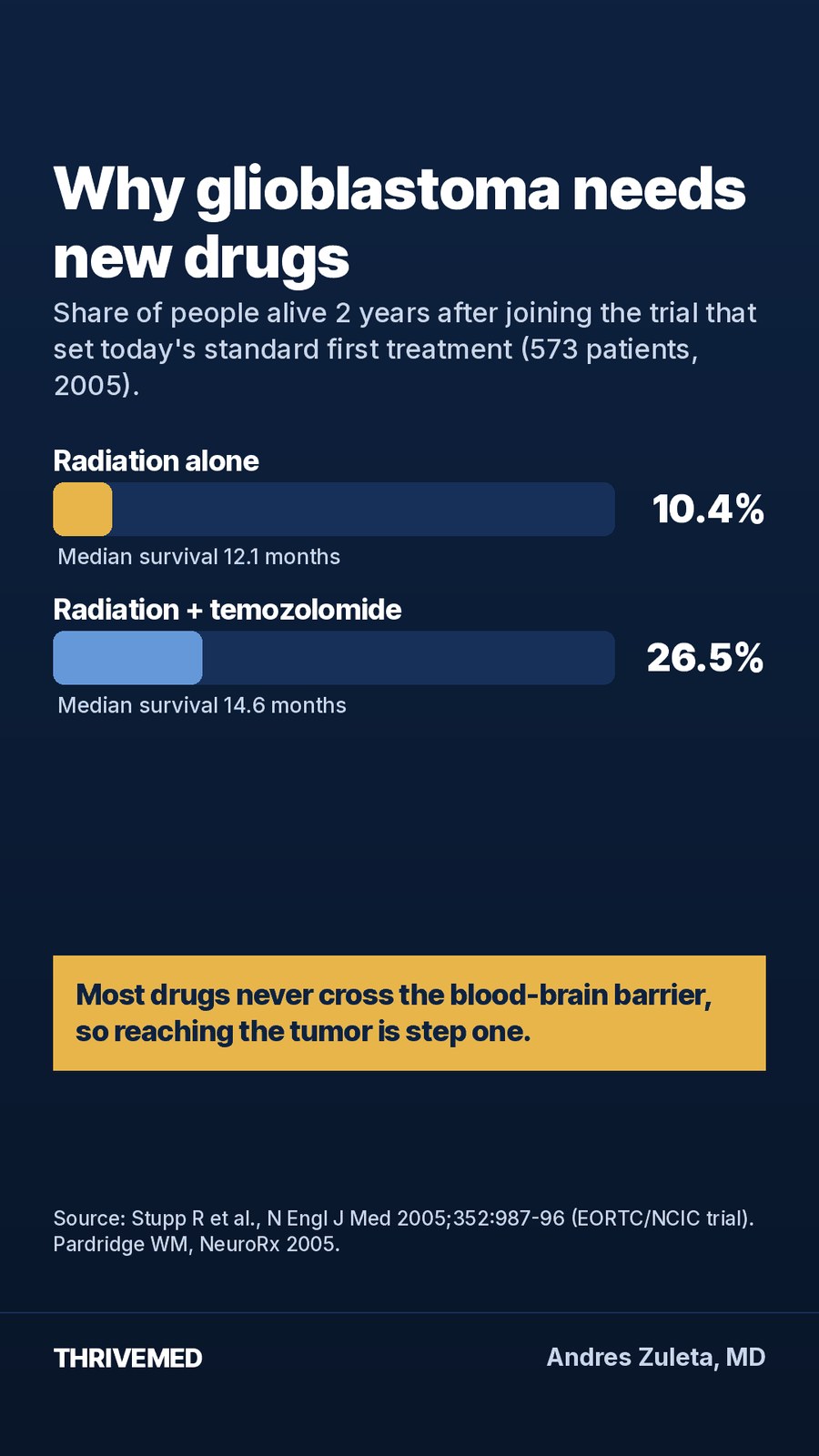
Two-year survival in the trial that set today's standard (Stupp et al., N Engl J Med, 2005).
Part of the reason progress is so slow is the blood-brain barrier, a tight lining of the brain's blood vessels. I think of it as a bouncer at a club door that turns most drugs away. A widely cited estimate says more than 98 percent of small molecule drugs do not cross it.
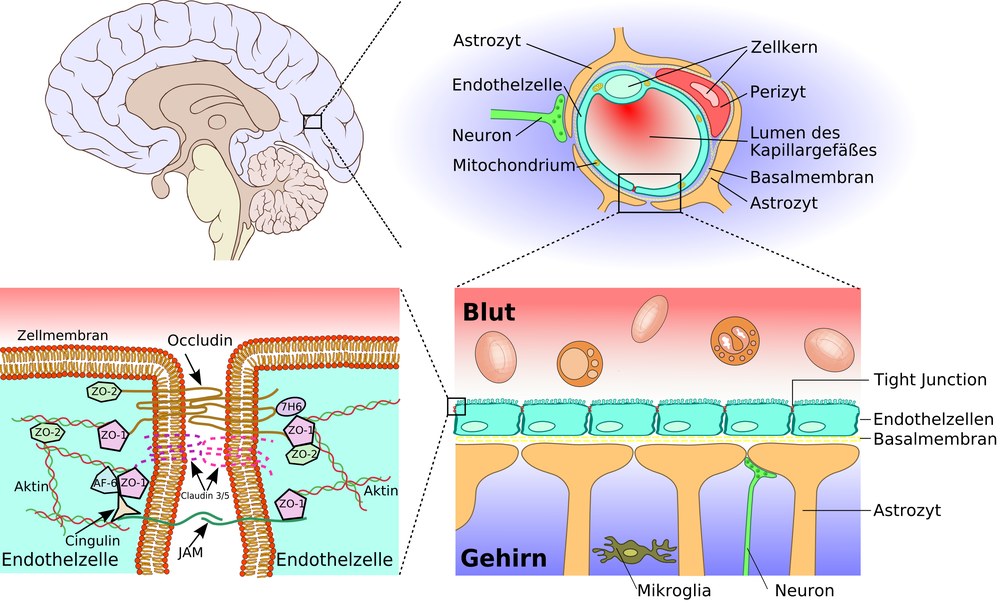
The blood-brain barrier (illustration: Armin Kuebelbeck and Patrick J. Lynch, Wikimedia Commons, CC BY 3.0).
The drug: a backpack that unzips inside the cell
Melflufen, full name melphalan flufenamide, is a peptide drug conjugate. A small two-part peptide is attached to melphalan, a classic chemotherapy that damages cancer DNA. Because the whole molecule is fat soluble, it slips into cells easily. Inside, the cell's own enzymes cut it and release melphalan. My picture for it: a backpack that walks into the cell and unzips inside.
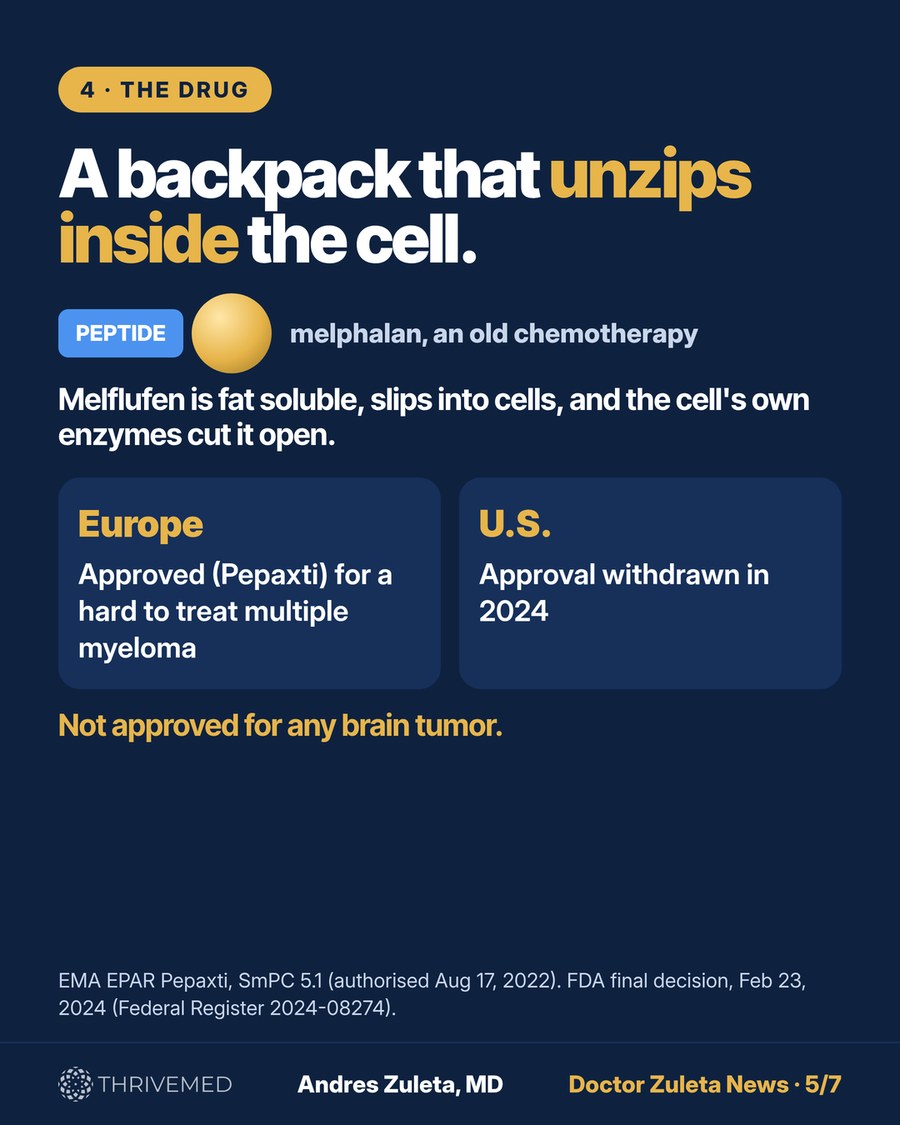
Where it stands today:
- Europe: approved as Pepaxti, with dexamethasone, for adults with advanced multiple myeloma after at least three earlier treatments. In September 2026, the European Medicines Agency's committee recommended extending it to earlier myeloma treatment; the European Commission has not decided yet.
- United States: it received accelerated approval in 2021, and the FDA withdrew that approval in 2024 after the confirmatory trial did not meet its main goal.
- Brain tumors: it is not approved anywhere for glioblastoma or any brain tumor. Like any chemotherapy, it has real side effects, most often low blood counts, nausea and infections.
How the study works
The study is called INSULA (OP-701), and it runs at one hospital, Oslo University Hospital in Norway. It is a Phase 1 study with about 10 patients planned.

Radiumhospitalet, Oslo University Hospital (photo: GAD, Wikimedia Commons, CC BY-SA 4.0).
It is a Window of Opportunity study. People whose glioblastoma has come back, and who already need another operation, get one 30 minute infusion of melflufen either a few hours or about a day before surgery. The tumor that has to come out anyway is then tested for the drug. It is a clever way to check delivery directly, without an extra procedure.
The first three patients all had the drug in their tumors, at levels the company says were in line with its animal and laboratory studies. So far it has been well tolerated, with no major drug related side effects and no unexpected surgical problems reported. The first patient has continued with monthly doses in an extension, five so far.
The honest limits
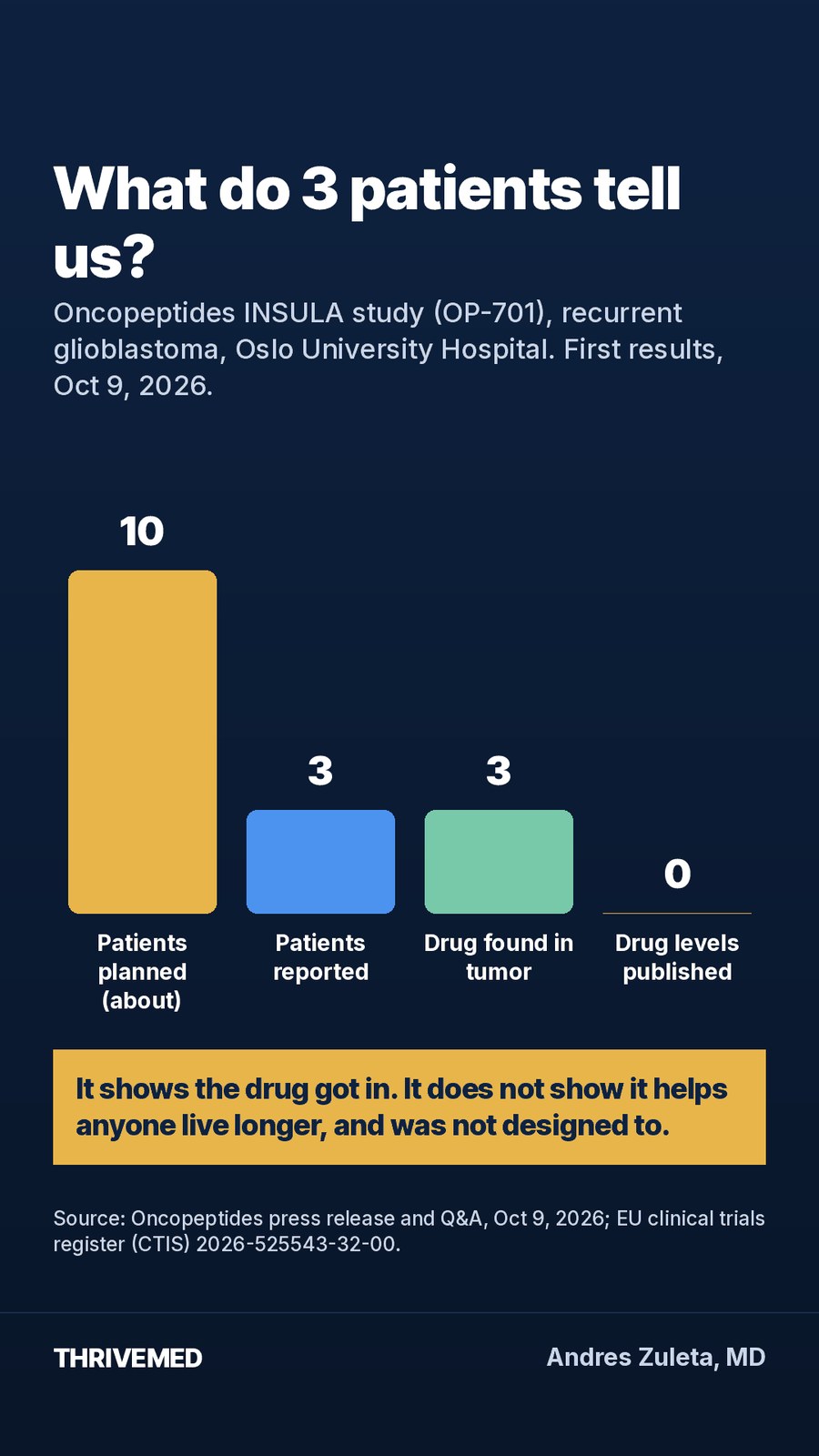
What three patients can tell us (Oncopeptides, Oct 9, 2026; EU trials register).
- Small and early: three patients, no comparison group, no published numbers, and this is a press release, not a peer reviewed paper.
- Delivered is not working: the company's own Q&A says the study looks at uptake and mechanism, not survival. It does not show the tumor shrank or that anyone lived longer.
- The barrier is patchy: in glioblastoma, it is often leaky in the core of the tumor but largely intact at the edges, where cancer cells spread. Tissue removed in surgery may overstate how well a drug reaches those edges.
- "Active compound" is not defined: we do not yet know whether it means melflufen itself, melphalan, or both, or the levels at each time point.
What it means for you
If you or someone you love is living with glioblastoma, this is not a new treatment option, and melflufen is not available for brain tumors. It is a sign that this delivery approach can get a drug where it needs to go, which is the first gate any brain cancer drug has to pass.
How to be proactive
- When you read a cancer headline, ask three questions: how many patients, what was measured, and was there a comparison group?
- If you are interested in clinical trials, ask your neuro-oncology team. They know which studies fit your situation.
- Watch for the full results and a peer reviewed paper, with real numbers.
For a deeper physician's read of the evidence, see my physician read on drzuleta.com.
Sources: Oncopeptides press release and investor Q&A, Oct 9, 2026; EU clinical trials register (CTIS) 2026-525543-32-00; Oslo University Hospital study page; Oncopeptides, Jun 17, 2026; EMA EPAR Pepaxti and CHMP opinion, Sep 17, 2026; FDA withdrawal, Federal Register 2024-08274; Stupp R et al., N Engl J Med 2005;352:987-96; Pardridge WM, NeuroRx 2005;2:3-14; Sarkaria JN et al., Neuro-Oncology 2018;20:184-191.
Educational only, not medical advice. Andres Zuleta, MD, ThriveMed.