
The Boy Who Got the First Insulin Shot: Leonard Thompson, 1922
By Andres Zuleta, MD, ThriveMed · Patient and family education
In December 1921, a 14-year-old boy named Leonard Thompson was admitted to Toronto General Hospital. He weighed 65 pounds. He had severe type 1 diabetes, and the only treatment medicine had was a strict diet of about 450 calories a day. Doctors were starving children to keep them alive a little longer. A few weeks later he became the first person ever treated with insulin, the first peptide medicine.
This is Episode 2 of my series The Peptide Breakthroughs. Below I walk you through the discovery, the results, the limits and the possibilities in plain language, plus two research-backed ways to help your own insulin work.
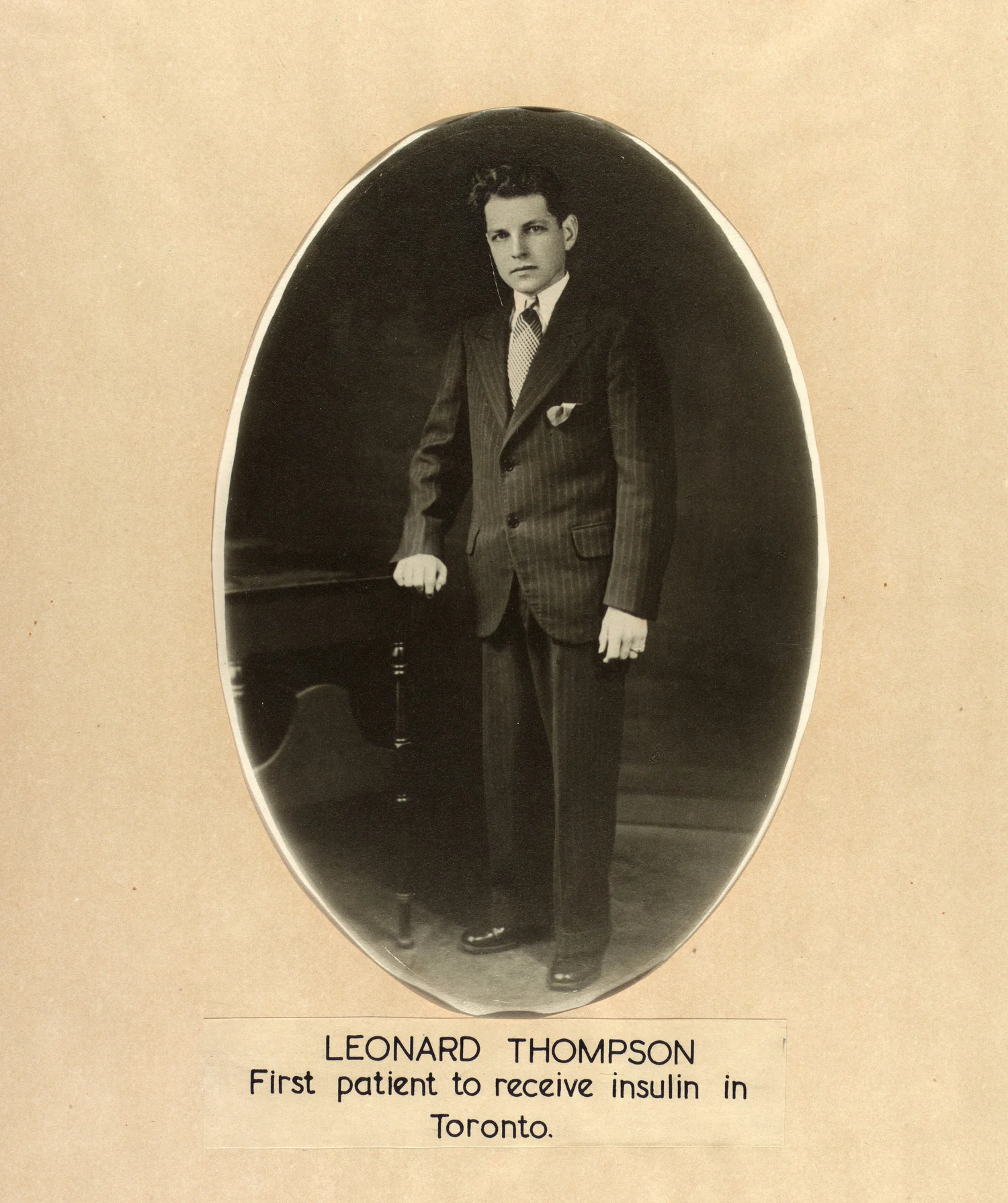
Leonard Thompson as a young man, c. 1930. Public domain; Thomas Fisher Rare Book Library, University of Toronto.
The short version
- The discovery: at the University of Toronto, Frederick Banting and Charles Best, working in John Macleod's lab, made a pancreas extract that lowered blood sugar in animals. The biochemist James Collip joined to purify it.
- The results: the first injection, on January 11, 1922, failed. Twelve days later, Collip's purer extract brought Leonard's blood sugar to normal in one day. He lived 13 more years. That August, Elizabeth Hughes, 14 and 45 pounds, arrived in Toronto and went on to live to 73.
- The limits: insulin was a treatment, not a cure. Early batches were impure, and low blood sugar is still the main risk of tight control.
- The possibilities: more than 80 peptide drugs have followed, and since 2022 a drug can delay type 1 diabetes in people at high risk.
Watch: the boy who got the first insulin shot
Short on time? Watch the 38-second version on YouTube Shorts.
1. The discovery
Insulin is made in small clusters of cells in the pancreas called islets. The challenge in 1921 was to capture that blood sugar signal before the pancreas's own digestive enzymes destroyed it. Banting and Best spent the summer of 1921 in Macleod's lab working on exactly that, and their extract lowered blood sugar in animal experiments.
On January 11, 1922, Leonard received the first injection. His blood sugar fell by about a quarter, but there was no clinical benefit, and impurities caused an abscess where the needle went in. The extract was too crude. So Collip worked on purifying it, and on January 23 Leonard started daily injections of the purer version.
2. The results
This time it worked. According to the University of Toronto archive, his blood sugar dropped to normal in one day. Before treatment he was losing well over 100 grams of sugar in his urine every day; on treatment days that fell to between 7.5 and 45 grams. The ketones, the acids that build up in uncontrolled diabetes, disappeared. The 1922 paper puts it simply: the boy "became brighter, more active, looked better and said he felt stronger." All seven patients in that first report improved.
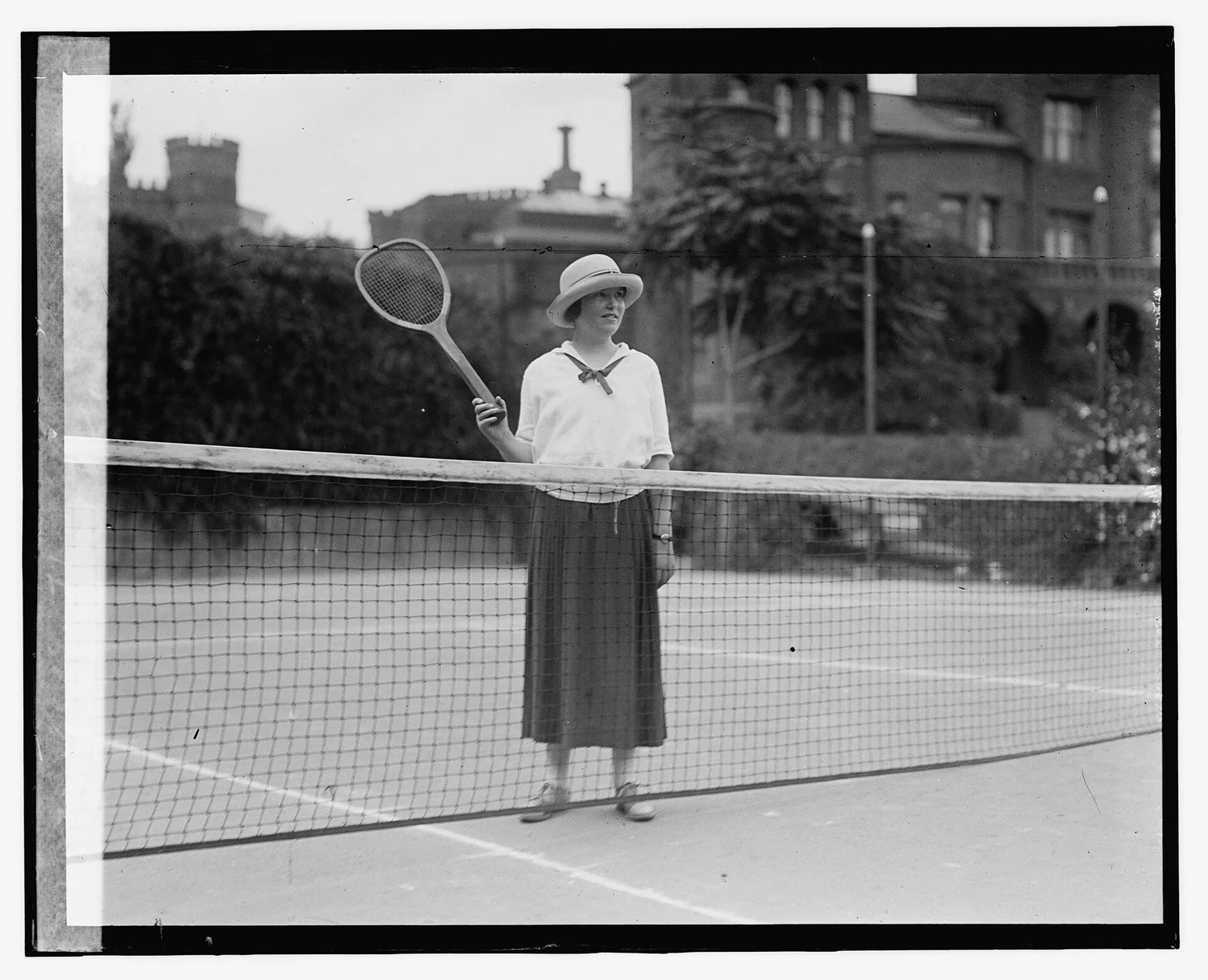
Elizabeth Hughes, c. 1924, two years after she started insulin. Public domain; Library of Congress, National Photo Company Collection.
In August 1922, a 14-year-old girl named Elizabeth Hughes arrived in Toronto. She had been on a starvation diet since 1919, and Banting's notes say she weighed 45 pounds and could barely walk. After five weeks on insulin she had gained ten pounds. She learned to give her own injections, went to college, and lived to 73. Leonard lived 13 more years with insulin. He died in 1935, at 27, of pneumonia and complications of diabetes.
In 1923, the Nobel Prize in Physiology or Medicine went to Banting and Macleod "for the discovery of insulin." Insulin itself is a peptide hormone: 51 amino acids in two chains.
3. The limits
Here is the honest part. Insulin was a treatment, not a cure: when Leonard's injections stopped for ten days that February, sugar came back in his urine. The first extracts were impure, and the authors warned that severe toxic reactions could occur. Every batch came from animal pancreas. The Nobel left out two people who made it work, Charles Best and James Collip. And insulin can push blood sugar too low; even today, low blood sugar is the main risk of tight control.
4. The possibilities
Look where it led. In the 1993 DCCT trial of 1,441 people with type 1 diabetes, tighter blood sugar control with insulin lowered the risk of new eye disease by 76 percent, with severe low blood sugar 2 to 3 times more common. More than 80 peptide drugs have reached the market since insulin. In 2022 the FDA approved the first drug shown to delay type 1 diabetes, by about two years in a trial of 76 people at high risk. And in a small 2025 study, lab-grown islet cells let 10 of 12 people stop insulin for a year, with immune suppression and serious risks still to solve.
What you can do: help your own insulin work
- Protect your sleep. In a study of nine healthy adults, one night of four hours of sleep made insulin work about 25 percent less well the next day.
- Break up long sitting. In a review of seven one-day trials, light walking breaks lowered after-meal glucose and insulin.
These are small, short studies. They support your care; they do not replace it.
Want a proactive plan for your own health? Join Thrive Nation.
Sources
- Banting, Best, Collip, Campbell and Fletcher. Can Med Assoc J 1922 (free full text): PMC1524425
- University of Toronto, insulin collection, early patients: collections.library.utoronto.ca
- Nobel Prize in Physiology or Medicine 1923: nobelprize.org
- DCCT Research Group, NEJM 1993: doi.org/10.1056/NEJM199309303291401
- Herold et al., NEJM 2019: doi.org/10.1056/NEJMoa1902226
- Reichman et al., NEJM 2025: doi.org/10.1056/NEJMoa2506549
- Muttenthaler et al., Nat Rev Drug Discov 2021: doi.org/10.1038/s41573-020-00135-8
- Donga et al., J Clin Endocrinol Metab 2010: doi.org/10.1210/jc.2009-2430
- Buffey et al., Sports Med 2022: doi.org/10.1007/s40279-022-01649-4
Educational only, not medical advice. Andres Zuleta, MD, ThriveMed.