
Your Brain Has a Nightly Cleaning System and Most People Are Shutting It Off
A landmark 2013 study revealed a hidden network inside your skull that removes the toxic proteins linked to Alzheimer’s and dementia. It only runs while you sleep.
I want you to picture something.
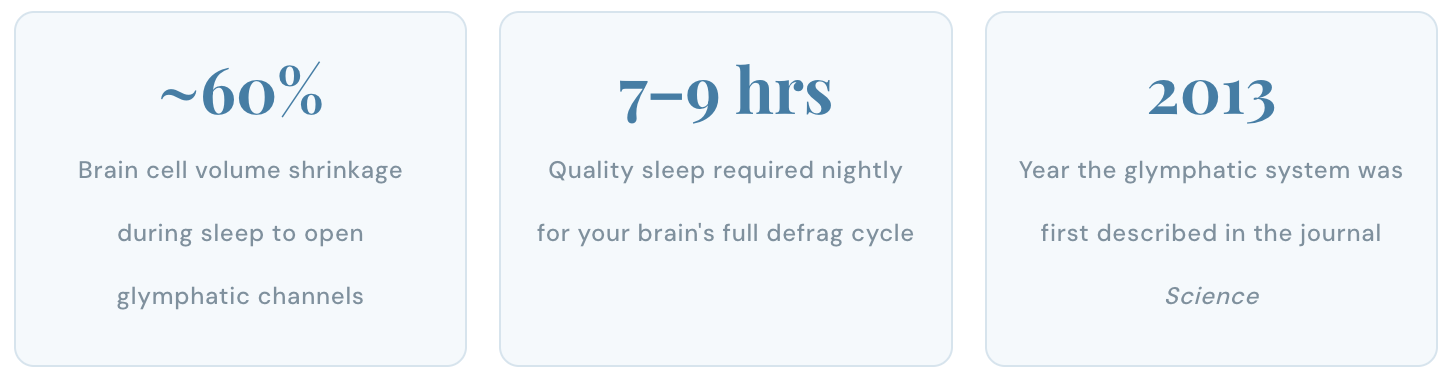
It’s 2 a.m. You’re deep in sleep. Your body is still, your breathing slow. And inside your skull, something extraordinary is happening that you’ve never been told about. The cells in your brain are physically shrinking, not all the way, but by roughly 60%, and the space they leave behind is flooding with fluid. That fluid moves in waves, driven by the pulse of your own arteries, washing through the corridors of your brain like a slow tide. It carries away toxic proteins. It clears the debris of everything you thought and felt and did that day. By morning, if everything went right, your brain wakes up cleaner than it was when you went to bed.
This isn’t a metaphor. This is real, documented physiology. And until about a decade ago, scientists had no idea it existed.
The Paradox That Puzzled Neuroscience for Decades
Here’s something that bothered neuroscientists for a long time, though most of us outside the field never heard about it.
Your brain is the most metabolically active organ in your body. It burns glucose constantly, fires across 100 billion neurons, and never fully stops, even when you’re asleep. That level of activity produces metabolic waste. Every organ in your body has a lymphatic system, a dedicated network of vessels that hauls away the byproducts of cellular work. Your liver has one. Your kidneys. Your muscles.
But the brain? Nothing. No lymphatic vessels. No obvious plumbing for waste removal. Scientists were genuinely stumped: how does this incredibly busy organ take out its own trash?
For decades, the working assumption was that the brain handled waste slowly, through diffusion, metabolites just kind of drifting out over time. It wasn’t a satisfying answer, but it was the best one available.
Then came 2013.
The Discovery That Changed Everything
In 2013, Dr. Maiken Nedergaard and her team at the University of Rochester published a landmark paper in the journal Science. What they found was so unexpected that they had to invent a new name for it.
They called it the glymphatic system, a brain-wide cleaning network that works by co-opting the cells lining the brain’s blood vessels (called glial cells, which is where the “g” in glymphatic comes from). Here’s what they documented:
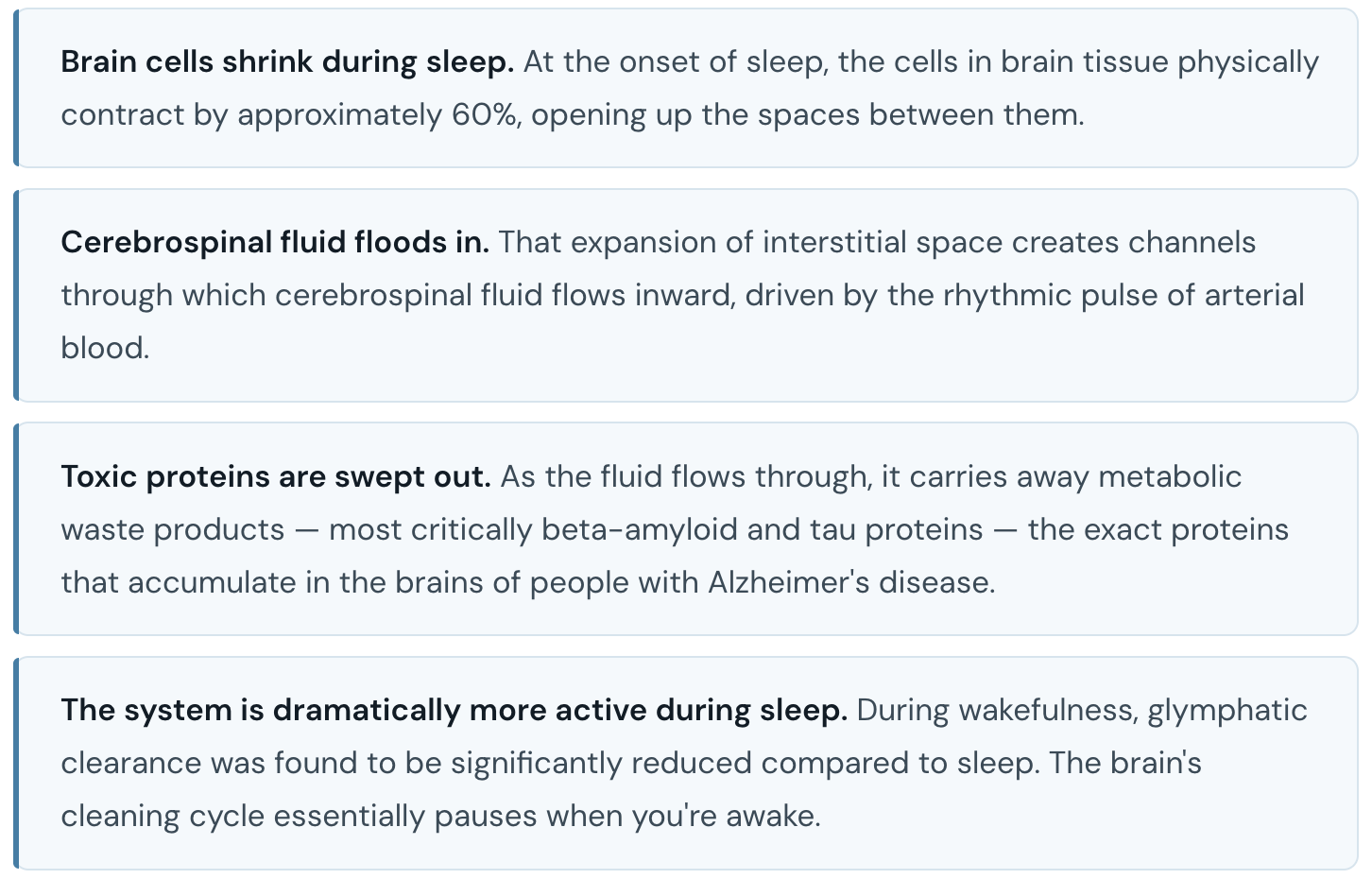
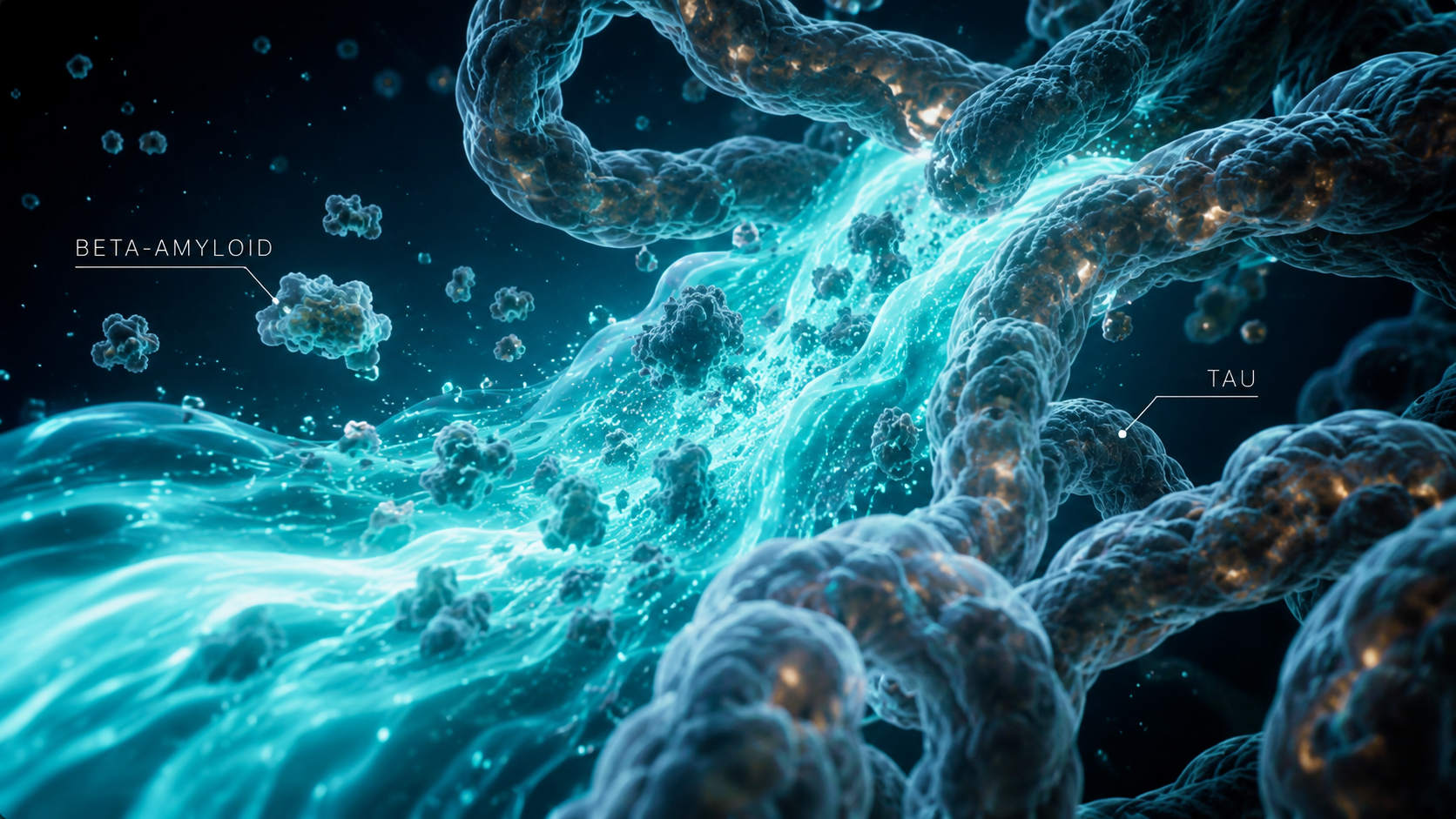
Beta-amyloid and tau — the proteins that accumulate in Alzheimer’s disease — are cleared via the glymphatic system during sleep.

What This Means for Alzheimer’s and Brain Aging
For decades, the search for an Alzheimer’s cure has focused on drugs, molecules that might dissolve beta-amyloid plaques, or slow the progression of tau tangles. Some of that research has produced results. But here’s what the glymphatic discovery forces us to confront: we may have been neglecting the most powerful anti-Alzheimer’s tool in human biology.
Every night you sleep well, your brain runs a cleanup pass. Every night you don’t, it doesn’t.
Think of it this way: staying awake, or sleeping poorly, is like never running your dishwasher. Every day, residue accumulates. Over weeks, months, years, decades, the buildup becomes structural. The damage compounds. And the cruel irony is that it happens silently. You don’t feel your glymphatic system failing. You just wake up a little more tired than usual, chalk it up to aging, and keep going.

Five to six hours of sleep per night is the norm for millions of people. That’s not a personal failing. It’s a cultural one. We live in a world that treats exhaustion as a badge of productivity and sleep as something you do after you’ve finished being useful. What the glymphatic research makes clear is that this attitude has a biological cost, and it’s measured in protein accumulation, year by year, decade by decade.
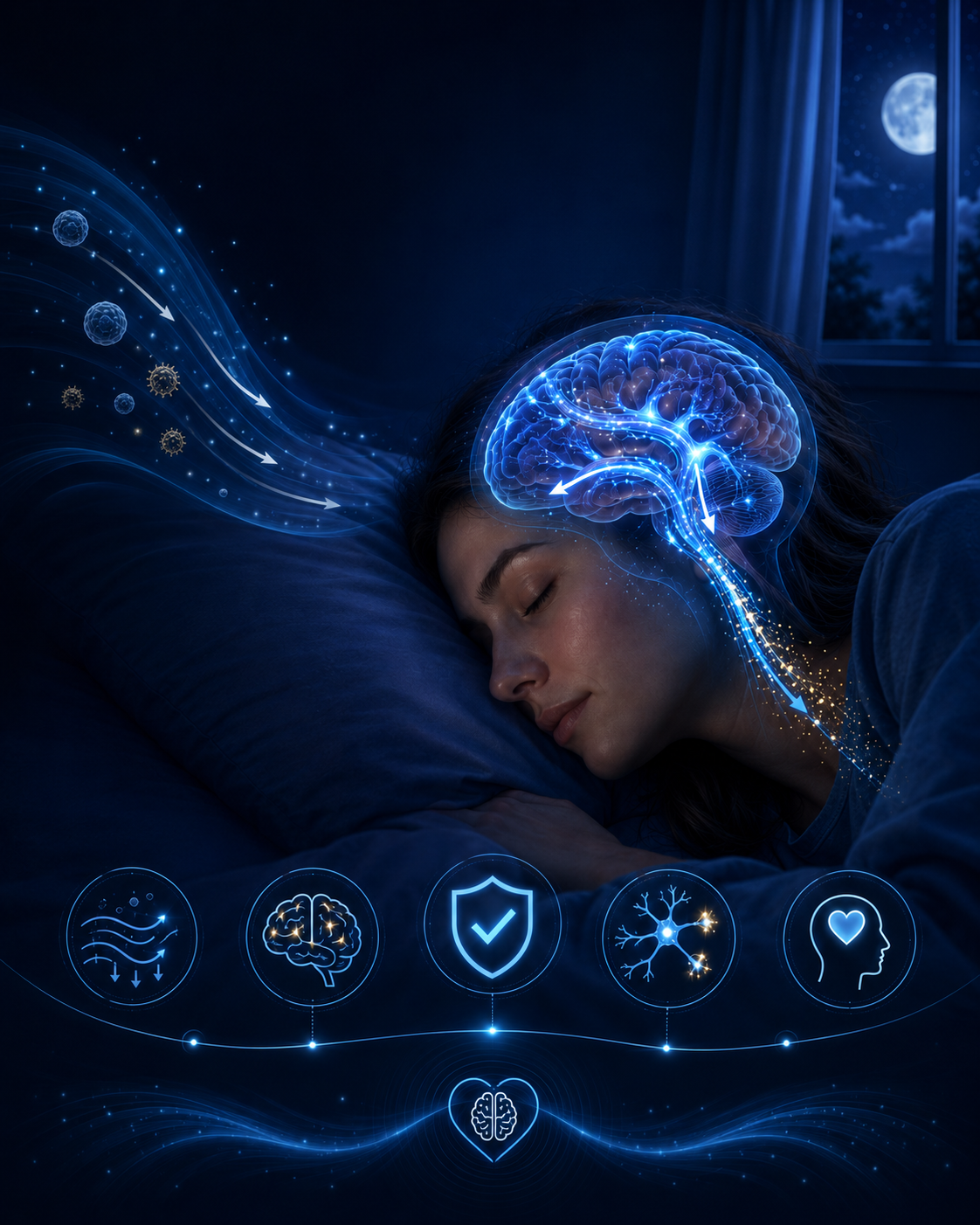
Seven to nine hours of quality sleep is not a lifestyle preference. It’s your brain’s required maintenance window — the time the glymphatic system needs to do its work.
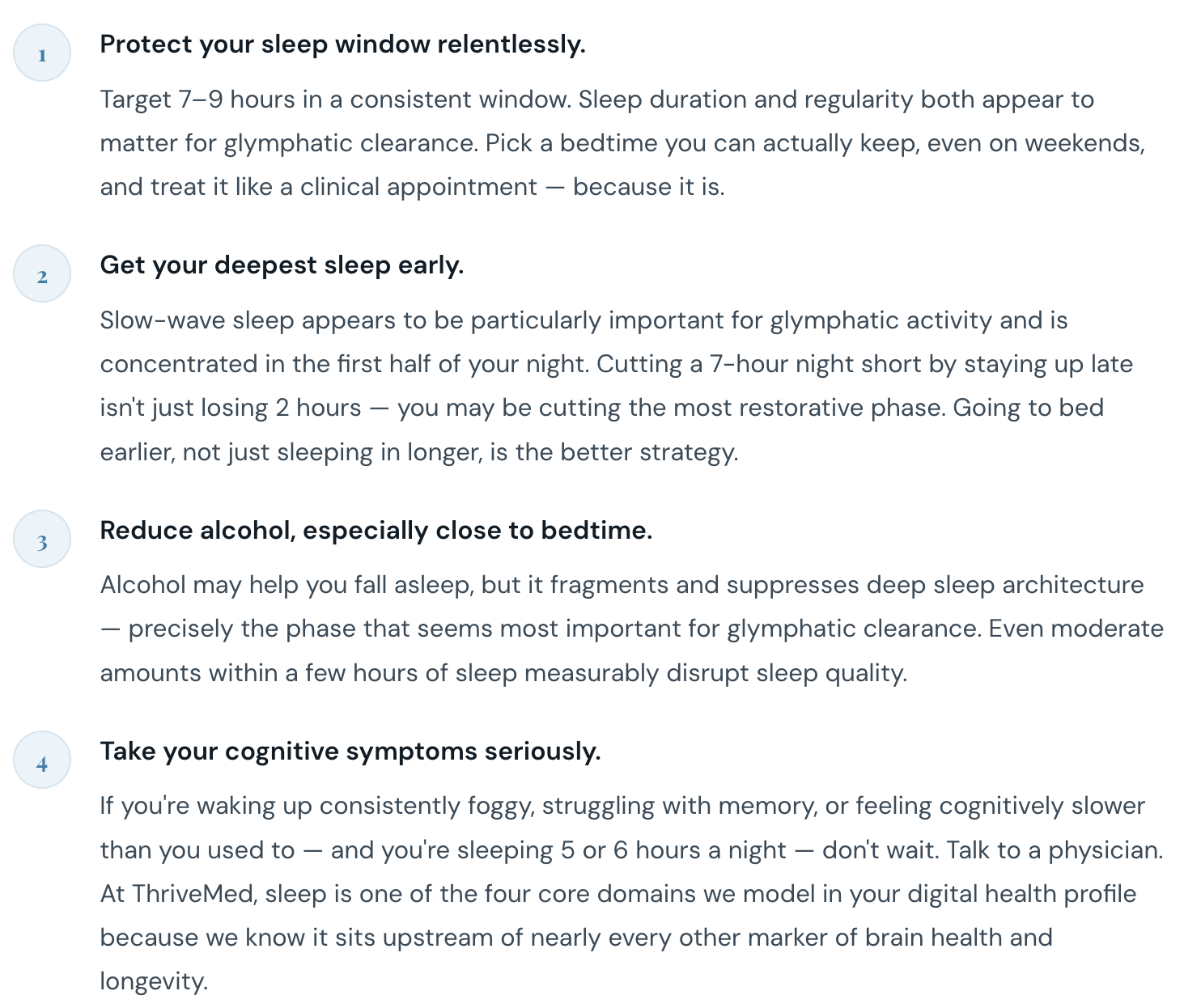
4 Practical Things You Can Do Starting Now
I want to be honest with you: we don’t yet have a drug that mimics the glymphatic system. We can’t bottle what sleep does. But we do know, from this research and from the broader sleep science literature, that certain behaviors protect and support glymphatic function.
The Bottom Line
The glymphatic system is one of the most important discoveries in modern neuroscience. It reframes sleep from a passive state into an active, high-priority biological maintenance process. It gives us a mechanistic explanation for why chronic sleep deprivation is linked to dementia risk. And it points to something genuinely hopeful: the most powerful tool you have against Alzheimer’s isn’t a prescription. It’s already built into your biology. It activates every night, at no cost, with no side effects.
The science is clear. The system is ready.
The only question is whether you’ll use it.
Stay well.
— Dr. Andres Zuleta, MD
Family Medicine Physician | Founder, ThriveMed
For more deep-dives like this one on brain health, longevity, and what the science is actually saying, follow Dr. Zuleta on Medium.
Key References
Xie L, Kang H, Xu Q, et al. Sleep drives metabolite clearance from the adult brain.Science.2013;342(6156):373–377. Read →
Nedergaard M, Goldman SA. Glymphatic failure as a final common pathway to dementia.Science.2020;370(6512):50–56. Read →
Hablitz LM, Nedergaard M. The glymphatic system: a novel component of fundamental neurobiology.J Neurosci.2021;41(37):7698–7711. Read →
This article is for educational purposes and is not a substitute for personalized medical advice. If you have specific concerns, please consult a qualified healthcare provider.