
The Pill That Copies a Peptide: How Orforglipron Works
By Andres Zuleta, MD, ThriveMed · Patient and family education
Last time, we watched semaglutide learn to survive the stomach. It needed a helper molecule, an empty stomach, and even then less than one percent got in. Today, scientists try a completely different answer.
This is Episode 16 of my series, The Peptide Breakthroughs. Today's breakthrough is a medicine that copies a peptide without being one.
The short version
- 2020: researchers publish a detailed picture of a small molecule, now called orforglipron, sitting inside the GLP-1 receptor.
- 2023: in a phase 2 trial, adults with obesity lose up to about 15% of their body weight in 36 weeks, compared with about 2% on placebo.
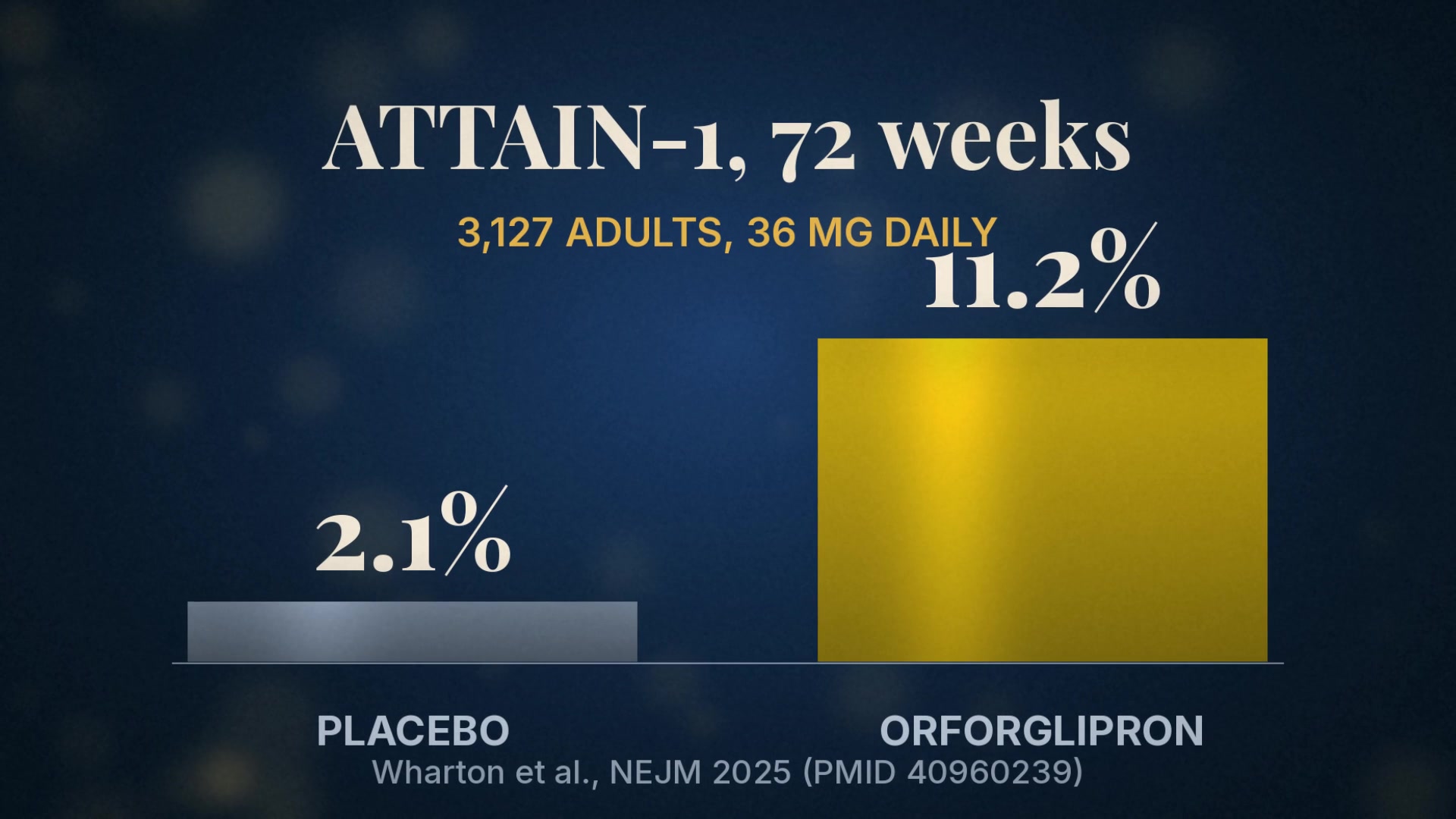
- 2025: in ATTAIN-1, 3,127 adults take a daily pill for 72 weeks. On the top dose they lose about 11% on average, compared with about 2% on placebo.
- April 1, 2026: the FDA approves orforglipron for weight.
Watch the 5-minute story.
A key and a lock
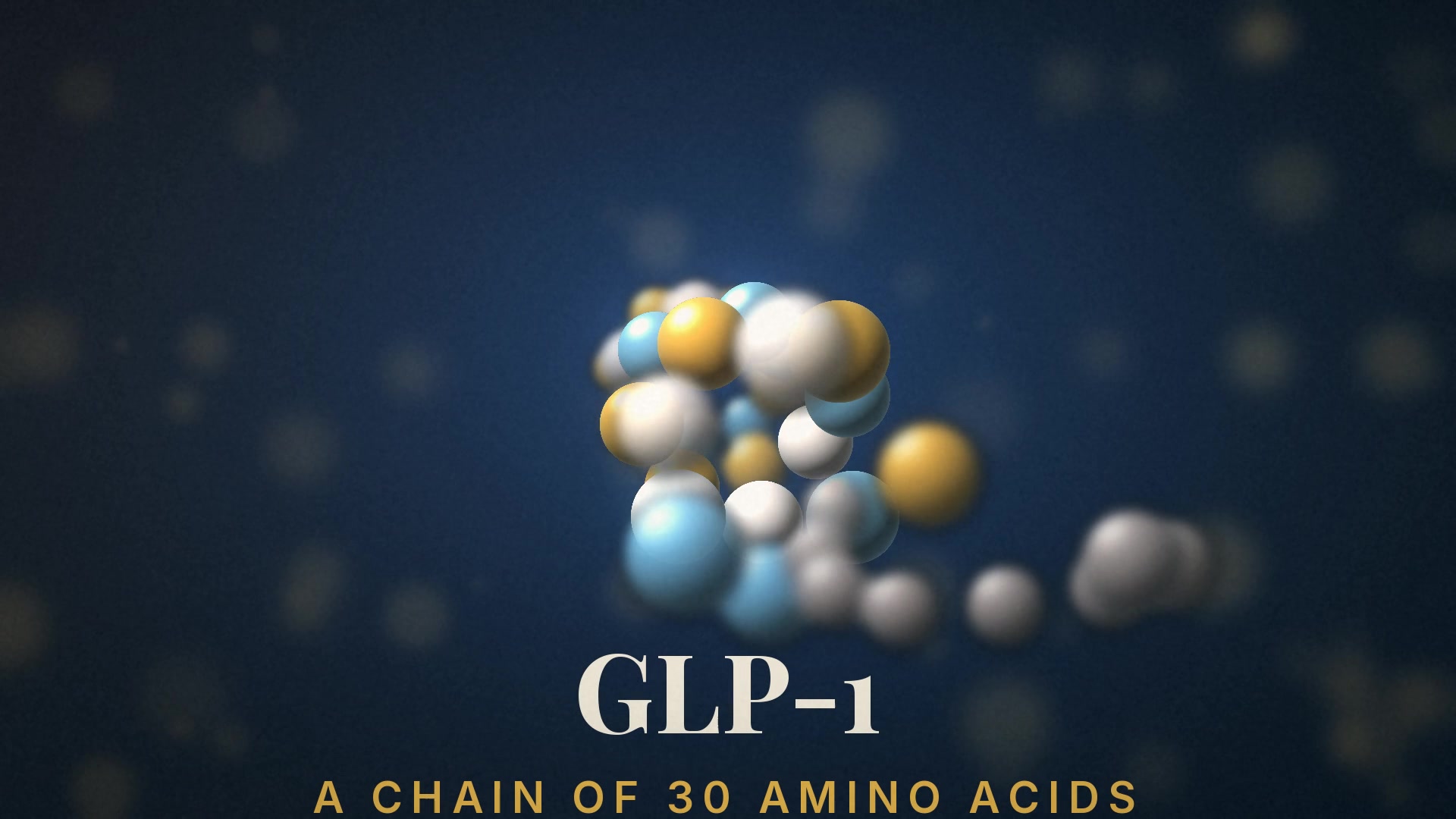
GLP-1 is a peptide hormone, a chain of 30 amino acids. It works by fitting into a receptor on your cells, like a key in a lock. For decades, every GLP-1 medicine was a modified version of that same chain, which is why they were shots, or a pill that needed special protection.
A much smaller key
What if you did not need the whole key? Chemists had tried for years, and it was hard. This receptor is large, and the natural hormone grips it in many places at once. Then a team at Chugai Pharmaceutical in Japan found a small molecule that worked, and they developed it with Eli Lilly.
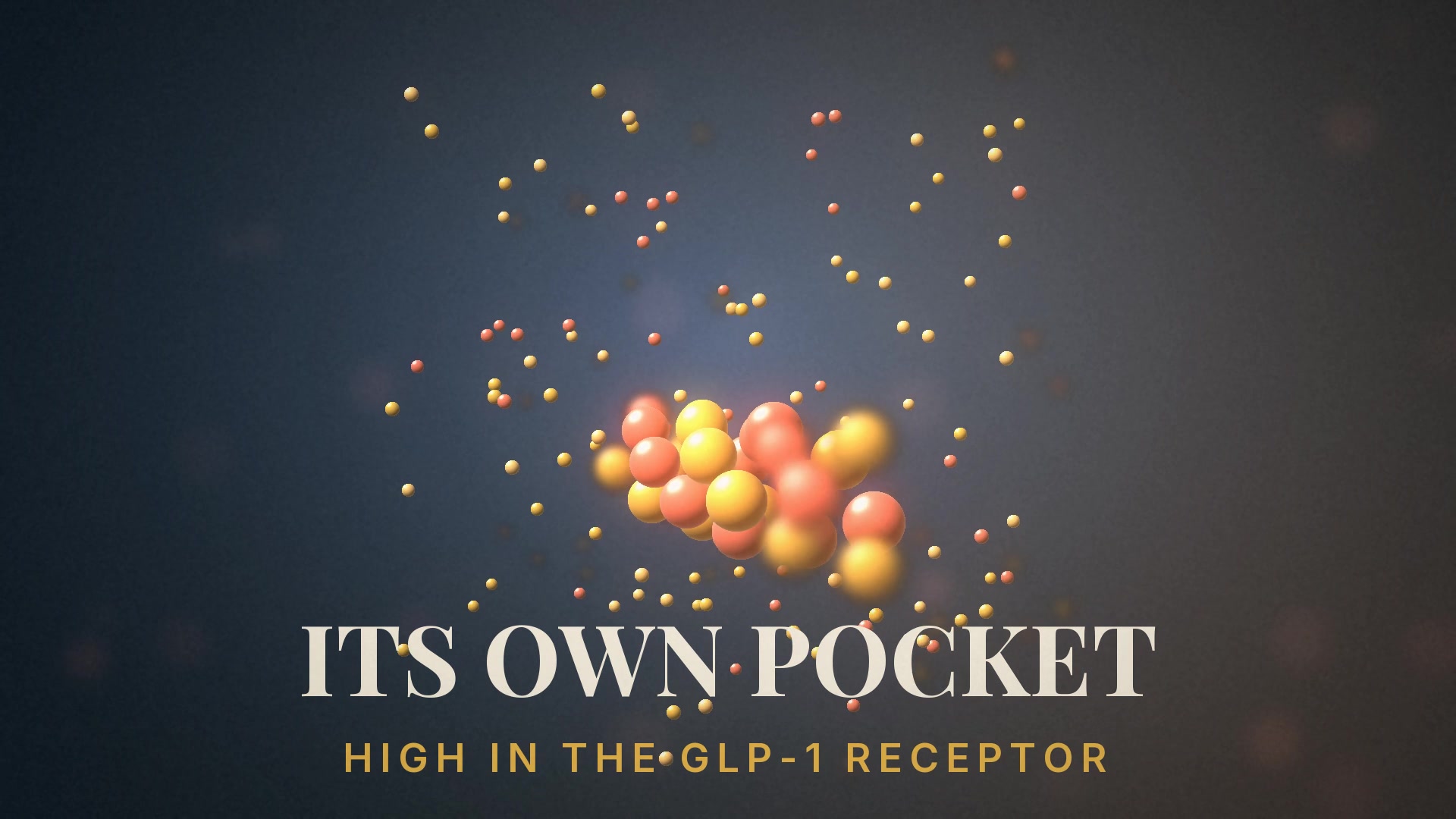
In 2020, researchers published a detailed picture of it inside the receptor. It does not copy the hormone piece by piece. It slips into its own pocket, high in the receptor, and changes its shape enough to send the signal. Decades of peptide science mapped this receptor so well that chemists could design something new to fit it.
Why there is no empty stomach rule
Because orforglipron is small and sturdy, your stomach does not digest it the way it digests a peptide. It is absorbed like an ordinary pill, so it can be taken any time of day, with or without food.
What the trials found
- Phase 2 (2023): up to about 15% weight loss at 36 weeks, compared with about 2% on placebo.
- ATTAIN-1 (2025): 3,127 adults with obesity, 72 weeks. About 11% weight loss on the top dose, compared with about 2% on placebo. About 1 in 5 lost 20% or more.
- ACHIEVE-1 (2025): lower blood sugar in early type 2 diabetes.
- ACHIEVE-3 (2026): in type 2 diabetes, it lowered average blood sugar more than the semaglutide pill.
The honest part
- In these trials, average weight loss was lower than with the strongest weekly shots.
- Stomach side effects like nausea, diarrhea and vomiting were common, mostly mild to moderate and mostly while the dose was going up.
- In ACHIEVE-3, about 1 in 10 people stopped orforglipron because of side effects, compared with about 1 in 20 on the semaglutide pill, and heart rate went up by a few beats per minute.
- These trials were funded by the maker.
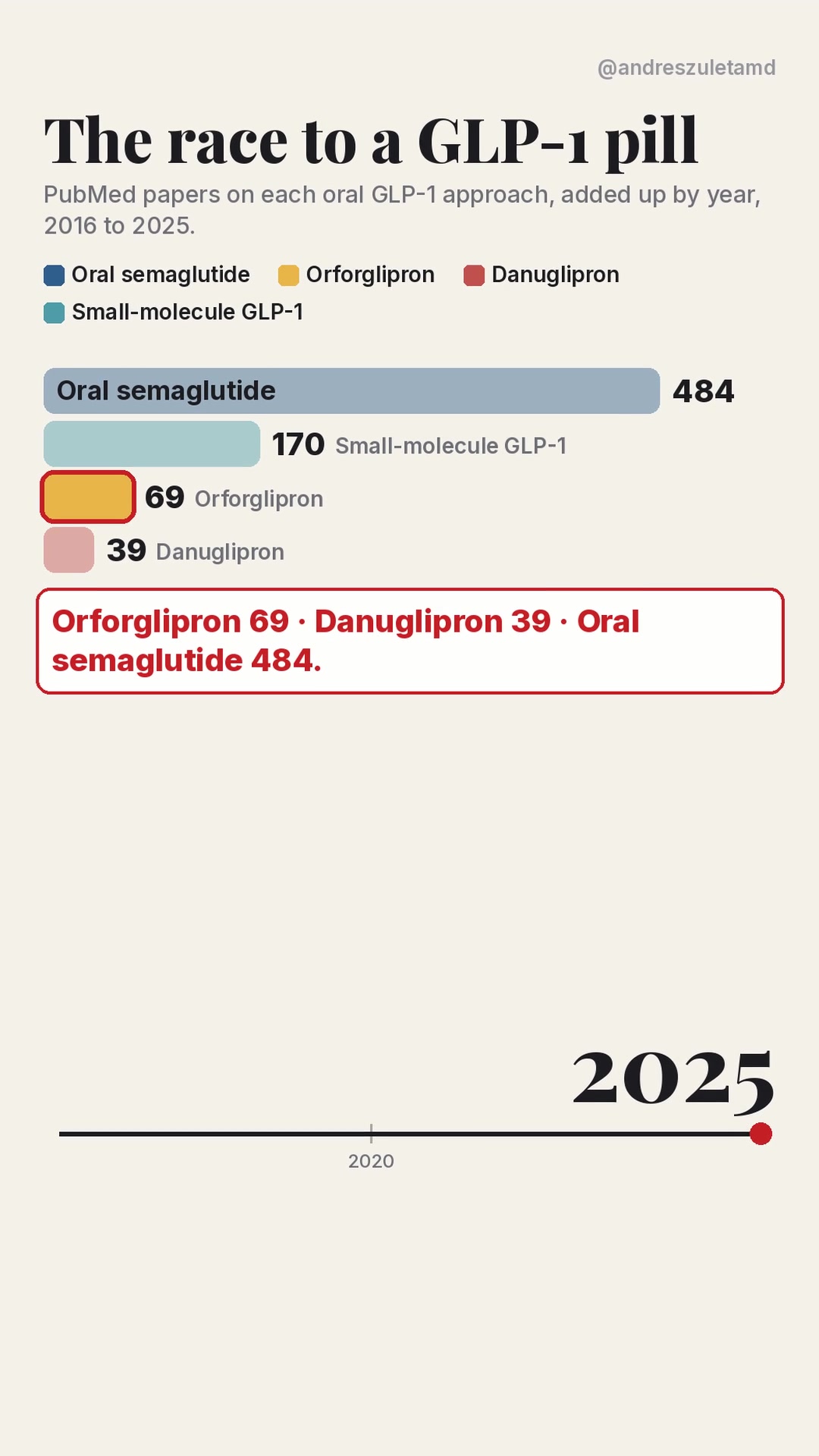
- Small molecules carry their own risks. In 2025, another company stopped a similar pill, danuglipron, after a possible liver injury in one volunteer. Being a pill does not make a medicine simple.
Two things you can use
- A peptide and a small molecule can switch on the same receptor, but they are different medicines, with different side effects and different evidence.
- The most convenient option is not always the strongest one, and the right choice is a conversation with your doctor.
For a more technical take, read my physician's version: Orforglipron: a physician's read
Stay curious, look closely, and keep learning how your body works. Be proactive.
Sources
- Kawai T et al. Structural basis for GLP-1 receptor activation by LY3502970, an orally active nonpeptide agonist. PNAS 2020 (PMID 33177239).
- Wharton S et al. Daily oral GLP-1 receptor agonist orforglipron for adults with obesity. NEJM 2023 (PMID 37351564).
- Wharton S et al. Orforglipron, an oral small-molecule GLP-1 receptor agonist for obesity treatment (ATTAIN-1). NEJM 2025 (PMID 40960239).
- Rosenstock J et al. Orforglipron, an oral small-molecule GLP-1 receptor agonist, in early type 2 diabetes (ACHIEVE-1). NEJM 2025 (PMID 40544435).
- Rosenstock J et al. Once-daily oral orforglipron compared with oral semaglutide in type 2 diabetes (ACHIEVE-3). Lancet 2026 (PMID 41765029).
- US FDA. Press release and approval letter, Foundayo (orforglipron) tablets, NDA 220934, April 1, 2026.
- Pfizer. Update on oral GLP-1 receptor agonist danuglipron, April 14, 2025.
Educational only, not medical advice. Andres Zuleta, MD, ThriveMed.