
The Peptide That Survived the Stomach: How Semaglutide Became a Pill
By Andres Zuleta, MD, ThriveMed · Patient and family education
Last time, we met insulin's quiet partner, amylin. Every medicine in this story so far has had one thing in common: it came as a shot. Today, that changes.
This is Episode 15 of my 15-part series, The Peptide Breakthroughs. Today's breakthrough is not a new hormone. It is a new route: a peptide that finally survived the stomach.
The short version
- 1922: the first insulin shot. From then on, peptide medicines are injected, because the stomach digests them.
- 2018: Stephen Buckley and colleagues show how a small helper molecule called SNAC lets semaglutide be absorbed in the stomach.
- 2019: oral semaglutide becomes the first GLP-1 pill, approved for type 2 diabetes.
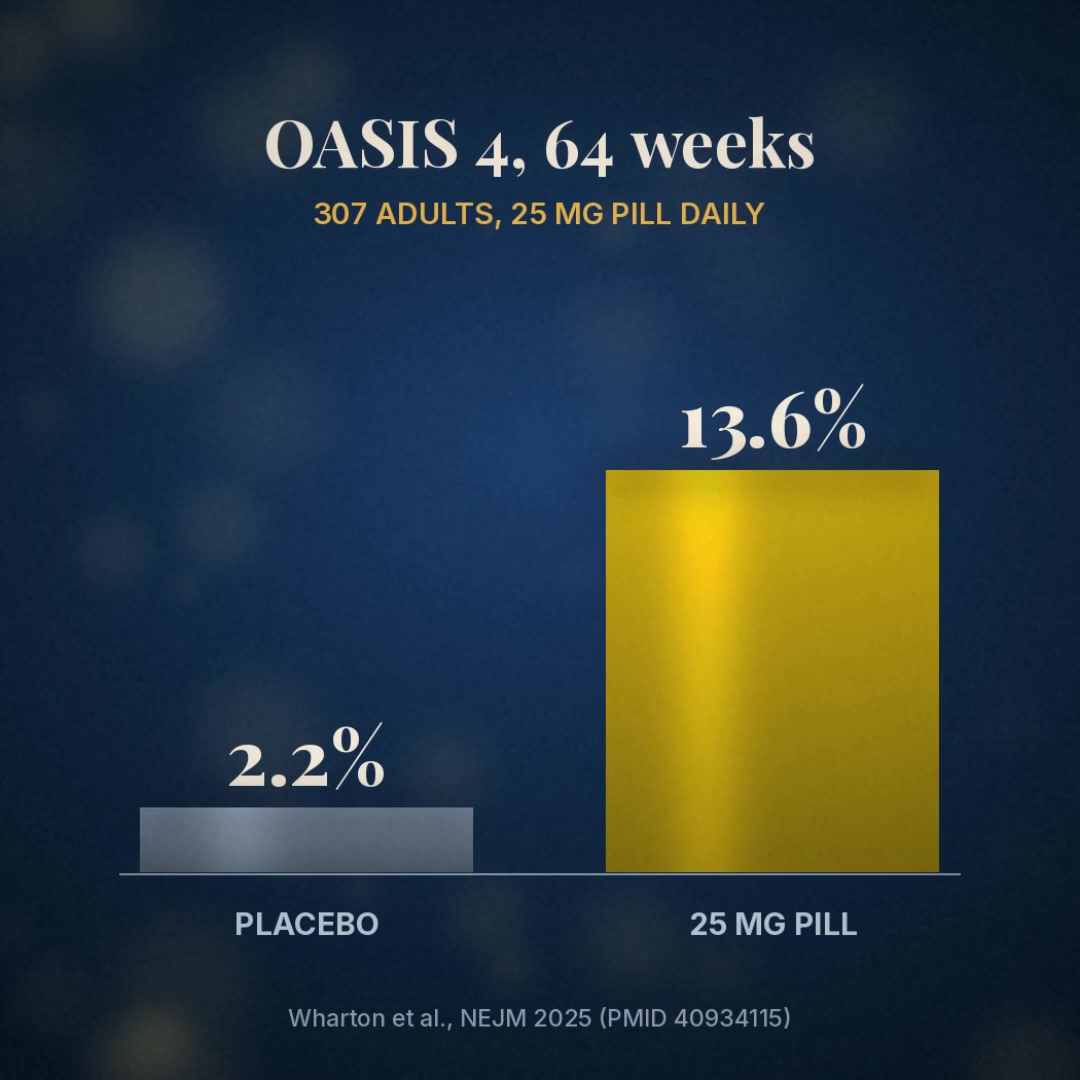
- 2025: in the OASIS 4 trial, a daily 25 mg pill leads to about 14% average weight loss at 64 weeks, compared with about 2% on placebo. In December 2025 it is approved in the United States for weight.
Watch the 5-minute story.
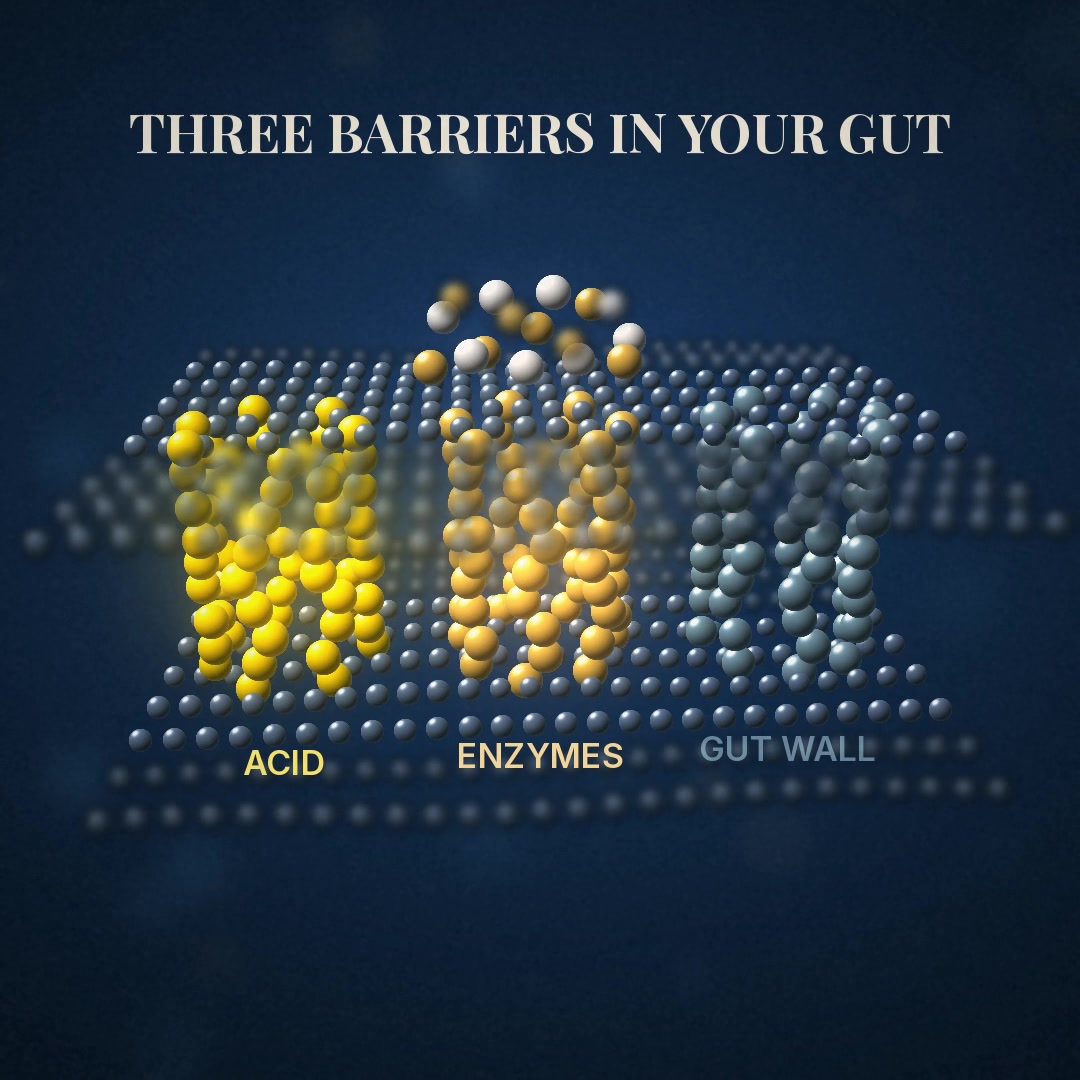
Why peptides were always shots
A peptide is a short chain of amino acids, the same building blocks as the protein in your food. Your stomach is built to break protein apart. Acid unfolds it, enzymes cut it, and anything that survives is too big to slip through the gut wall. So for a hundred years, a peptide pill was mostly a dream.
A tiny shield in the tablet
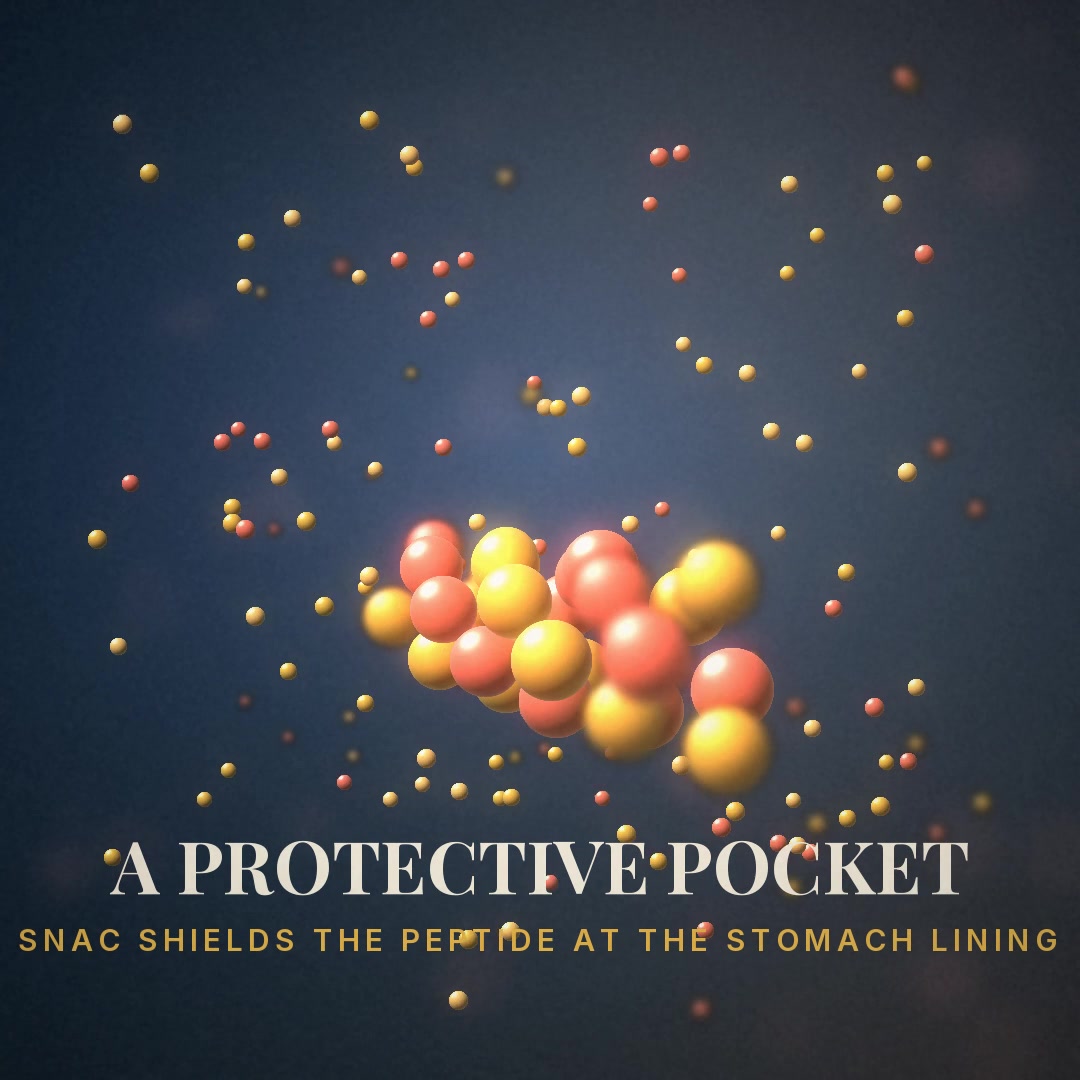
Scientists at Novo Nordisk wanted to change that for semaglutide, the weekly GLP-1 medicine we met earlier in this series. Their answer was a small helper molecule called SNAC, packed into the tablet right next to the semaglutide. In 2018, a team led by Stephen Buckley showed how it works:
- When the tablet dissolves, SNAC makes a tiny protective pocket around it.
- It lowers the acid right there and shields the peptide from enzymes.
- It helps the peptide pass through the cells of the stomach lining.
The surprise was where this happens: in the stomach itself, not the intestine, close to the surface of the tablet.
Less than one percent, and why the routine matters
Even so, less than one percent of the dose gets into the blood. That is why the pill dose is much larger than the shot dose, and why the routine matters: you take it on an empty stomach with a small sip of water, then wait at least 30 minutes before eating, drinking or taking other medicines.
From diabetes to weight
- PIONEER (2019): after a series of trials, oral semaglutide became the first GLP-1 pill, approved for type 2 diabetes.
- OASIS 1 (2023): 667 adults with obesity took 50 mg a day for 68 weeks and lost about 15% of their body weight on average, compared with about 2% on placebo.
- OASIS 4 (2025): a 25 mg daily pill led to about 14% weight loss over 64 weeks, compared with about 2% on placebo. That is close to what we saw with the weekly shot.
Heart news
The SOUL trial followed 9,650 adults with type 2 diabetes and heart or kidney disease. Fewer people on the pill had a heart attack, a stroke or died from heart disease: about 12%, compared with about 14% on placebo. In December 2025, the 25 mg pill was approved in the United States for weight.
The honest part
- A pill is not gentler. In OASIS 4, about 3 in 4 people on the pill had stomach side effects like nausea, diarrhea or vomiting, mostly mild to moderate and mostly early on. The dose is stepped up slowly for that reason.
- A daily pill asks for a daily routine, and skipping the empty stomach rule can mean very little medicine gets in.
- These trials were funded by the maker.
- Drops, sprays or tablets sold online as oral semaglutide are not the medicine that was studied. Without that helper molecule and that routine, the peptide is simply digested.
Two things you can use
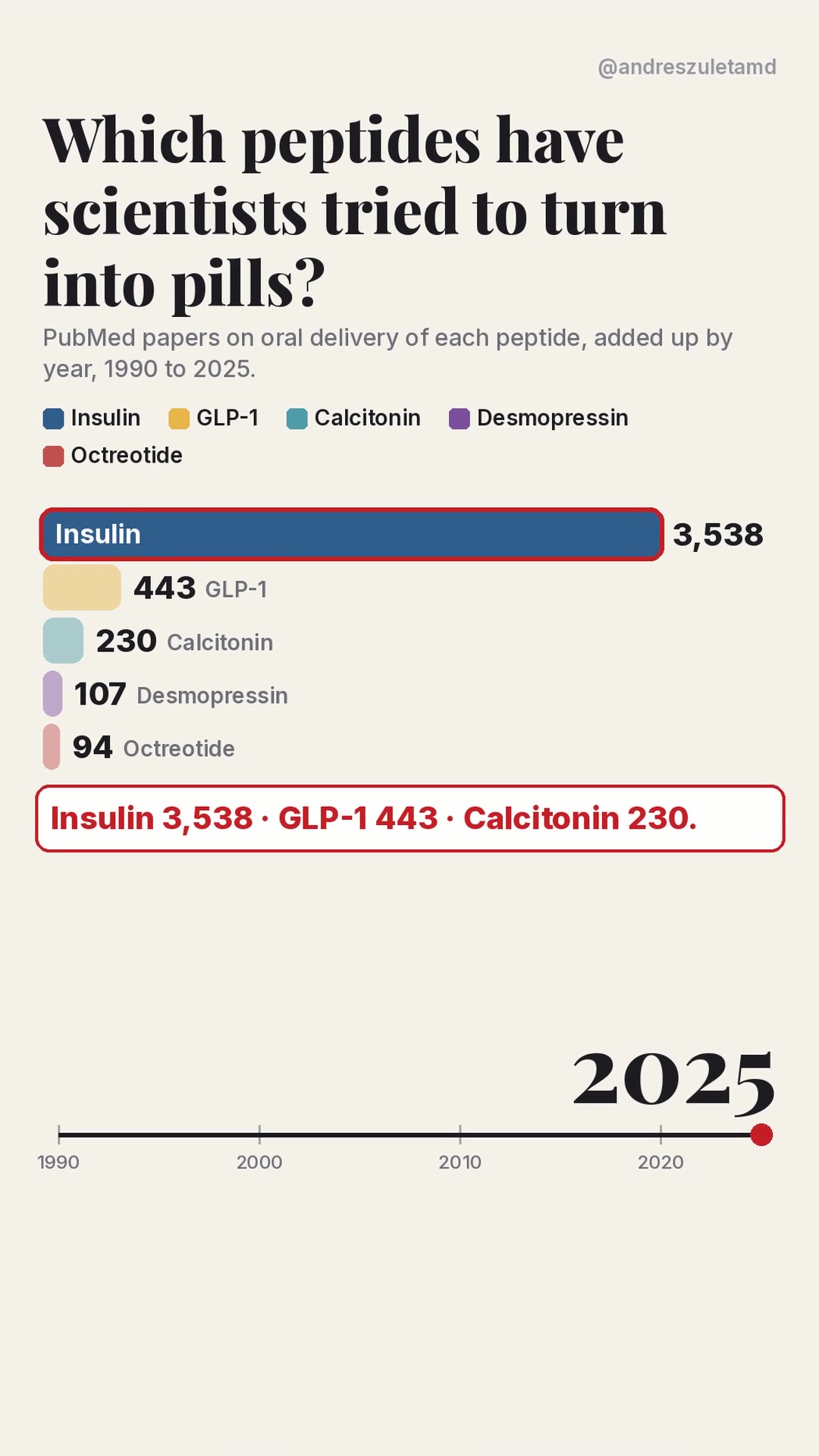
- Your stomach treats a peptide like food, so any peptide sold as a pill should make you ask one question: how does it survive digestion?
- A pill and a shot are different tools, and the right one is a conversation with your doctor.
For a more technical take, read my physician's version: Oral semaglutide and SNAC: a physician's read
Thank you for following all 15 episodes. Stay curious, look closely, and keep learning how your body works. Be proactive.
Sources
- Buckley ST et al. Transcellular stomach absorption of a derivatized glucagon-like peptide-1 receptor agonist. Sci Transl Med 2018 (PMID 30429357).
- Aroda VR et al. PIONEER 1: oral semaglutide monotherapy in type 2 diabetes. Diabetes Care 2019 (PMID 31186300).
- Knop FK et al. Oral semaglutide 50 mg taken once per day in adults with overweight or obesity (OASIS 1). Lancet 2023 (PMID 37385278).
- Wharton S et al. Oral semaglutide at a dose of 25 mg in adults with overweight or obesity (OASIS 4). NEJM 2025 (PMID 40934115).
- McGuire DK et al. Oral semaglutide and cardiovascular outcomes in high-risk type 2 diabetes (SOUL). NEJM 2025 (PMID 40162642).
- US FDA. Approval letter, Wegovy (semaglutide) tablets, NDA 218316, December 22, 2025.
Educational only, not medical advice. Andres Zuleta, MD, ThriveMed.