
The Peptide That Learned to Stay: How MariTide Works
By Andres Zuleta, MD, ThriveMed · Patient and family education
Last time, we met a pill that copies a peptide without being one, taken every single day. Today, scientists go the other way: a real peptide, built to last a whole month.
This is Episode 17 of my series, The Peptide Breakthroughs. Today's breakthrough is a peptide that rides on an antibody.
The short version
- The problem: natural GLP-1 lasts only a couple of minutes in your blood. Earlier medicines stretched that to a day, then a week.
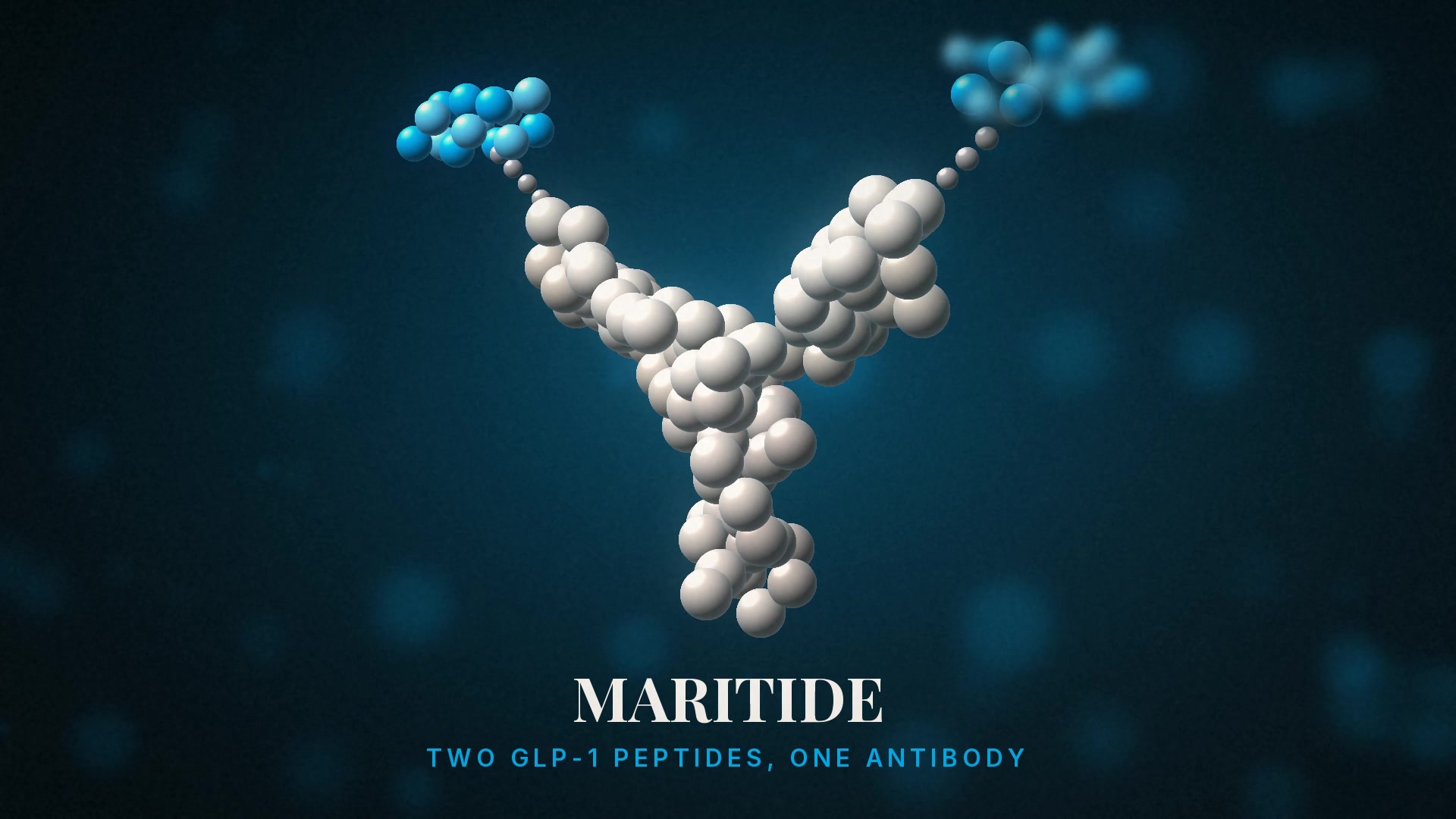
- The idea: scientists at Amgen attached two GLP-1 peptides to an antibody, a large protein your body keeps for weeks. It is called maridebart cafraglutide, or MariTide.
- 2024: in an early trial, weight loss held for up to 150 days after the last dose.
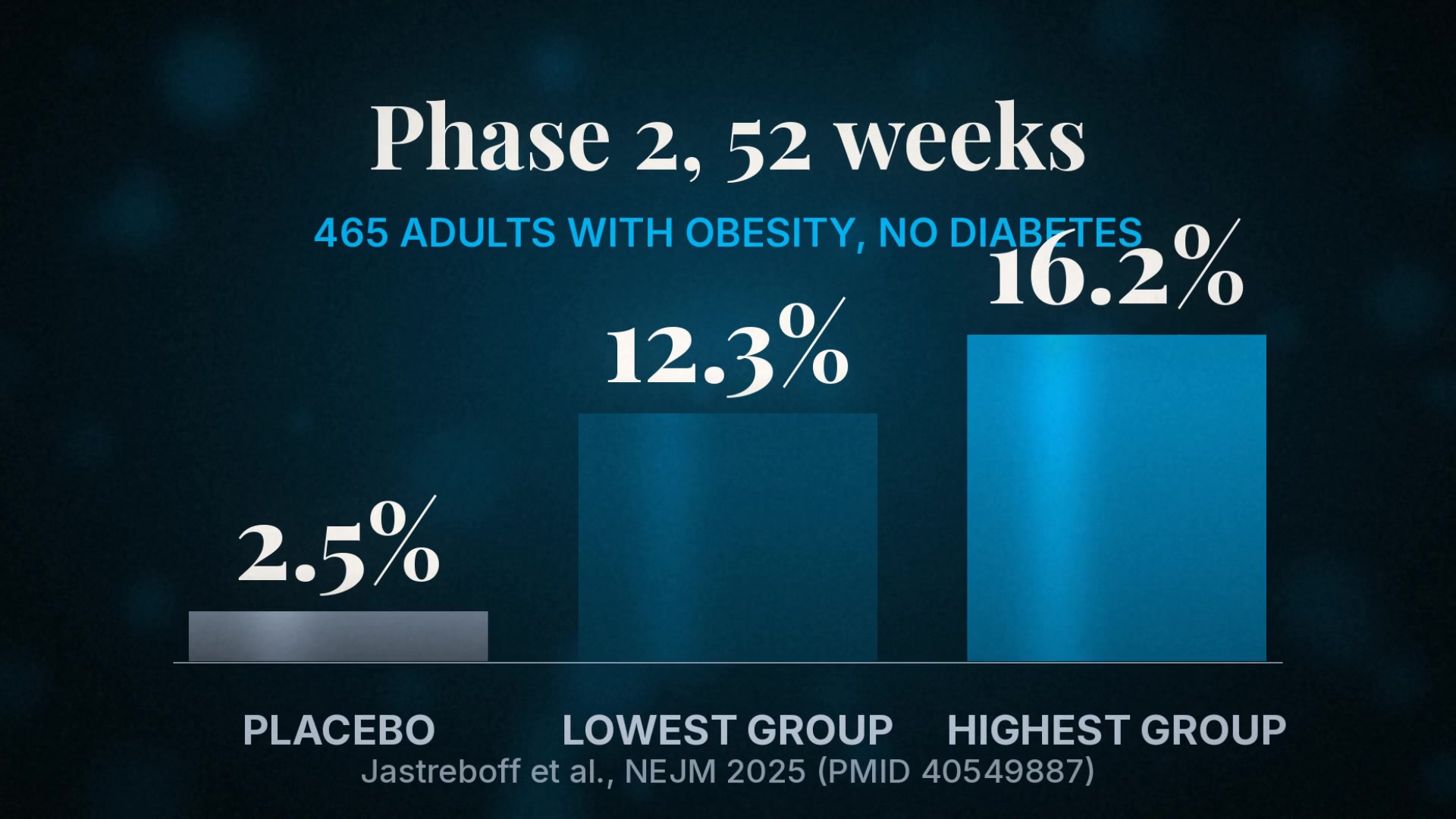
- 2025: in a phase 2 trial, people without diabetes lost about 12 to 16% of their body weight in 52 weeks, with one shot every 4 weeks.
- Today: it is not approved. The large phase 3 trials are still running.
Watch the 5-minute story.
Why peptides do not last
Peptides are small, so your body clears them fast. Enzymes cut them, and your kidneys filter them out. Earlier in this series, chemists stretched GLP-1 medicines to a day, and then to a week, by letting the peptide hitch a ride on albumin, a protein in your blood.

A much bigger vehicle
Antibodies are large proteins your immune system makes, and your body keeps them around for weeks. So a team at Amgen built a hybrid. They took a fully human antibody and attached two GLP-1 peptides to it with short linkers.
One receptor, two answers
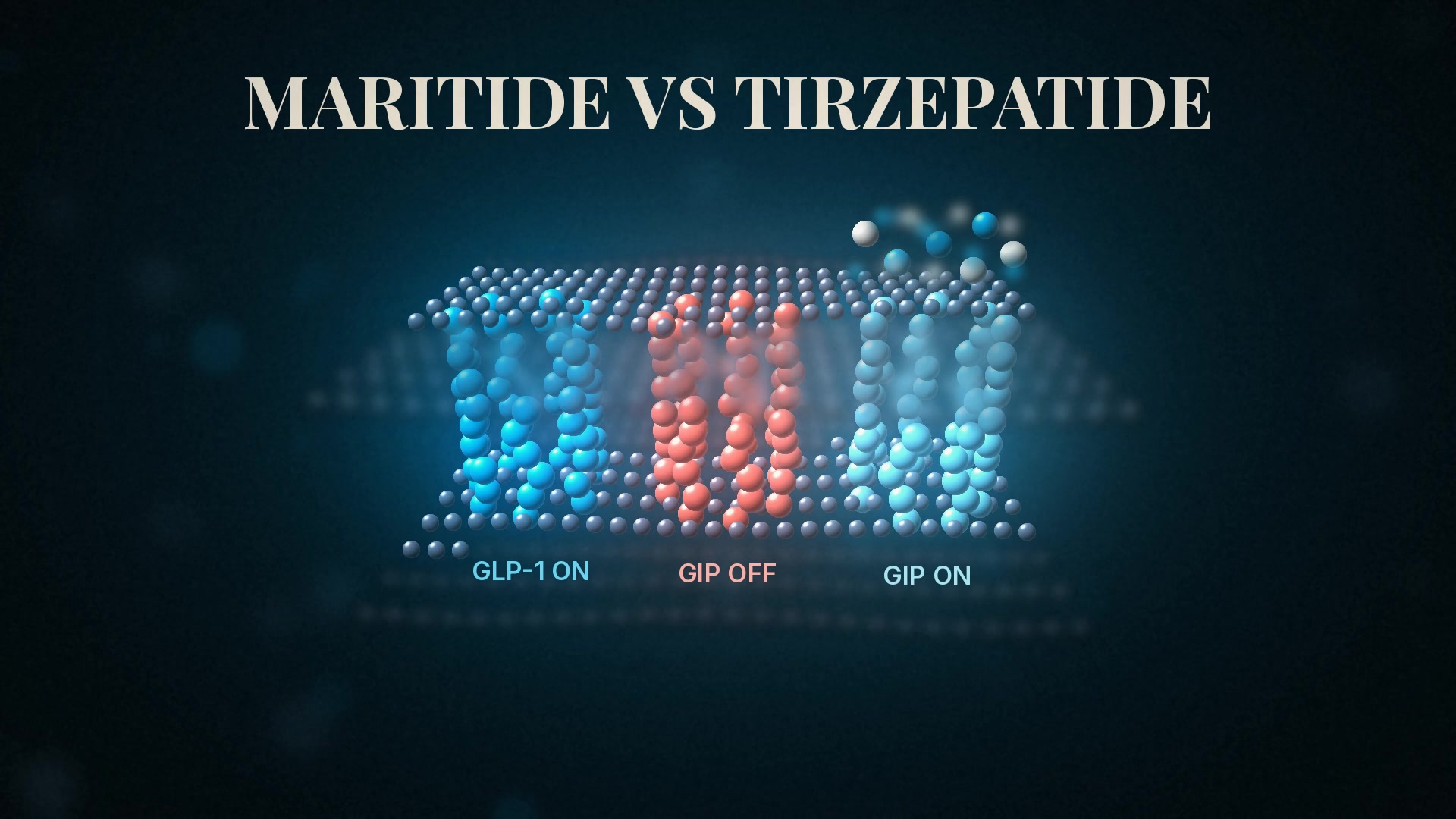
The antibody is not just a carrier. It blocks a second receptor, the receptor for GIP, another gut hormone. Tirzepatide switches that receptor on. MariTide switches it off. Both approaches have led to weight loss in trials, and scientists are still working out why. One clue came from human genetics: large studies linked changes in the GIP receptor gene to lower body weight.
What the trials found
- Early trial (2024): in the groups that got several doses, weight loss held for up to 150 days after the last dose.
- Phase 2 (2025): 592 adults with obesity got an injection once every 4 weeks, and one group every 8 weeks. After 52 weeks, people without diabetes lost about 12 to 16% of their body weight on average, compared with about 2.5% on placebo.
- With type 2 diabetes: people lost about 8 to 12%, and their average blood sugar (HbA1c) dropped by more than one full point.
The honest part
- This medicine is not approved. It is still being tested.
- Stomach side effects like nausea and vomiting were common, especially at first. They were less frequent when the dose started lower and rose slowly.
- This was a phase 2 trial, and it was funded by the maker.
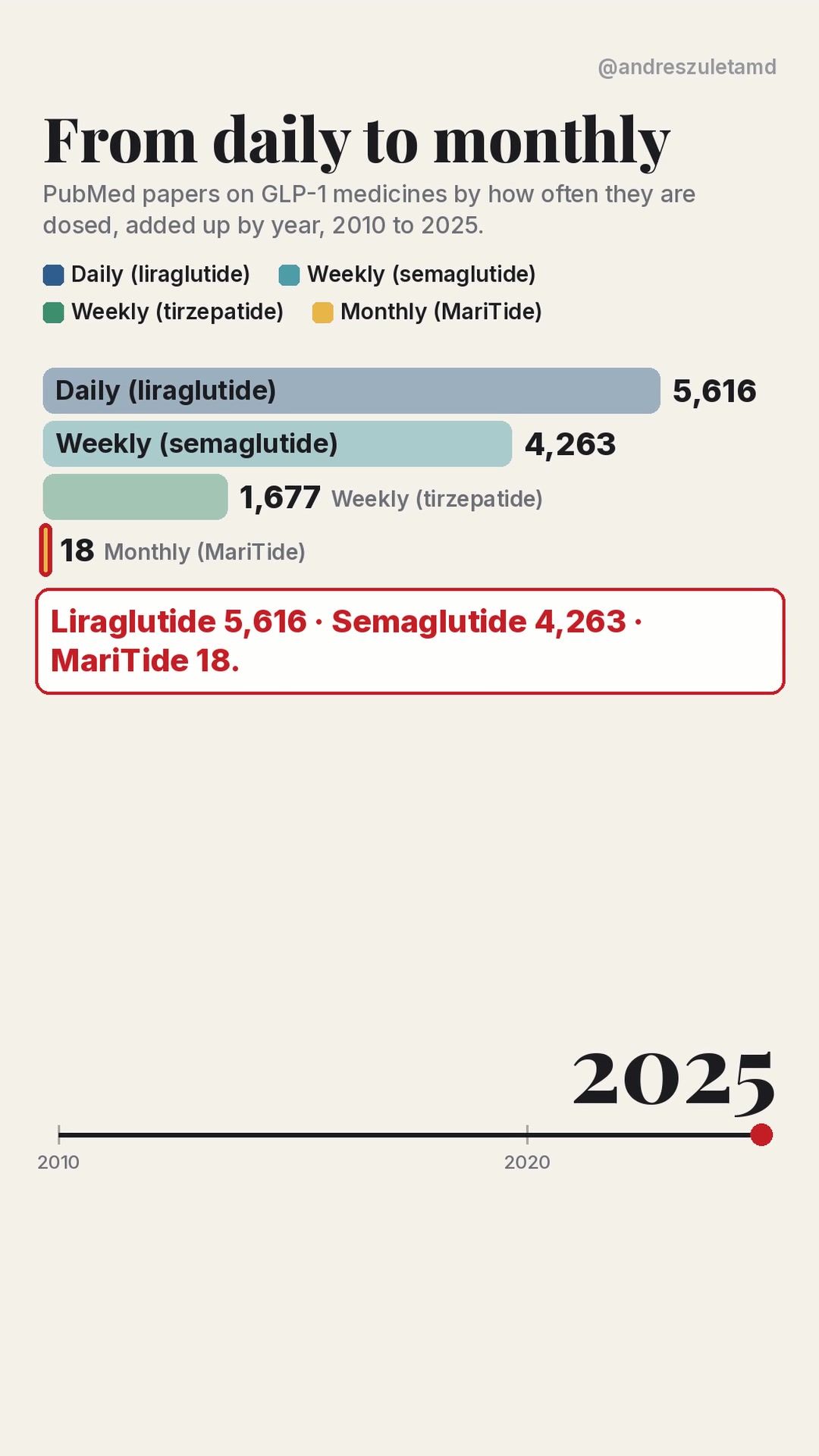
- The large phase 3 trials, called MARITIME, are still running, with the first main results expected in 2027.
- Until then, we do not know how it compares with weekly shots in the same trial, or how it holds up over years.
Two things you can use
- How long a medicine lasts depends on how it is built. Here, the peptide borrowed time from an antibody.
- A new design is a reason for careful interest, not a reason to skip the evidence. Wait for the phase 3 results, and talk with your doctor about what is approved today.
For a more technical take, read my physician's version: Maridebart Cafraglutide: a physician's read
Stay curious, look closely, and keep learning how your body works. Be proactive.
Sources
- Veniant MM et al. A GIPR antagonist conjugated to GLP-1 analogues promotes weight loss with improved metabolic parameters in preclinical and phase 1 settings. Nat Metab 2024 (PMID 38316982).
- Jastreboff AM et al. Once-monthly maridebart cafraglutide for the treatment of obesity: a phase 2 trial. NEJM 2025 (PMID 40549887).
- Turcot V et al. Protein-altering variants associated with body mass index implicate pathways that control energy intake and expenditure in obesity. Nat Genet 2018 (PMID 29273807).
- Yie J et al. Design and therapeutic rationale of antibody-peptide conjugates: insights from maridebart cafraglutide (AMG133). Antib Ther 2026 (PMID 42592044).
- ClinicalTrials.gov NCT06858839 (MARITIME-1), status checked October 2026.
Educational only, not medical advice. Andres Zuleta, MD, ThriveMed.