
What Was in the Medicine That Saved Elizabeth Hughes? The First Protein Ever Read
By Andres Zuleta, MD, ThriveMed · Patient and family education
In August 1922, a girl named Elizabeth Hughes arrived in Toronto. She was almost 15 and weighed 45 pounds. Diabetes was starving her. On August 17 she got her first shot of insulin, and within weeks she was gaining weight; her own handwritten chart shows 9 pounds by September 3. She later wrote to her mother that, learning to give herself the shots, she was "Captain of my own ship."
Elizabeth went on to college, married, and lived 58 more years on insulin. But here is the part that still amazes me as a doctor: for the first 33 of those years, nobody on Earth knew what insulin was made of. This is Episode 4 of my 15-part series, The Peptide Breakthroughs.
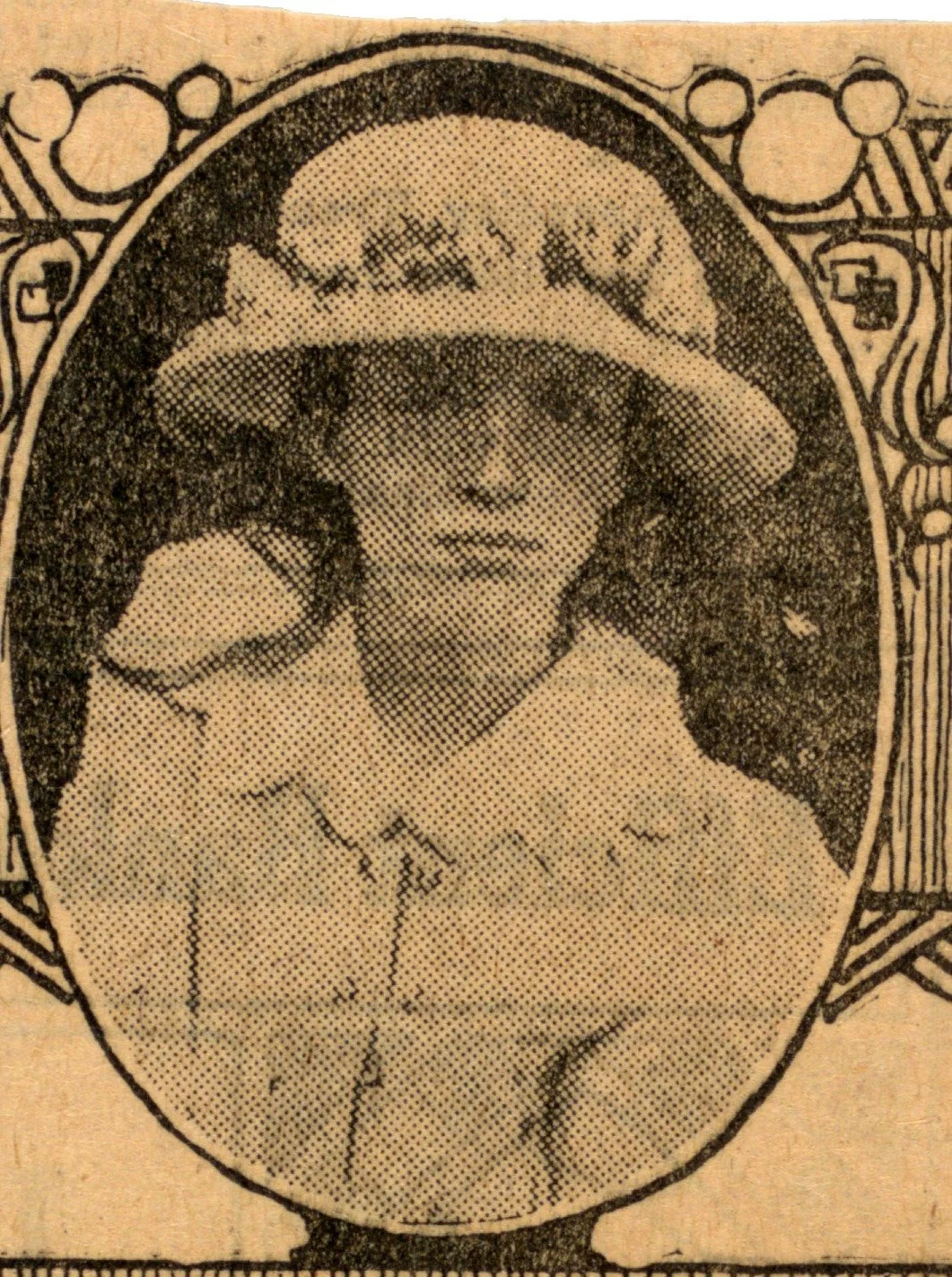
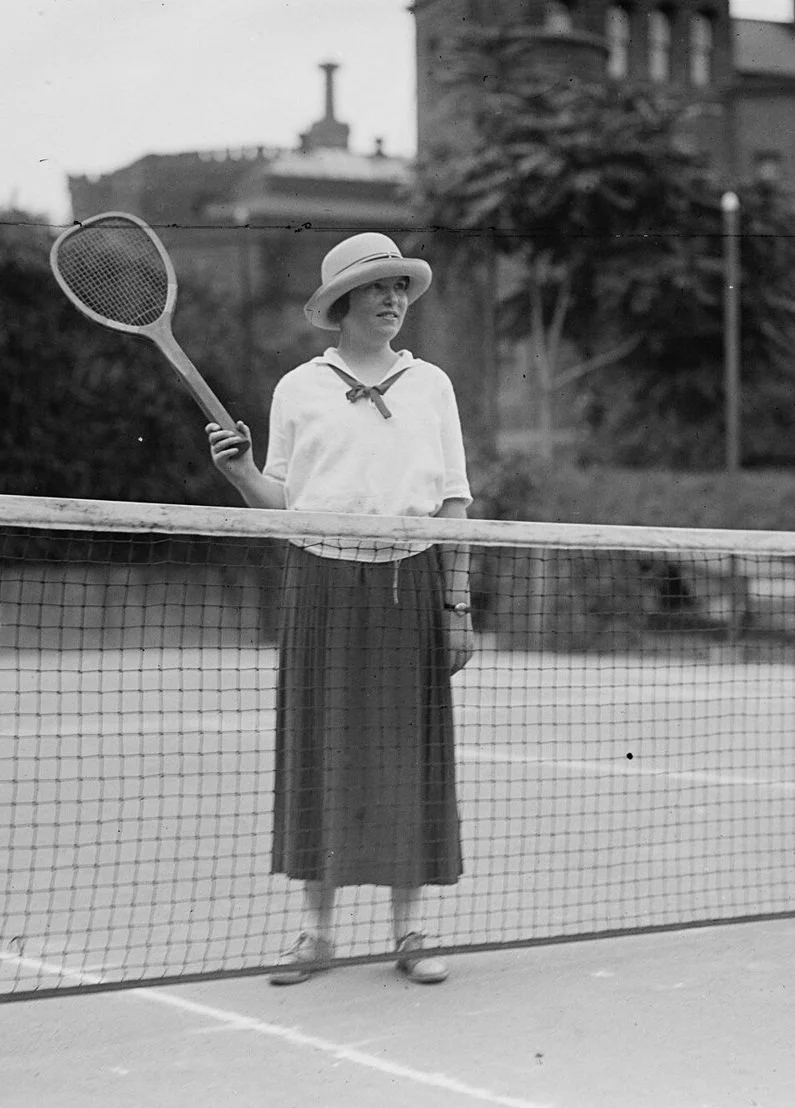
Before and after. Left: Elizabeth Hughes as the Toronto Daily Star printed her on August 17, 1922, the day of her first insulin shot (public domain, published 1922; scan courtesy of the Thomas Fisher Rare Book Library, University of Toronto, insulin:C10033). Right: Elizabeth on a tennis court in 1924, two years after starting insulin (National Photo Company, Library of Congress, public domain).
The short version
- The discovery: between 1943 and 1955, Frederick Sanger in Cambridge read insulin's building blocks in order: the first chain in 1951, the second in 1953, and the three sulfur bridges that hold them together in 1955.
- The results: every insulin molecule has the same 51 building blocks in the same exact order. Proteins are precise sentences, not a random soup. He won the 1958 Nobel Prize in Chemistry.
- The limits: it took about twelve years by hand, and knowing the order did not reveal the shape or how the body makes insulin.
- The possibilities: reading proteins led to the one-letter change behind sickle cell disease, to insulins redesigned letter by letter, and to Sanger's second Nobel Prize, for reading DNA.
Watch
Elizabeth's story in under a minute.
Why insulin belongs in a peptide series
Insulin is a peptide hormone. Picture a necklace of beads: each bead is an amino acid, and the order of the beads is everything. A short necklace is a peptide. Insulin is two short strands, 51 beads in all. Very long chains, hundreds of beads, are what we usually call proteins, and insulin sits so close to that line that you will hear it called both. (US rules, for example, count any chain over 40 amino acids as a protein.) Insulin was the first peptide medicine, and Sanger made it the first one anyone could read.
1. The discovery
Peptides and proteins, including insulin, are chains of small building blocks called amino acids. There are about twenty common kinds, and scientists give each one a letter. In 1943 chemists could tell which amino acids were in a protein and roughly how many, but almost nothing about their order. Some thought the order repeated in a pattern. Others thought there was no fixed order at all.
Think of the words TEA, EAT and ATE. Same three letters, three different words. The order is the meaning.
Sanger, a family doctor's son who had first planned to study medicine, picked insulin. His first trick was a dye that grabs the first link of a chain and holds on even after the chain is broken apart; those tagged pieces come out bright yellow. Then he broke insulin into short pieces, read each one, and fit them back together from the overlaps, like rebuilding a torn sentence from the words that repeat. The Nobel committee compared it to laying a puzzle.
- 1951: the first chain, 30 amino acids.
- 1953: the second chain, 21 amino acids.
- 1955: the three sulfur bridges: two link the chains, one loops inside the shorter chain.
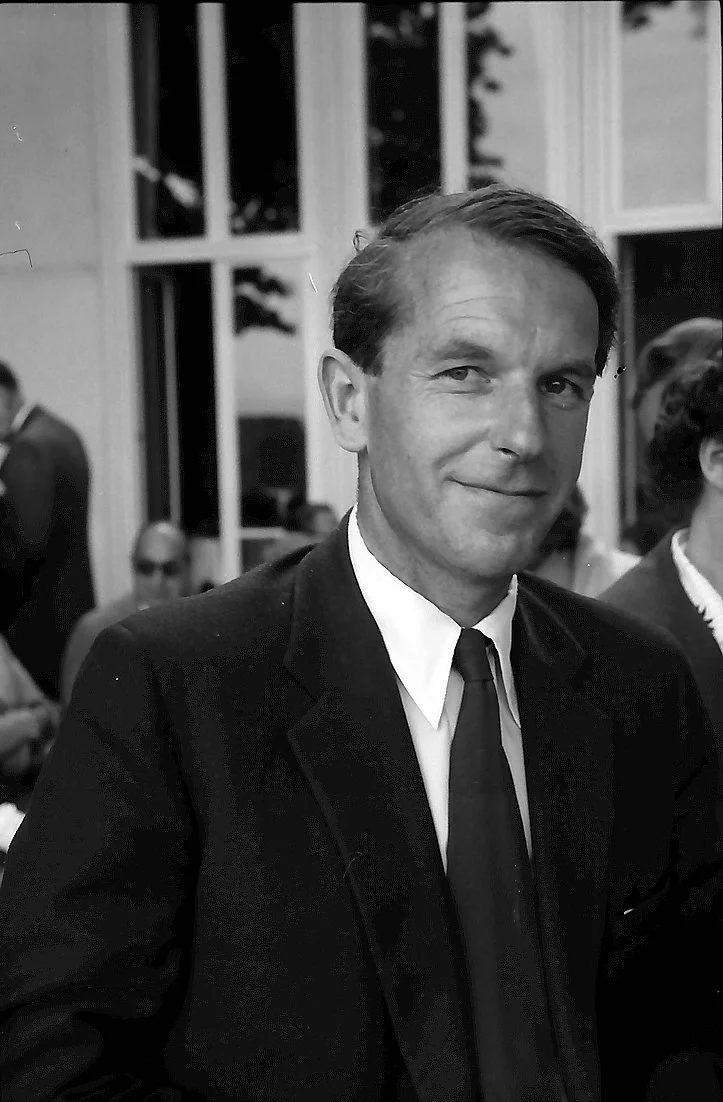
Frederick Sanger at the Nobel Laureate Meeting in Lindau, 1960. Photo: Willy Pragher, Landesarchiv Baden-Württemberg, CC BY 4.0.
2. The results
In his Nobel lecture, Sanger wrote that proteins have "a unique structure in which each position in the chain is occupied by one and only one amino acid residue." That sentence is the foundation under every peptide medicine since.
He also compared insulin from cattle, pigs, sheep, horses and whales. The differences sat in just three spots of one chain, which helped explain why animal insulin worked in people. When human insulin was read in 1960, pig insulin turned out to differ from ours at a single position out of 51. Think of gray and grey: one letter swapped, same meaning.
3. The limits
- Slow. About twelve years for one small protein, by hand. For most of that time, everyone even believed insulin was twice its real size.
- Order is not shape. Insulin's 3D shape was solved separately in 1969, with X-rays, in Dorothy Hodgkin's lab.
- A hidden step. In 1967 researchers found that the body first makes insulin as one longer chain, proinsulin, and then cuts out a middle piece. The sequence alone did not show that.
4. The possibilities
Once you can read a protein, you can find a typo. In 1956 Vernon Ingram used methods built on Sanger's to show that sickle cell disease comes down to one changed amino acid in hemoglobin, the protein that carries oxygen.
Then medicine started editing. Insulin lispro, approved in the United States in 1996, swaps two neighboring amino acids so it acts faster at mealtimes. Sanger went on to read DNA and in 1980 became the first person to win two Nobel Prizes in Chemistry. Today the UniProt database lists 575,748 protein sequences checked by experts, 20,431 of them human. It started with 51.
Two ideas you can use
- Ask what exactly is in it. A real peptide medicine has an exact, published sequence. When something is sold to you as a peptide, that is the first fair question.
- Know about C-peptide. The middle piece the body cuts out of proinsulin is called C-peptide, and it became a blood test. For people who use insulin, it can help show how much insulin their own body still makes and which type of diabetes they have.
Want the physician's read, with the papers? Read my deep dive on drzuleta.com: Insulin, 1955: A Physician's Read on the First Protein Sequence.
The Peptide Breakthroughs: Previous, Episode 3: The First Hormone Built by Chemists · Next, Episode 5: the bead that built modern peptides (link when live).
Want a proactive plan for your own health? Join Thrive Nation.
Sources: Sanger F. Biochem J 1945;39:507-515; Sanger F, Tuppy H. Biochem J, Sep 1951;49:463-490 (PMIDs 14886310, 14886311); Sanger F, Thompson EOP. Biochem J, Feb 1953;53:353-374 (PMIDs 13032078, 13032079); Ryle AP, et al. Biochem J, Aug 1955;60:541-556 (PMID 13249947); Brown H, et al. Biochem J, Aug 1955;60:556-565 (PMID 13249948); Sanger F, Nobel lecture, Dec 11, 1958; Nicol DSHW, Smith LF. Nature, Aug 6, 1960 (PMID 14426955); Ingram VM. Nature, Oct 13, 1956 (PMID 13369537); Steiner DF, et al. Science, Aug 11, 1967 (PMID 4291105); Adams MJ, et al. Nature, Nov 1969 (doi.org/10.1038/224491a0); FDA label, insulin lispro (BLA 020563); UniProt release 2026_03, Sep 2, 2026; American Diabetes Association, Standards of Care in Diabetes 2026, section 2; University of Toronto, Elizabeth Hughes Papers and chart (Aug 16, 1922); Toronto Daily Star, Aug 17, 1922 (insulin:C10033); StatPearls, Physiology, Pancreas (NCBI Bookshelf); 21 CFR 600.3(h)(6). Images: Toronto Daily Star 1922 and Library of Congress 1924, public domain; Willy Pragher, Landesarchiv Baden-Württemberg, CC BY 4.0. Educational only, not medical advice.