
One Blood Test. Every Cancer.
A 2025 study in Nature Medicine just validated something that changes how I think about cancer detection. A single blood draw — no biopsy, no surgery — can detect cancer signals across multiple tumor types simultaneously. Before symptoms appear. The blood already knows. We're learning to listen.
The Problem We Don’t Talk About Enough
Here’s the number that should be on every billboard outside every oncology center in the country:
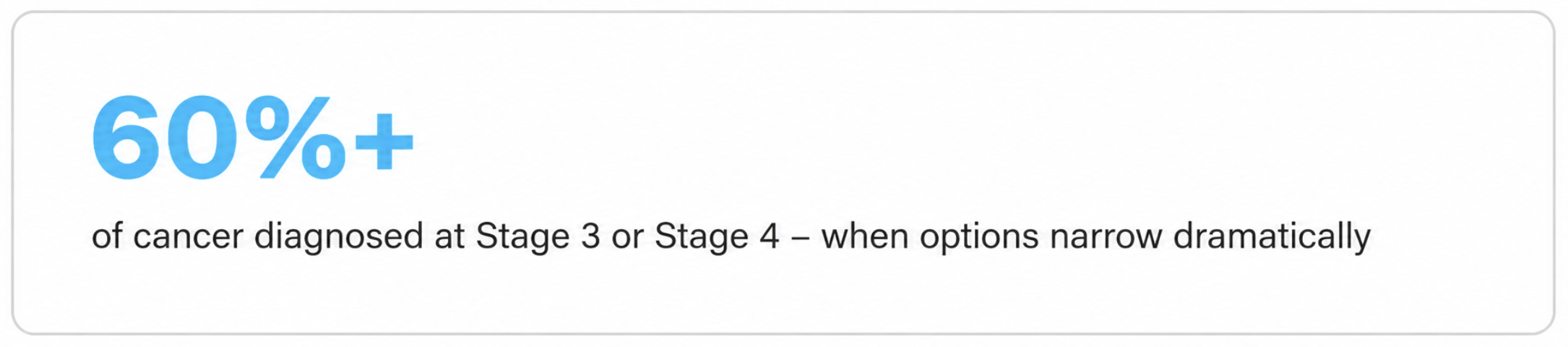
This isn’t a failure of treatment. It’s a failure of timing. In many of these cases, the cancer was biologically detectable, shedding signals into the bloodstream, months or even years before the first symptom appeared.
We simply weren’t looking. The standard model of cancer care is reactive: wait for symptoms, then investigate. That model has a built-in lag that costs lives.
Compare five-year survival rates for lung cancer: Stage 1 is around 80%. Stage 4 is under 10%. That gap isn’t biology, it’s how late we found it.
What Liquid Biopsy Actually Is
When cancer cells divide, and they divide constantly, they shed fragments into the bloodstream. Circulating tumor DNA (ctDNA). Circulating tumor cells (CTCs). Exosomes carrying molecular cargo that reflects the tumor’s identity.
Liquid biopsy is the umbrella term for tests that detect and analyze these fragments from a blood draw. No scalpel. No tissue sample. No anesthesia. A vial of blood, processed correctly, can now tell a story that used to require surgery to read.
Think of it like a smoke detector versus a fire alarm. A fire alarm goes off when your house is already burning. A smoke detector catches the signal in the wall — before the damage is done. Liquid biopsy is the smoke detector.
What the 2025 Data Actually Shows
The Nature Medicine review synthesizes the current state of the field with 2025 validation data from real clinical populations, not just controlled lab settings. Key findings:
Multi-cancer detection from a single draw. ctDNA analysis can now identify cancer signals across colorectal, lung, breast, pancreatic, and other tumor types simultaneously from one sample. This is significant: it means a single screening test could cast a wide net.
Earlier detection than conventional imaging. In validated cohorts, liquid biopsy detected molecular signals at earlier stages than CT, MRI, or PET would have flagged anything actionable.
Real-time treatment monitoring. Once a patient is in treatment, ctDNA levels in the blood track therapy response weeks before imaging shows any change. This gives oncologists actionable data much earlier , faster pivots when a therapy isn’t working.
Minimal residual disease detection. Perhaps the most powerful application: detecting tiny populations of surviving cancer cells after treatment, cells too small for any scan, that will cause relapse if untreated. This is where liquid biopsy could most dramatically change survival outcomes.
What It Can’t Do Yet, Being Honest
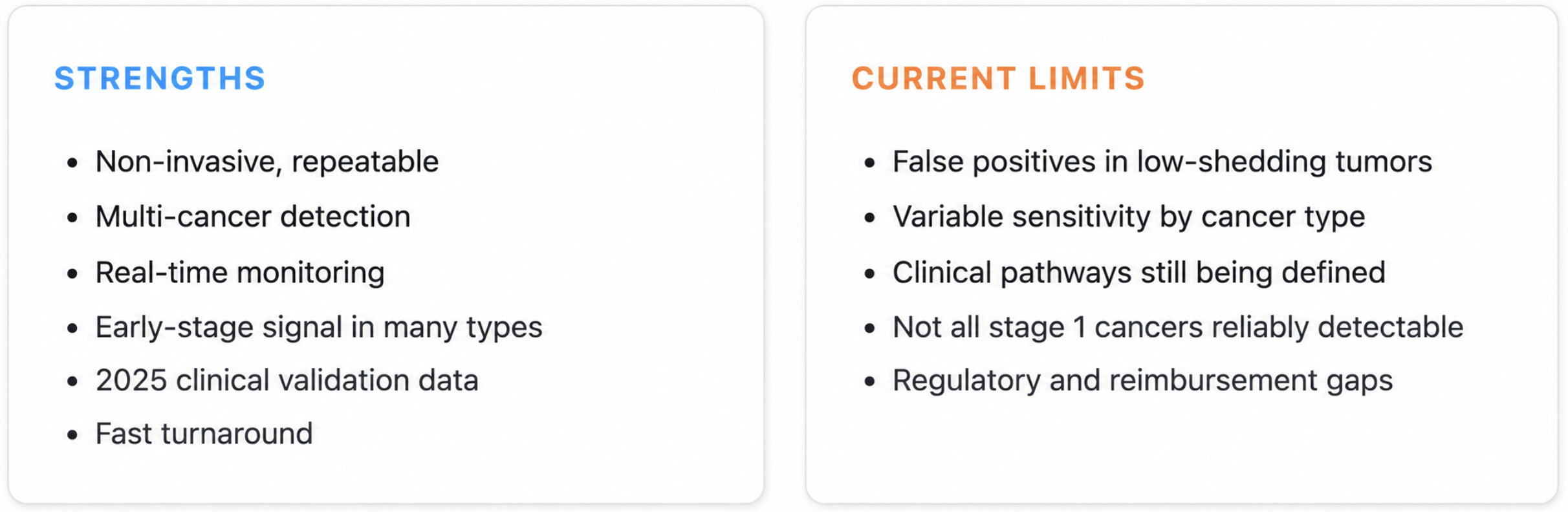
The science is moving fast. What wasn’t reliable in 2022 is clinically validated in 2025. The trajectory matters here as much as the current state.
Why the Trajectory Is What Matters
The honest read on liquid biopsy in 2025 isn’t “this is ready for population-wide screening tomorrow.” It’s “we have cleared the proof-of-concept hurdle and the clinical validation data is compelling.” The field is moving from bench to bedside at a pace we haven’t seen in diagnostics since genomic sequencing dropped in cost.
By 2027, we will likely have liquid biopsy panels that are reimbursed, integrated into standard oncology workflows, and routinely catching cancers that would have taken another 18 months to diagnose through conventional means. That’s not speculation, that’s the straight line from the current data.
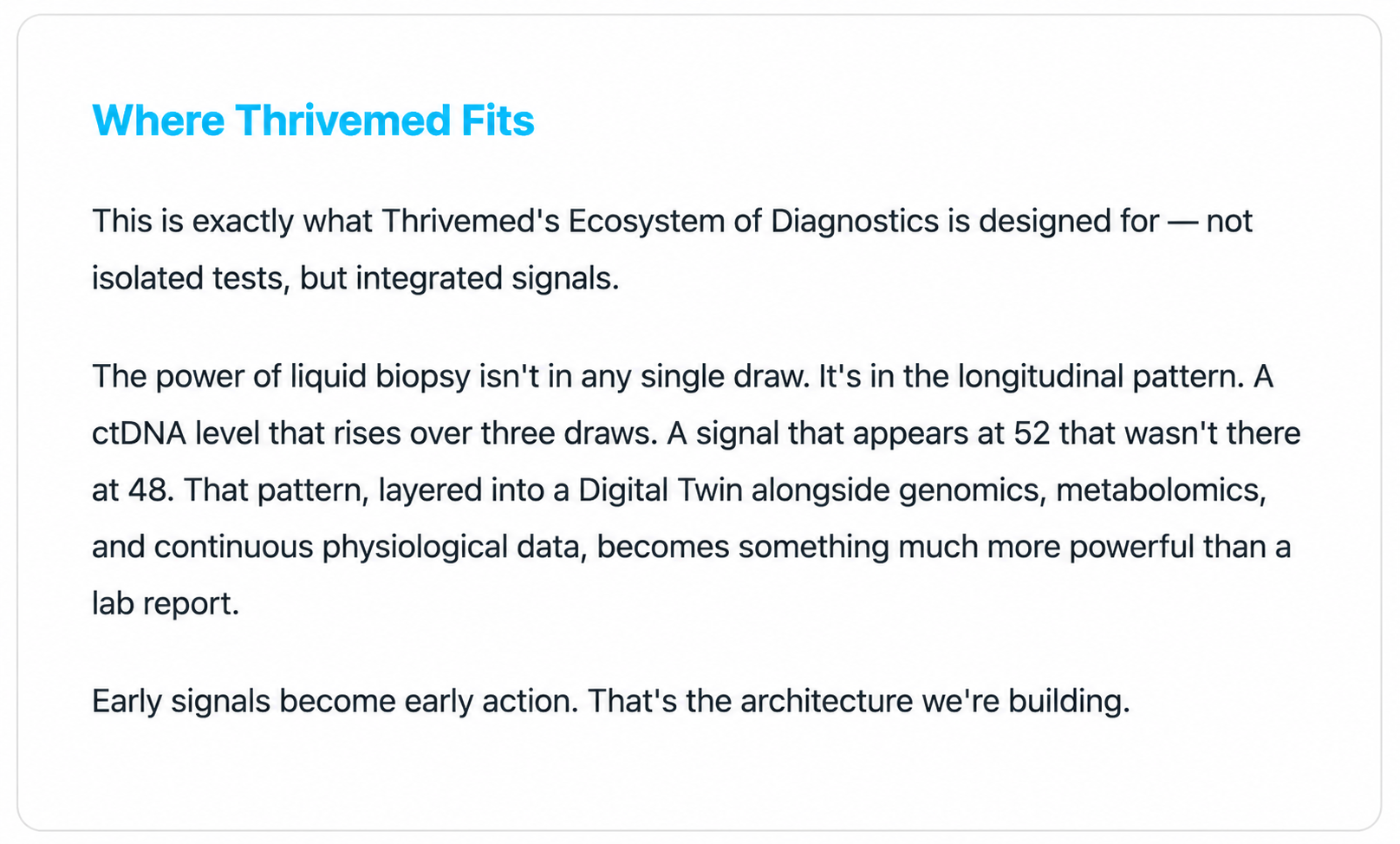
We are not locked into finding cancer late. The science in 2025 is telling us, clearly, that the blood already knows what’s coming. We’re finally learning to listen.
Stay vital.
— Dr. Andres Zuleta, MD
Family Medicine Physician | Founder, ThriveMed
Key References
“Liquid biopsies across the cancer care continuum” — Nature Medicine, 2025. Read →
This article is for educational purposes and is not a substitute for personalized medical advice. If you have specific concerns, please consult a qualified healthcare provider.